
Can Taking GLP-1 Drugs Affect Your Food Preferences?
Weight loss drug users tend to cut back on high-fat foods, despite still desiring them.
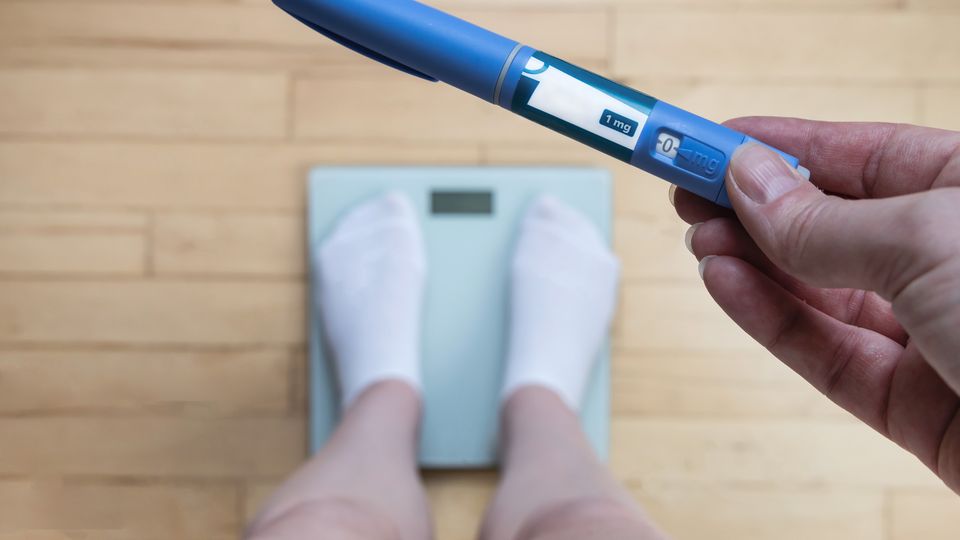
Obesity is a serious health condition that can significantly increase a person's risk for developing cardiovascular disease and type 2 diabetes, as well as some types of cancer and other chronic diseases.
For many, weight loss is achievable through routine lifestyle and diet changes. But others can struggle to lose weight through lifestyle interventions alone.
Recently, GLP-1 receptor agonists (GLP-1RAs or GLP-1s) have become a popular option for medicated weight loss. One study of nearly 6,000 British households found that 2.9% had used a GLP-1 medication to support weight loss within the past year—equivalent to approximately 1.6 million adults nationwide.
GLP-1s—initially developed for managing type 2 diabetes—mimic the effects of endogenous GLP-1, which is produced in the intestines after eating to enhance glucose-dependent insulin secretion and slow gastric emptying. GLP-1s can also act on the central nervous system to suppress appetite and promote feelings of satiety. Together, these actions can help to reduce caloric intake and aid weight loss.
With the increasing popularity of GLP-1s for weight loss, we are learning more about how these drugs affect appetite and food intake. But do GLP-1s change what people eat as well as how much they eat? And, if so, could these behaviors have consequences for the wider food industry?
GLP-1s, calorie restriction, and the food industry
While only a relatively small percentage of households report having used a GLP-1 for weight loss so far, adoption is increasing; between 2019 and 2023, the number of overweight or obese non-diabetic patients using GLP-1s rose more than 700% in the United States. It is estimated that nearly 40% of adults worldwide are overweight and 13% are obese, meaning that a significant number of the total population could, in theory, qualify for weight loss drug prescriptions and choose to pursue these as an option.
As the number of people taking these medications continues to climb, the food industry is taking notice. When more people start to consume significantly fewer calories—one study found reductions of upwards of 700 calories per day in GLP-1 users—the question needs to be asked: where are these skipped calories coming from, and are there any trends there?
While research in this area is still developing, there is some evidence that GLP-1 use might be associated with shifts in food preferences. One recent study of patients taking GLP-1s for type 2 diabetes noted that those on oral semaglutide tended to choose fewer high-fat and sweet foods from the trial's snack boxes than those taking a placebo. Another study found that those taking once-weekly semaglutide specifically for weight loss also exhibited less hunger, reduced cravings, and a lower preference for high-fat foods than a placebo group. However, these existing studies covered only a limited number of food items and food groups in a controlled environment, meaning they cannot provide exact insight into how changes in calorie consumption might manifest in the general population.
Discovering how—or if—weight loss drugs affect food preferences is an important aspect of understanding how these drugs help people to lose excess weight. If these drugs do affect food preferences, possibly by reducing intake of high-fat or sweet foods as early studies suggest, this could be something to be incorporated into targeted public health strategies by designing tailored lifestyle recommendations for patients pursuing medicated weight loss.
How does food consumption change in people taking GLP-1s?


Drug Repurposing Unlocks Novel Therapeutic Approaches
This listicle highlights real-world success stories in drug repurposing and emerging strategies involving genomics, clinical data, network biology, and AI to identify new uses for existing medicines.View Listicle
To better understand how food consumption and characteristics change when taking GLP-1s, a 2025 studysurveyed nearly 2,000 individuals belonging to one of four different consumer groups: 1) those currently taking a GLP-1 medication, 2) those who had previously taken a GLP-1, 3) those who plan to begin taking a GLP-1 in the future, and 4) those who have never taken and do not plan to start taking a GLP-1 drug.
The study confirmed that those currently taking GLP-1 medications consume significantly fewer calories than the other groups. It also found that GLP-1 takers were the most likely to have reduced their consumption of processed foods, sugar-sweetened beverages, refined grains, and beef.
"Our study documents consumption patterns rather than investigating their underlying mechanisms. However, the observed patterns align with some explanations in existing research," senior study author Brandon R. McFadden, PhD, a professor and Tyson Chair in food policy economics at the University of Arkansas, told Technology Networks.
"The first is basic satiety: GLP-1s delay gastric emptying and enhance feelings of fullness, leading individuals to have a smaller ‘appetite budget.’ Consequently, energy-dense foods are typically the first to be reduced. The second involves changes in taste and reward: previous studies have shown that GLP-1s decrease preference for high-calorie and fatty foods, and evidence suggests these drugs can increase sensitivity to sweet tastes while reducing the enjoyment of fatty foods."
McFadden's research contrasts with these previous studies, as participants in this work continued to report a strong desire for the foods they cut back on the most.

Around the Bottleneck: Chromatography-Free Mass Spectrometry
This infographic explores how chromatography-free MS bypasses traditional separation steps, enabling faster, simpler, and more cost-effective analysis without compromising data quality.View Infographic
"What complicates a purely preference-based explanation is this dissociation regarding desirability," McFadden said. "If food choice solely reflected preference, this gap wouldn't exist. To me, this is the most significant insight in the paper regarding the mechanism; it highlights the need for further physiological and metabolic research into how GLP-1s influence eating behaviors."
Understanding how GLP-1s affect our behaviors around food
Existing research has already shown that individuals who are overweight or obese do have distinct eating behaviors compared to peers without obesity—including increased energy (calorie) intake, stronger food cravings, heightened reward sensitivity to palatable foods, and an altered preference towards high-fat, high-sugar, and energy-dense foods. People with obesity also tend to have longer meal durations, take larger bites or sips, and report delayed satiation.
The existence of these consistent behavioral phenotypes, alongside the changes in eating behavior seen in GLP-1 users, has led to increased interest in investigating the neurobiological mechanisms that lead to weight gain, and how these are altered by different obesity treatments.
Francisca Contreras is a registered dietitian and PhD candidate at University College Dublin, who is working to develop standardized training in obesity management for healthcare professionals. She was recently the first author of a review which looked at how bariatric surgery and weight loss drugs modify eating behaviors.


Building Confidence Early in Drug Discovery
Explore two case studies demonstrating how this strategy enables assay development, novel hit identification, binding characterisation, and molecule prioritisation.View Webinar
"Compared with obesity medications, we have much stronger evidence for bariatric surgery because researchers have directly measured what people eat over extended periods," Contreras told Technology Networks. "These studies consistently show that people eat less after surgery because they feel full sooner and stop eating earlier, rather than dramatically changing the types of foods they choose."
Contreras' review concluded that GLP-1-based weight loss treatments predominantly reduce people's drive to eat, rather than making food less pleasurable. "People often still enjoy food, but feel less driven to eat it and find it easier to stop when they are full," she said. "'Food liking' is the pleasure you get from eating, while 'wanting' is the motivational drive or craving to obtain it. That distinction is fundamental when we analyze eating behavior because it helps us understand how obesity treatments influence eating behaviors and the underlying brain mechanisms involved."
"[For GLP-1s,] the likely mechanism is a mix of central and peripheral effects. On the central side, GLP-1-RAs act on hypothalamic and brain circuits, activating anorexigenic POMC/CART neurons and suppressing orexigenic NPY/AgRP neurons. Neuroimaging studies have also shown reduced neural responses to high-energy palatable food cues in regions like the orbitofrontal cortex, insula, amygdala, and stratum, although it remains unclear to what extent these neural changes translate into changes in eating behavior. There is also a plausible taste-related pathway, as GLP-1 may modulate sweet-taste sensitivity, but human direct evidence for consistent peripheral taste modulation is still limited and mixed."
Both McFadden and Contreras agree that further research into the neurobiological and metabolic effects of GLP-1 drugs will be an important step forward in our understanding of how these drugs affect human food behaviors. Contreras also highlights the need for more studies directly examining the eating behavior of GLP-1 users.
"People taking GLP-1 medications often say they think about food less and have fewer cravings for foods that are high in fat or sugar. However, we don't yet have enough studies that directly observe what people actually eat in everyday life to know whether these medications truly change food choices," Contreras said.
"Future research needs to move beyond weight loss alone and directly observe how people eat while taking these medications. We need to understand whether obesity medications change eating behaviour differently in the short- and long-term, why some people respond better than others, and how these changes affect nutritional health. This will help us understand how these medications work, as well as inform the development of better, more personalized dietary advice for people using these treatments."
 Add Technology Networks as a preferred Google source to see more of our trusted coverage.



