
Analytical Innovation Driving the Next Generation of Nasal Sprays
Explore how emerging analytical techniques are enabling precise dose delivery, regulatory compliance, and the advancement of next-generation nasal therapies.

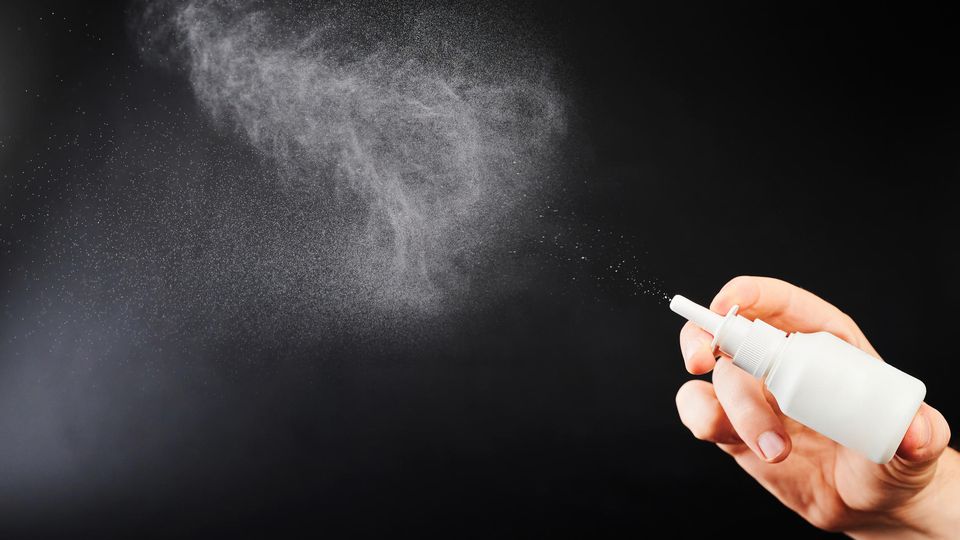
Estimates suggest that the global nasal spray market is set to exceed $59.4 billion by 2032. A key milestone in this growth occurred last year with the UK Medicines and Healthcare products Regulatory Agency’s approval of EURneffy®, a needle-free alternative to the EpiPen®. This development highlights increasing regulatory and clinical confidence in nasal spray drug delivery, driven by advances in analytical technologies that ensure product safety, consistency, and efficiency.
Technology Networks recently spoke with Dr. Steve Ward-Smith, senior technical specialist in applications at Malvern Panalytical, to explore the analytical challenges and opportunities shaping the development of nasal spray therapeutics.
In this interview, Ward-Smith discusses the role of particle analysis in formulation optimization and device performance, and how emerging analytical techniques are enabling precise dose delivery, regulatory compliance, and the advancement of next-generation nasal therapies.
What key factors are driving the rapid growth of the nasal spray market?
Stephen Ward-Smith, PhD (SWS):
AM:
SWS:
New technologies reached the market for the first time, positioning 2025 as a pivotal year for nasal drug delivery innovation. There has been a recent trend in innovative deliveries, such as nasal dry powder inhalers, delivering new kinds of molecules nasally.
These innovations not only improve the stability and bioavailability of sensitive compounds but also expand the therapeutic potential of nasal delivery beyond traditional applications such as allergy and congestion relief.
By combining advanced formulation science with precision-engineered devices, these technologies are making nasal sprays more effective, reliable, and patient-friendly, paving the way for faster, targeted, and non-invasive treatments for a wider range of conditions.
AM:
SWS:
Droplet size is essential for delivering the correct dose to the location where it will be absorbed. Drug particle size analysis also allows us to examine whether the drug is in a dispersed or agglomerated state within the droplets, which is critical for ensuring consistent delivery, formulation stability, and predictable therapeutic outcomes.
By understanding both droplet and particle characteristics, developers can optimize nasal sprays to achieve precise dosing, improve absorption, and maintain efficacy across different patients.
AM:
SWS:
When creating nasal sprays, several key techniques help analyze the particles. These methods provide key information that helps to perfect how well the spray works and ensure that it meets regulations.
Laser diffraction is a primary method for measuring droplet and particle size distribution. This technique enables developers to understand how droplets form and disperse during actuation, which is critical for predicting deposition in the nasal cavity and ensuring consistent, effective dosing.
Morphologically Directed Raman Spectroscopy (MDRS) combines microscopy with Raman spectroscopy to identify active drug particles and excipients, offering detailed information on particle morphology, size, and composition. MDRS is particularly valuable for analyzing complex formulations and for detecting agglomerates.
Together, these approaches provide precise control over the physical characteristics of nasal spray formulations, ensuring particle size and distribution align with the desired therapeutic outcomes.
Beyond particle-specific techniques, additional analytical methods—including the spray pattern assessment, shot weight, and impaction testing—play a vital role in development and regulatory evaluation.
Spray pattern testing evaluates the shape and spread of the emitted plume, confirming that the formulation consistently reaches the targeted regions of the nasal cavity. Shot weight measurements ensure that each actuation delivers the correct mass of formulation, which is crucial for dose uniformity and patient safety. Impaction studies simulate deposition within the nasal passages, providing predictive data on delivery efficiency.
While these methods do not measure particle properties directly, they complement particle analysis by validating that the combination of formulation and device consistently delivers safe, reproducible, and effective doses, helping developers meet both regulatory expectations and practical performance standards.
AM:
SWS:
Delivering emerging drug classes via nasal sprays presents additional challenges. These include maintaining formulation stability for sensitive molecules, controlling particle size and spray patterns to ensure deposition in the correct region of the nasal cavity, and overcoming mucosal absorption barriers. They also include managing patient variability, such as differences in nasal anatomy or congestion.
By providing precise measurements of droplet size, spray plume, and deposition patterns, it enables developers to optimize both the formulation and the device for consistent, reliable delivery. It also supports predictions of in vivo performance and minimizes variability, making nasal sprays more reproducible, effective, and suitable for even the most complex or sensitive drug molecules.
Actuator design (making something that can deliver the same size every time) can simplify the workflow involved in nasal spray measurements, so that inter-operator inconsistencies can be removed.
AM:
SWS:
One of the key innovations to advance nasal spray therapeutics is the addition of extra spectral capabilities beyond Raman into morphologically directed spectroscopy.
The future of nasal sprays lies at the intersection of drug delivery science and advanced analytical technologies. Integrating additional spectral techniques, such as near-infrared and ultraviolet spectroscopy, into particle analysis platforms will enable a deeper understanding of both particle morphology and chemical composition in a single, high-throughput workflow. This will allow developers to precisely characterize complex formulations, monitor stability in real time, and predict how different particles behave within the nasal cavity.
Other key innovations may include real-time imaging of spray deposition, AI-driven predictive modeling of in vivo performance, and more sophisticated aerosol and plume analysis techniques. Ultimately, these innovations will accelerate the development of next-generation nasal therapeutics that are safer, more reliable, and tailored to individual patient needs.
The introduction to this interview includes text that has been created with the assistance of generative AI and has undergone editorial review before publishing. Technology Networks' AI policy can be found here.
 Add Technology Networks as a preferred Google source to see more of our trusted coverage.



