
The Overlooked Engines of Discovery
Routine lab equipment is becoming smarter, more connected, and more sustainable.
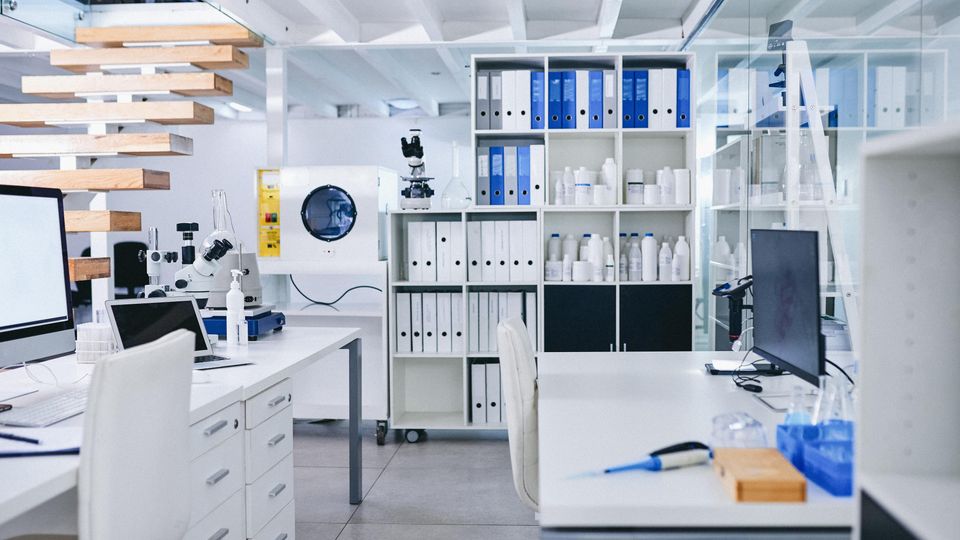
When thinking about innovation in the lab, attention often gravitates towards the biggest or most advanced instrumentation, logically so in many cases, given that this technology often unlocks new capabilities. But amid this excitement, the everyday equipment that researchers depend on daily, like centrifuges, incubators, freezers, and biosafety cabinets, doesn’t receive the same attention. We treat them as fixed infrastructure, as reliable as the power supply and about as interesting.
That view has fallen out of step with what's actually happening on the bench. These everyday pieces of equipment have been quickly and quietly evolving to reshape what researchers can achieve. Through the advancement of automation, interconnectivity, and sustainability, seemingly “routine” lab equipment is helping push research further than ever before.
Automation moves into the everyday
Automation was once reserved for high-throughput screening rigs and robotic liquid handlers, but has now become a baseline expectation for routine equipment. Incubators run their own sterilization cycles, centrifuges lock and balance rotors without manual adjustment, cold storage units log their performance and flag drift before it leads to failure, and electronic pipettes can now remember and store protocols that any user can activate and identically run.
These advances in automation deliver benefits that go beyond just accelerated research timelines. They have helped to eliminate researcher fatigue by limiting small, repetitive tasks that are prone to human error and subtly undermine reproducibility.
Automation has also helped with more consistent processes and results across users, shifts, and sites due to protocols living in instruments versus a researcher's memory. This standardization allows researchers to focus less time on minding equipment and more time on work that demands critical judgment. In some cases, non-specialists operate sophisticated equipment reliably because the intelligence sits in the machine, not the operator.
As labs are continuing to be asked to do more with less time, less budget, and less lab staff, advancements in lab equipment automation can help deliver results under these constraints.
Connected equipment is enhancing workflows
Historically, instruments operated as siloed devices, performing the task they were designed to do with limited benefits to the overall workflows of lab researchers. As interconnectivity has dismantled that isolation in tasks and bridged lab equipment together, researchers have seen increased benefits in how they function in the lab.
Critical tasks such as performance monitoring have become more advanced and accurate due to increasingly interconnected equipment. For example, a freezer in one room can signal an alarm on a computer at an entirely different location if its temperature unexpectedly changes or its power fails, protecting the samples within. With remote access and operation, some pieces of equipment can have their settings adjusted from anywhere, while protocols between other pieces of equipment are able to move freely between devices in different rooms or countries.
As equipment begins to coordinate, predicting maintenance, scheduling shared resources, and surfacing the data that managers need to make evidence-based decisions about their fleet becomes more seamless. Instruments that used to operate in silos are becoming part of an interconnected infrastructure that shares data, integrates workflows, and supports smarter decision making across the whole lab.
Sustainability becomes a designated design parameter
Just as important as the technical enhancements are improvements made to support sustainability efforts. Labs are resource-hungry facilities. A single ultra-low-temperature freezer can use as much power as a house. For years, this kind of usage was viewed as a necessary price to pay for advancing science.
However, labs today are starting to prioritize new designs that sharply reduce energy use. Everyday lab equipment such as freezers, incubators, and safety cabinets has been redesigned to run on a fraction of the energy their predecessors required, saving thousands of kilowatt-hours per unit each year.
Natural refrigerants such as CO₂, ammonia, and hydrocarbons are replacing traditional refrigerants, lowering global warming potential and limiting ozone depletion. Further, recycled and locally sourced materials help to minimize the manufacturing and transport footprint, while take-back programs address end-of-life waste.
Notably, none of these changes are asking scientists to trade performance for sustainability. The ongoing push to prioritize more sustainable solutions is driving more advanced engineering as lab researchers continue to balance between the two. Additionally, third-party ecolabels, such as the My Green Lab ACT Ecolabel, are also allowing buyers to easily compare the environmental impact of equipment, giving sustainability a concrete role in purchasing decisions.
Why lab equipment innovation matters
While often disregarded, routine lab equipment is growing smarter, more connected, and more sustainable, making it an increasingly strategic player in any lab. Together, these innovations are helping labs advance their research with more reliable results, lower waste and energy use, while freeing up researchers from burdensome tasks so they can focus on deeper research questions.
As researchers continue to invest in their labs and equipment, the foundational elements of everyday research deserve a closer look and more credit, given their essential role in keeping labs operational every day.
 Add Technology Networks as a preferred Google source to see more of our trusted coverage.



