
Breast Cancer Cells Tap Fat Reserves Through Tunnel-Like Structures
These structures, known as gap junctions, appear to play a crucial role in tumor development in laboratory settings.
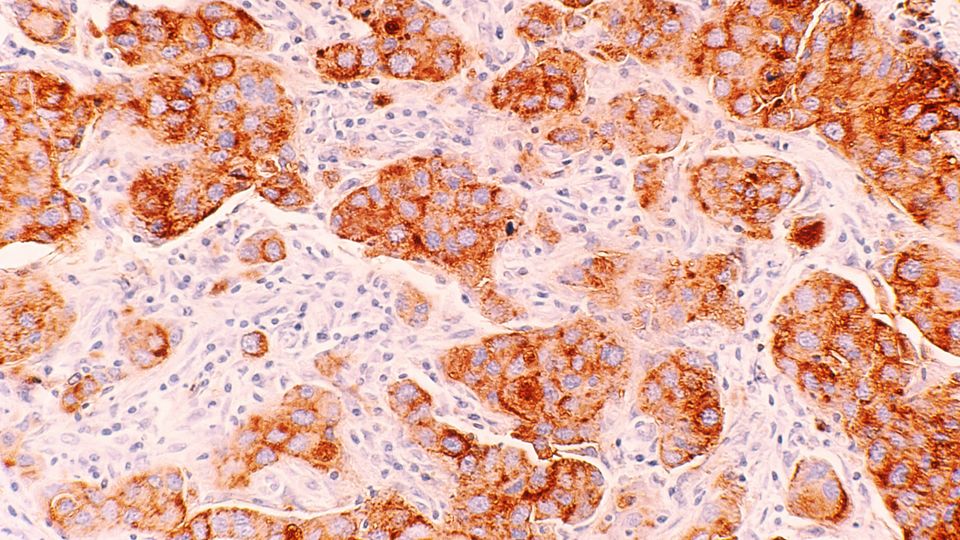
Researchers at the University of California, San Francisco (UCSF) have found that cells from triple-negative breast cancer (TNBC) form direct connections with nearby fat cells to access energy needed for tumor growth. These structures, known as gap junctions, appear to play a crucial role in tumor development in laboratory settings.
Triple-negative breast cancer is an aggressive subtype defined by the absence of estrogen receptors, progesterone receptors, and HER2 protein. The lack of these common therapeutic targets makes treatment options more limited. In this study, investigators discovered that TNBC cells form molecular tunnels that enable them to communicate with adipocytes, or fat cells, in the surrounding tissue.
Using tissue samples from breast cancer patients and in vitro models, the team found that cancer cells send signals through these gap junctions to stimulate the breakdown of lipids stored within adipocytes. The released fatty acids are then likely absorbed by the cancer cells and used to support their rapid proliferation.
Inhibiting gap junctions reduced tumor growth in the lab
The researchers also tested whether blocking these tunnel-like connections could interrupt the tumor’s energy supply. They used inhibitors that disrupt gap junction formation and observed reduced growth of TNBC cells in laboratory experiments.
Although these results are preliminary and derived from cell-based models, they suggest that gap junctions may represent a targetable mechanism for slowing the progression of certain breast cancers. Clinical trials are already underway for drugs that block gap junctions in other cancers, including glioblastoma, raising the possibility of future repurposing efforts.
The findings were published August 20 in Nature Communications and supported by funding from the National Institutes of Health and the US Department of Defense.
Reference: Williams J, Camarda R, Malkov S, et al. Tumor cell-adipocyte gap junctions activate lipolysis and contribute to breast tumorigenesis. Nat Commun. 2025. doi:10.1038/s41467-025-62486-3
This article has been republished from the following materials. Note: material may have been edited for length and content. For further information, please contact the cited source. Our press release publishing policy can be accessed here.
This content includes text that has been generated with the assistance of AI. Technology Networks' AI policy can be found here.
 Add Technology Networks as a preferred Google source to see more of our trusted coverage.

