
Clams Living on Canada’s Broken Group Islands Are Thriving
Crab scars on clam shells show shellfish stayed resilient for 3,000 years in Canada’s Broken Group Islands.
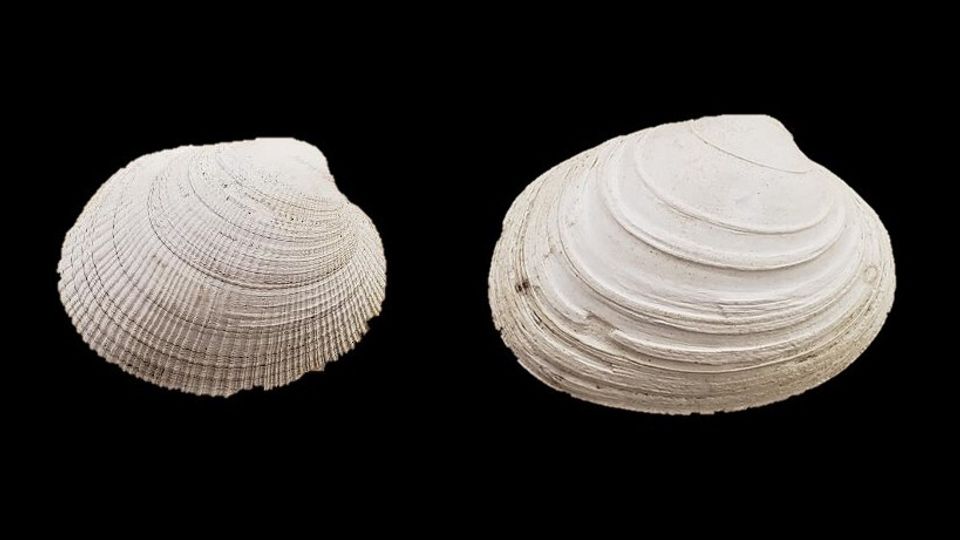
A small community of Canadian shellfish appear to have remained abundant over the last 3,000 years, according to a recent paper.
The researchers determined the population health of the butter and littleneck clams living on the Broken Group Islands, British Columbia, by excavating historical “clam gardens”.
Their method for determining the population health of local crabs, however, was much more novel.
Given that crab bodies biodegrade fairly rapidly after death, the researchers used the shells of ancient clams – and the markings long-dead crabs left behind – to infer the abundance of the crustaceans over the centuries.
The research was published in Biological Conservation.
Ghost in the shell
The Broken Group Islands are an archipelago on the west coast of Vancouver Island, Canada.
The islands have been home to the Tseshaht First Nation people for millennia and are now part of the Pacific Rim National Park Reserve.
Thanks to this status, the islands’ shellfish are largely protected from commercial harvesting, although they remain vulnerable to other pressures like ocean acidification and the invasive European green crabs.
To understand how these sheltered shellfish have fared over the centuries, the researchers from the University of Victoria sampled numerous clam shells from three historic Indigenous “clam gardens” across the Broken Group Islands.
“Indigenous clam gardens were once common along the northwest Pacific coast, but have largely been lost due to displacement of Indigenous peoples during the colonization of the Americas,” Dr. Kristina Barclay, a research scientist at the Hakai Institute and lead author on the study, told Technology Networks [Updated July 22 2025].
Since crab carapaces do not preserve like clam shells do, gauging the abundance of the clams’ clawed predators took a little more work.
Using a method normally applied in living ecosystems, Barclay and her fellow researchers noted the number of “repair scars” – made by a crab that failed to kill its prey – on the excavated clam shells. A higher frequency of scars would indicate a high presence of local crabs.
“These shell markings are called repair scars and are evidence of a crab attack,” Barclay said. “Research shows that the frequency or number of scars in a sample of shells (e.g., clam shells) can be compared between samples to get a sense of relative crab abundance (e.g., more scars = more crabs)."
Barclay and her colleagues observed a stable level of clam shells and repair scars across their samples, which dated as far back as 3,000 years. They thus concluded that the Broken Group Islands shellfish had remained abundant for millennia.
The more recently deposited shells even seemed larger than the historic ones, a finding that indicates that the decline of human harvesting and local sea otter populations has benefited the bivalves.
The research team were also surprised that the current clams and crabs seemed unaffected by more modern threats, such as ocean acidification.
“Ocean acidification along the west coast of North America has had significant impacts on many shellfish, such as oysters, mussels and crabs," said Barclay.
Nonetheless, she stressed that climate change still threatened the wider ecology of the Broken Group Islands.
“It is possible that ocean conditions and ocean acidification are not yet severe enough to have had large enough impacts on crab predation on clams in the Broken Group to be detected by the methods used in this study. More work is needed to understand ocean acidification impacts to these kinds of predator-prey interactions!"
Reference: Barclay KM, Baum JK, Claire DS, McKechnie I. Merging coastal archaeology and conservation paleobiology to evaluate shellfish resilience to Indigenous harvest over the past 3000 years. Biol Conserv. 2025. doi: 10.1016/j.biocon.2025.111186
The content of this article has been updated to provide additional quotes from Kristina Barclay, PhD.
 Add Technology Networks as a preferred Google source to see more of our trusted coverage.


