
Do Glass Bottles Have Microplastics? Exploring Contamination in Beverages
Beverages stored in glass bottles can contain higher levels of microplastics than those packaged in plastic bottles.
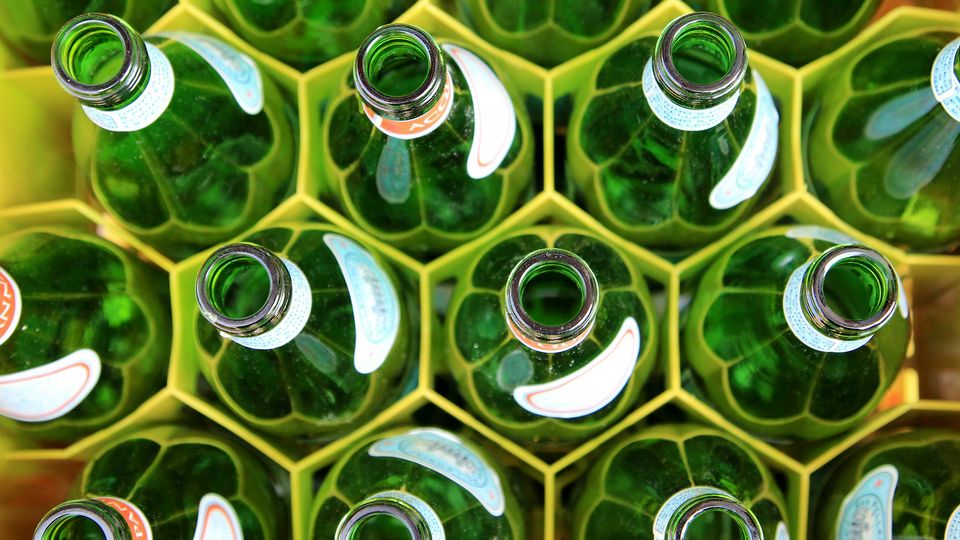
Microplastics – plastic fragments measuring less than 5 mm in size – have become a growing concern in environmental and food safety research. These tiny particles originate from the degradation of larger plastic materials or from direct industrial sources such as coatings, packaging and textiles. While most research on microplastics has focused on marine ecosystems, scientists are increasingly turning their attention to food and beverage products that may serve as sources of human exposure.
This concern has led to a central question for both consumers and laboratory professionals: do glass bottles have microplastics? Although glass is often perceived as a “cleaner” and more environmentally friendly packaging option compared to plastic, recent investigations suggest that glass bottles are not immune to microplastic contamination. In fact, research conducted by the Boulogne-sur-Mer unit of the ANSES Laboratory for Food Safety indicates that beverages stored in glass bottles can contain higher levels of microplastics than those packaged in plastic bottles, cartons or cans.
The findings underscore the importance of understanding how microplastics in beverages arise, the role of packaging in contamination and the laboratory methods used to detect and quantify these particles.
Microplastics in beverages: Key findings
The ANSES study examined a range of common beverages – including water, cola, lemonade, iced tea, wine and beer – to quantify microplastic contamination and assess the influence of packaging materials (Table 1). The results revealed an unexpected trend: glass bottles, particularly those sealed with painted metal caps, contained the highest number of microplastic particles per liter.
Table 1. A comparison of average microplastic levels by container type
| Beverage Type | Glass Bottles (particles/L) | Plastic Bottles (particles/L) | Cartons (particles/L) | Cans (particles/L) |
| Cola, Lemonade, Iced Tea, Beer | ~100 | 2–20 | N/A | 2–20 |
| Water | 4.5 | 1.6 | 1.6 | N/A |
| Wine | 5.3 | 2.1 | N/A | N/A |
These values highlight that:
- Glass bottles of cola, lemonade, iced tea and beer showed the highest contamination, with up to five to fifty times more microplastics compared to plastic bottles and cans.
- Water and wine contained relatively few microplastics across all packaging types, suggesting differences in beverage composition or packaging interaction.
- The majority of microplastics found in glass bottles were linked not to the glass itself, but to the painted coatings on metal bottle caps.
Sources of microplastics in glass bottles
Cap paint as a contamination pathway
The study determined that most microplastics present in drinks stored in glass bottles originated from the painted coatings of metal caps. The evidence was based on:
- Color and composition matches between the microplastic particles detected in beverages and the cap paint.
- Microscopic scratches on the painted surface of caps, caused by friction during storage, which released microplastic fragments.
This finding challenges the assumption that glass packaging is inherently free from plastic contamination. While the glass itself does not degrade into microplastics, auxiliary packaging components – such as caps and liners – play a critical role.
Are glass bottles lined with plastic?
Another source of microplastics in glass bottles may come from plastic-based liners used inside metal caps. These liners create a seal to preserve carbonation and prevent leakage, but they can also degrade or shed micro-scale fragments into the liquid. While the ANSES study primarily focused on cap paint, laboratory professionals are aware that multilayer packaging materials often combine metals, plastics and adhesives, each representing a potential contamination source.
Laboratory methods for detecting microplastics
Measuring microplastic contamination in beverages requires sensitive and validated laboratory methods. Analytical workflows typically combine sample preparation, particle isolation and identification using advanced instrumentation.
Sample preparation and filtration
Beverages are often filtered through membranes with pore sizes ranging from 0.45 µm to 10 µm, depending on the study objectives. This step concentrates microplastics from large liquid volumes, allowing for downstream characterization. Care must be taken to avoid laboratory contamination, with researchers using glassware cleaned with filtered solvents and conducting experiments in controlled environments.

Credit: iStock.

Discover What Metabolism Can Reveal
This infographic explores how real-time, live-cell metabolic measurements can help reveal the drivers of cellular response and provide deeper functional insight.View Infographic
Microscopy techniques
- Optical microscopy provides preliminary particle counts but lacks specificity for identifying polymer types.
- Micro-CT (computed tomography) scanning can visualize three-dimensional structures of microplastics embedded in beverage matrices.
- Scanning electron microscopy offers high-resolution imaging of surface morphology, particularly useful for linking microplastic fragments to painted cap coatings.
Spectroscopic methods
Fourier-transform infrared spectroscopy and Raman spectroscopy are gold-standard tools for polymer identification. These techniques allow researchers to match the chemical signatures of detected particles to reference databases, confirming whether particles are indeed microplastics rather than natural fibers or pigments.
Pyrolysis-gas chromatography/mass spectrometry (Py-GC/MS) enables chemical fingerprinting of microplastic particles by thermally degrading them into identifiable monomers. This technique is especially useful when working with complex mixtures or particles below the optical detection limit.
Together, these methods allow laboratories to quantify particle abundance, determine polymer types and trace contamination sources, strengthening the reliability of microplastic studies.
Why do some beverages contain more microplastics?
The differences observed between water, wine and carbonated drinks suggest that beverage properties may influence microplastic contamination levels. Several factors may play a role:
- Carbonation and acidity: Carbonated sodas and beers exert higher internal pressure, potentially increasing abrasion between the liquid, cap and painted surfaces.
- Alcohol content: Ethanol in wine or beer could affect polymer solubility and interaction with cap coatings.
- Storage conditions: Temperature fluctuations and transportation may exacerbate friction between caps, releasing more particles.
Accelerate High-Throughput Cloning With Automated Colony Handling
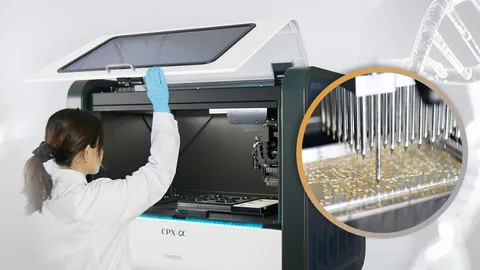
This app note explores how automated, image-based colony handling can improve efficiency, support reproducible colony selection, and maintain traceable records throughout high-throughput cloning workflows.View App Note / Case Study
These variables highlight the complexity of microplastic contamination in drinks and the need for standardization in laboratory testing protocols.
Reducing microplastic contamination
The ANSES study also investigated mitigation strategies by testing different cap-cleaning methods before bottling.
- Uncleaned caps: 287 particles per liter detected.
- Air-blown caps: Reduced to 106 particles per liter.
- Air-blown and rinsed caps: Further reduced to 87 particles per liter.
Practical interventions for beverage manufacturers
- Cap cleaning – Implementing air or solvent rinsing steps before bottling.
- Storage modifications – Reducing friction between caps during storage by altering packaging and handling conditions.
- Paint reformulation – Developing coatings that are less prone to abrasion and particle release.
- Alternative seal designs – Exploring non-plastic liners or innovative closure technologies that minimize microplastic shedding.
Around the Bottleneck: Chromatography-Free Mass Spectrometry
This infographic explores how chromatography-free MS bypasses traditional separation steps, enabling faster, simpler, and more cost-effective analysis without compromising data quality.View Infographic
These measures demonstrate that microplastic contamination is not inevitable and that simple adjustments in manufacturing processes can significantly reduce exposure.
Implications for public health and regulation
Currently, there is no established toxicological reference threshold for microplastics in beverages, meaning the health implications remain uncertain. While microplastics are known to accumulate in marine organisms and have been detected in human tissues, the dose–response relationship and long-term impacts on health are still under investigation.
For laboratory professionals and regulatory bodies, the findings highlight the importance of:
- Developing standardized analytical methods for microplastic detection.
- Establishing monitoring programs to evaluate contamination across beverage types and packaging materials.
- Collaborating with industry to mitigate contamination pathways before regulations are enforced.
The question “do glass bottles have microplastics?” can be answered with a clear yes – but not for the reasons many might assume. While the glass itself does not degrade into plastic fragments, painted caps and sealing components represent a significant source of microplastic contamination in beverages.
For laboratory professionals, the findings underscore the need to refine analytical methods for detecting microplastics in packaging and food products. For manufacturers, the research points to actionable solutions – from cap cleaning to reformulating paints – that could reduce contamination levels.
As concerns about microplastic contamination in drinks grow, the role of laboratory science will remain central in uncovering contamination pathways, advancing detection methods and informing both industry practices and regulatory policies.
This article is a rework of a press release issued by the ANSES Laboratory for Food Safety. Material has been edited for length and the content has been updated to provide additional context and details of related developments since the original press release was published on our website. This content includes text that has been created with the assistance of generative AI and has undergone editorial review before publishing. Technology Networks' AI policy can be found here.
 Add Technology Networks as a preferred Google source to see more of our trusted coverage.


