
Hotspot of Tropical Storm Clusters Are Shifting From the Pacific to Atlantic
Tropical cyclones do not always strike alone; sometimes they form in clusters.
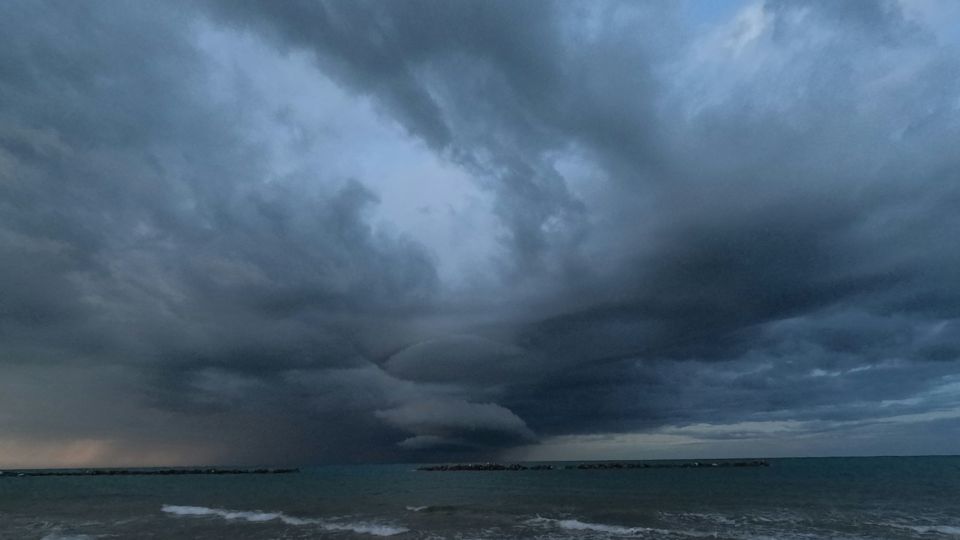
A new study co-led by Professor Dazhi XI, climatologist from the Department of Earth and Planetary Sciences at The University of Hong Kong (HKU), and Zheng-Hang FU, a PhD student from Fudan University reveals that over the past decades, clustered tropical cyclone—storms that occur in close succession—are becoming less frequent in the Northwestern Pacific, including Hong Kong, Japan, and the Philippines, while becoming more common in the North Atlantic, affecting regions such as the U.S. East Coast and the Caribbean. The study, titled “Shifting Hotspot of Tropical Cyclone Clusters in a Warming Climate,” was recently published in Nature Climate Change.
Tropical cyclones, commonly known as typhoons or hurricanes, do not always strike alone. Sometimes, they form in clusters—two or more storms developing simultaneously within the same ocean basin. This phenomenon is not rare—historically, only 40% of tropical cyclones appeared alone. For example, in September 2024, typhoon Bebinca and tropical storm Pulasan made landfall in Shanghai, within three days of each other, disrupting the city’s infrastructure before recovery efforts could fully begin.
These cluster events can cause disproportionate damage, as affected regions have limited time to recover between successive storms. Therefore, understanding the mechanisms and trends behind these events is essential for coastal risk management.
“We wanted to understand whether these clustering patterns are simply coincidental or whether something deeper is going on,” said Professor Dazhi Xi, climatologist at HKU Earth and Planetary Sciences and co-author of the study.
“We developed a probabilistic framework to investigate whether the observed changes in cyclone clusters could be explained by random factors alone. If clusters simply form by chance, their occurrence should depend only on how often storms form, how long they last, and when they occur during the season. So, we built a model based on these three factors to simulate storm clusters over the recent decade, giving us a baseline to compare against actual observations.”
Key findings from the study
- Clustered storms are increasing in the North Atlantic but declining in the Northwestern Pacific.
- Using a probabilistic model, the research suggests that changes in storm frequency are the primary driver behind the shifting of cluster hotspots. Other factors, such as storm duration and timing, play only secondary roles.
- However, in some years, the model significantly underestimates the actual number of clustered storms, indicating that not all clusters form by chance.
- These exceptions are linked to synoptic-scale waves—a series of train-like atmospheric disturbances that actively increase the chance of tropical cyclone cluster formation.
- The shift in clustering patterns appears to be driven by a La Niña–like global warming pattern, where the Eastern Pacific is warming more slowly than the Western Pacific. This warming pattern not only modulates storm frequency but also affects the strength of the synoptic-scale waves, further contributing to the relocation of cyclone clusters from the Pacific to the Atlantic.
Reference: Fu ZH, Xi D, Xie SP, et al. Shifting hotspot of tropical cyclone clusters in a warming climate. Nat Clim Chang. 2025. doi:10.1038/s41558-025-02397-9
This article has been republished from the following materials. Note: material may have been edited for length and content. For further information, please contact the cited source. Our press release publishing policy can be accessed here.
 Add Technology Networks as a preferred Google source to see more of our trusted coverage.

