
Humans Can Accurately Perceive Biodiversity Without Training
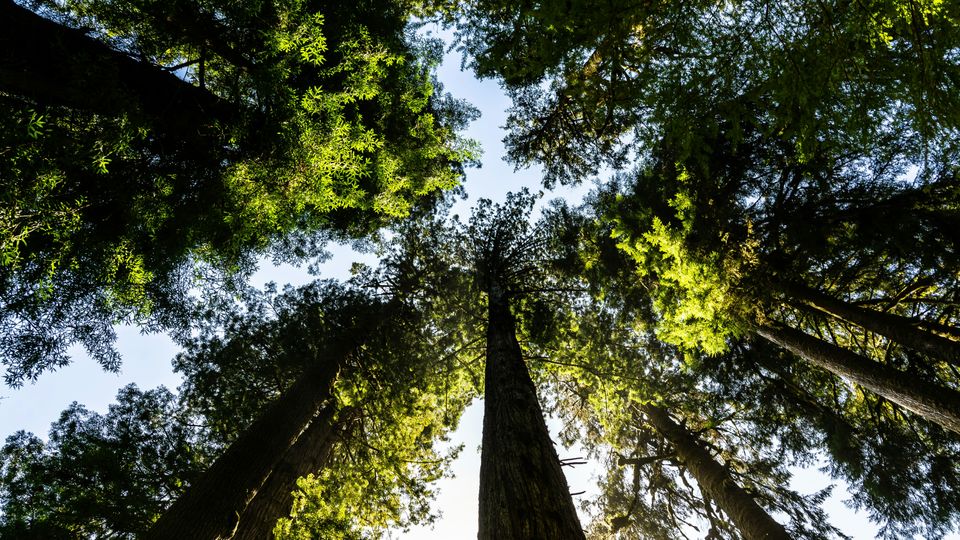
People’s intuitive perception of biodiversity through visual and audio cues is remarkably accurate and aligns closely with scientific measures of biodiversity. This is according to new research published in People and Nature.
In a new study led by researchers at the German Centre for Integrative Biodiversity Research (iDiv), the Helmholtz Centre for Environmental Research (UFZ) and the Friedrich Schiller University Jena, participants with no ecological training were asked to sort images and audio recordings of forests based on perceived biodiversity.
The researchers found that the biodiversity levels that participants perceived from the images and audio recordings closely matched the actual biodiversity of the forests.
How we perceive the natural world has implications for our health. Previous research has suggested that it is perceived biodiversity, rather than measured biodiversity, that is linked to our wellbeing.
Lead author Kevin Rozario, iDiv, said: “Because it’s suspected that perceived biodiversity translates into mental health benefits, it’s important to identify what people perceive with regards to biodiversity, what the contribution of the different senses could be, and under which circumstances people’s perception of biodiversity best aligns with what ecologists measure.”
To understand what indicators of biodiversity people were perceiving, the researchers also asked the study participants to sort the images and audio recordings according to any criteria that stood out to them.
Visually, people noticed vegetation density, light conditions or color. Acoustically, people noticed birdsong characteristics, volume or emotions that the audio evoked.
“Not only are we experiencing an extinction of species, but also and extinction of biodiverse experiences.” said Kevin Rozario.
“We recommend to conserve and restore diverse forests characterized by a variety of tree species and structures to also provide habitats for different vocalizing bird species. These conservation measures will have the dual benefit of meeting conservation goals while also increasing people’s experience of biodiversity and therefore likely increasing mental wellbeing.”
In each of the two sorting studies, 48 participants were presented with 57 photographs or 16 audio recordings of forest patches throughout Germany, Belgium and Poland with varying levels of biodiversity.
The actual biodiversity of the forests in the photographs was assessed using a combination of four commonly used forest diversity indicators: tree species richness, forest structural diversity, understory structural diversity and understory abundance. Actual biodiversity in the audio files was measured via bird species richness.
The researchers caution that people’s abilities to accurately perceive biodiversity may be reliant on them being able to directly compare environments with different biodiversity levels. They point to similar studies that found that participants could not easily perceive biodiversity when they were asked to rate one environment on its own.
The researchers also note that the majority of their study participants were university educated women and that future studies could look to replicate their methods with more representative samples of the general population.
Reference: Rozario K, Shaw T, Marselle M, et al. Perceived biodiversity: Is what we measure also what we see and hear? People Nat. 2025. doi: 10.1002/pan3.70087
This article has been republished from the following materials. Note: material may have been edited for length and content. For further information, please contact the cited source. Our press release publishing policy can be accessed here.
 Add Technology Networks as a preferred Google source to see more of our trusted coverage.

