Innovative Material Could Help Clean Up Chernobyl and Fukushima
Complete the form below to unlock access to ALL audio articles.
Materials which could be used to help clean-up the Chernobyl and Fukushima nuclear power stations have been developed by engineers at the University of Sheffield.
The materials, produced by Dr Claire Corkhill and her team from the University’s Department of Materials Science and Engineering, in collaboration with scientists in Ukraine, can simulate the Lava-like Fuel Containing Materials (LFCMs) that are obstructing decommissioning efforts at the nuclear disaster sites.
Published in the journal Nature Materials Degradation, the development is the first time a close approximation of a real LFCM has ever been achieved.
LFCMs are a mixture of highly radioactive molten nuclear fuel and building materials that fuse together during a nuclear meltdown.
During the Chernobyl and Fukushima nuclear accidents, radioactive materials mixed with fuel cladding and other building materials in the reactors and are now incredibly difficult and dangerous to remove from the sites. If left untreated, the LFCMs pose an ongoing radiological safety risk to the local environment.
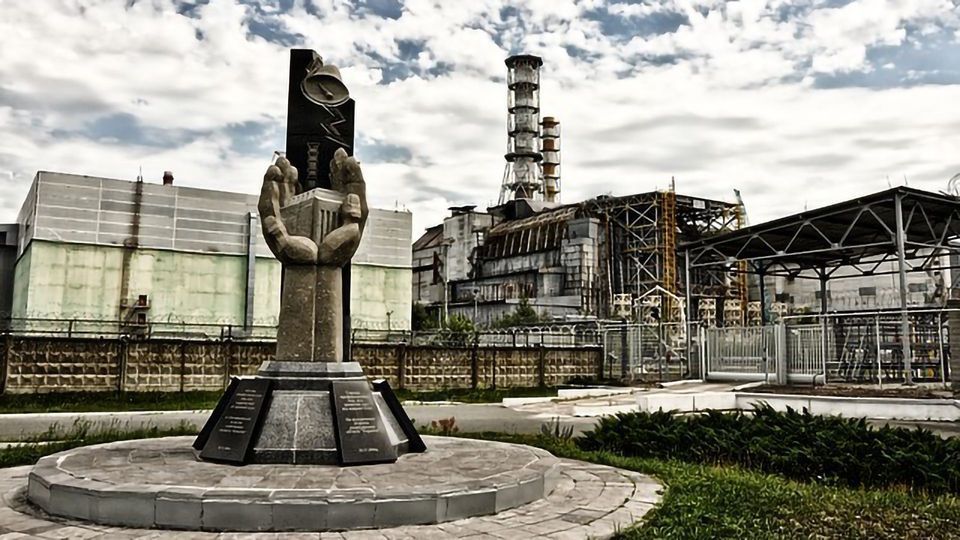
In the case of Chernobyl, the mixture of molten fuel, cladding, steel, concrete and sand formed nearly 100 tonnes of highly radioactive glass-like lava, which flowed through the nuclear power plant and has solidified into large masses.
The masses present a highly dangerous risk to personnel and the environment in the surrounding area and could remain a hazard for decades, even millennia, unless something can be done to stabilise or remove them. However, very few samples of these meltdown materials are available to study and the masses are often too hazardous for people or even robots to get close to in order to better understand the behaviour of the materials.
Dr Corkhill said: “Understanding the mechanical, thermal and chemical properties of the materials created in a nuclear meltdown is critical to help retrieve them, for example, if we don’t know how hard they are, how can we create the radiation-resistant robots required to cut them out?”
In the new research published today (30 January 2020), the University of Sheffield engineers at the NucleUS Immobilisation Science Laboratory (ISL) report their development of small batches of low radioactivity materials that can be used to simulate LFCMs.
These simulated materials have been used to analyse the thermal characteristics and corrosion kinetics of LFCMs, which produced results that are very close to those of real LFCM samples reported by previous studies.
The study of the corrosion behaviour is vital to support ongoing decommissioning efforts – both at Chernobyl and the Fukushima Daiichi Nuclear Power Plant – where LFCM-type materials are thought to have formed, and remain submerged in water used to cool the melted core. Using the new simulant materials developed at the University of Sheffield, Dr Corkhill and her team are collaborating with researchers at the University of Tokyo and the Japan Atomic Energy Agency to investigate the process of highly radioactive dust formation that occurs at the surface of LFCM when water is removed.
Dr Corkhill added: “The major difficulty in understanding the real materials is that they are too hazardous to handle and, although the Chernobyl accident happened over 33 years ago, we still know very little about these truly unique nuclear materials.
“Thanks to this research, we now have a much lower radioactivity simulant meltdown material to investigate, which is safe for our collaborators in Ukraine and Japan to research without the need for radiation shielding. Ultimately this will help advance the decommissioning operations at Chernobyl and also at Fukushima too.”
The investigation into the corrosion behaviour needs a lot more work, but having established a starting point, the research team hopes to advance this work quite rapidly. Dr Corkhill noted: “Since the clean-up of Chernobyl is anticipated to take around 100 years, and Fukushima at least 50 years, anything we can do to speed up the process will be beneficial to Ukraine and Japan, in both financial and safety terms.”
The development at Sheffield comes ahead of the Olympic Games being held in Japan this year. The Olympic torch relay is due to start in J-village - a sports ground close to the site of Fukushima - where high levels of radioactivity have been found.
Dr Corkhill added: “Until we have developed an understanding of the meltdown materials inside Fukushima, we can't remove them -- and until then, there may always be a small risk that radioactive materials from the reactors may find their way to the surrounding environment.”
Dr Corkhill is part of the University of Sheffield Energy Institute, which is finding low-carbon solutions to some of the world’s biggest energy challenges.
The Energy Institute carries out energy research across a wide spectrum of fields, including renewable, nuclear and conventional energy generation, energy storage, energy use and carbon capture, utilisation and storage technology. Its multi- and interdisciplinary research teams work with industry and government on sustainable solutions.
Research into nuclear energy is one of the institute’s strengths, with its academics conducting world leading research to ensure nuclear power can generate electricity safely, securely and sustainably.
Reference
Synthesis, characterisation and corrosion behaviour of simulant Chernobyl nuclear meltdown materials. Sean T. Barlow, Daniel J. Bailey, Adam J. Fisher, Martin C. Stennett, Clémence Gausse, Hao Ding, Viktor A. Krasnov, Sergey Yu Sayenko, Neil C. Hyatt & Claire L. Corkhill. npj Materials Degradation volume 4, Article number: 3 (2020),
This article has been republished from the following materials. Note: material may have been edited for length and content. For further information, please contact the cited source.