
Why Is Soy Sauce So Salty?
Studies show that soy sauce often tastes saltier than a sodium chloride solution with the same sodium concentration.
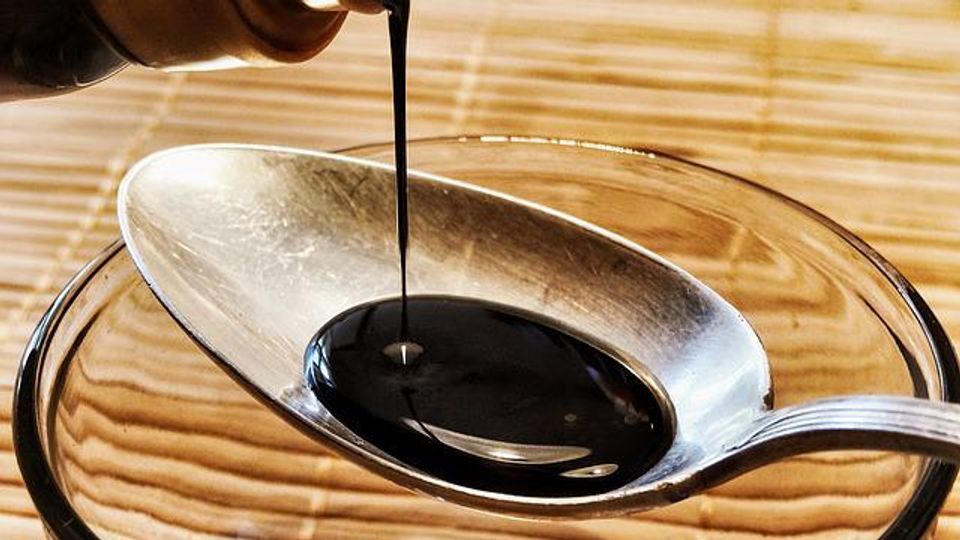
Soy sauce’s ability to intensify savory flavors, balance sweetness, and enhance mouthfeel has made it a model system for understanding complex taste perception. Yet a persistent question remains: why is soy sauce so salty?
At face value, the answer seems simple—soy sauce contains a high concentration of sodium chloride. However, sensory analysis shows that soy sauce tastes saltier than an equivalent sodium solution. This discrepancy highlights a broader scientific challenge: flavor is not dictated by a single compound but emerges from interactions between salts, peptides, amino acids, and volatile compounds shaped by fermentation.
Advances in fermented foods chemistry, analytical separation techniques, and sensory-guided fractionation have deepened understanding of how non-salt components enhance salt perception. Studies assessing soy sauce at the molecular level demonstrate that small proteins and peptides have been shown to contribute to or modulate salty, umami, and bitter sensations, reshaping how food scientists interpret sodium-driven taste.
Understanding saltiness beyond sodium chloride
How humans perceive saltiness
Saltiness is primarily detected through epithelial sodium channels (ENaCs) on the tongue, which respond to sodium ions entering taste receptor cells. This ionic influx triggers neuronal signaling interpreted by the brain as salt taste. However, sodium is not the only contributor to perceived saltiness.
Research in sensory physiology shows that compounds such as amino acids, peptides, and organic acids can enhance or suppress saltiness by modifying receptor sensitivity or influencing saliva composition and ion mobility. This phenomenon is central to understanding why fermented foods often taste saltier than their sodium content alone would predict.
Salt content in soy sauce
Chemically, traditional soy sauce contains between 18–20% sodium chloride by weight, depending on the style of soy sauce, a concentration comparable to saturated saline solutions. However, when expert panels compare soy sauce with salt solutions matched for sodium concentration, soy sauce still produces higher perceived saltiness intensity. This outcome provided early evidence that other flavor compounds play a role in amplifying salt perception.
The role of fermentation in soy sauce chemistry
Soy sauce production involves a multistep fermentation process that transforms soybeans and wheat into a chemically dense matrix of flavor-active compounds. Unlike single-ingredient seasonings, fermented foods accumulate hundreds of metabolites over time through microbial metabolism and enzymatic reactions.
Key microbial actors include:
- Aspergillus species during koji fermentation
- Lactic acid bacteria
- Salt-tolerant yeasts
These microorganisms break down proteins, carbohydrates, and lipids into smaller molecules that directly interact with taste receptors.
Fermentation stages and flavor development
The complexity of soy sauce flavor emerges across multiple production stages, each contributing distinct chemical transformations.
Table 1: Fermentation stages and associated flavor development.
Exploring Host–Pathogen Interactions With Single-Cell Metabolomics
This webinar explores why some macrophages remain uninfected during mycobacterial infection despite being located next to infected cells.View Webinar
| Fermentation stage | Key biochemical processes | Major flavor outcomes |
| Koji preparation | Protein hydrolysis by fungal proteases | Release of free amino acids and peptides |
| Brine fermentation | Microbial metabolism under high salt | Formation of organic acids, alcohols, and esters |
| Aging/maturation | Non-enzymatic reactions (Maillard chemistry) | Development of color, depth, and roasted notes |
| Refinement | Filtration and heat stabilization | Flavor integration and sensory balance |
Long fermentation durations—often several months—allow gradual accumulation of peptides and amino acid derivatives that influence saltiness and umami perception.
Why sodium alone cannot explain soy sauce saltiness
Early analytical models assumed saltiness arose solely from mineral content. While sodium chloride remains essential, this view fails to account for:
- Increased saltiness intensity at lower sodium concentrations
- Persistent salty taste after dilution
- Synergistic enhancement of umami and bitterness
These discrepancies prompted investigations into protein-derived compounds.
Proteins and peptides as salt taste modulators
Identification of flavor-enhancing peptides
Advanced chemical separation methods, including chromatographic fractionation, mass spectrometry, and sensory evaluation, have revealed the presence of small peptides that actively modify taste perception. In soy sauce, several proline-modified dipeptides and larger peptides were identified as contributing to salty and umami sensations.
Sensitive Quantitation of Antisense Oligonucleotides in Plasma
Measuring antisense oligonucleotides (ASOs) in plasma can be challenging when concentrations are low and matrix interference affects selectivity.View App Note / Case Study
These peptides do not activate ENaC channels directly. Instead, they:
- Enhance sodium ion transport efficiency
- Modify saliva viscosity and ion distribution
- Interact with umami and bitter taste receptors
Notably, some soy sauce peptides increased saltiness perception even in low-sodium fractions.
The relationship between umami and saltiness
Umami perception arises from activation of T1R1/T1R3 receptors, primarily by glutamate and certain peptides. Sensory studies show strong cross-talk between umami and salty taste pathways. When umami-active compounds are present, saltiness intensity increases even when sodium levels remain constant.
Soy sauce contains:
- High levels of free glutamate
- Umami-enhancing peptides
- Nucleotide derivatives that reinforce savory depth


The Bigger Picture: Combining Mass Spectrometry and Proximity Extension Assay
This webinar will explore how mass spectrometry (MS) and proximity extension assay (PEA) technologies can be used together, providing practical guidance for designing and analyzing integrated proteomics studies.View Webinar
Together, these compounds amplify saltiness perception and elongate flavor persistence.
Analytical approaches used to decode flavor
One effective strategy employed in food research involves recreating flavor profiles from identified compounds and validating them through trained sensory panels. Initial reconstructions using known compounds often fall short, highlighting missing components.
Only after incorporating newly identified peptides and proteins were researchers able to reproduce soy sauce’s full salty, bitter, and umami profile. This approach demonstrates the value of integrating analytical chemistry with sensory science.
Key laboratory techniques
Laboratories investigating fermented foods commonly use:
- High-performance liquid chromatography for peptide separation
- Mass spectrometry for molecular identification
- Taste dilution analysis to rank sensory relevance
- Recombination experiments to verify completeness of flavor models
These tools allow food scientists to connect molecular composition to human perception.


Achieve Five-Star Quality Control in Biopharmaceutical Development
This infographic explores the analytical techniques, compliance considerations, and emerging technologies shaping modern biopharma quality control workflows.View Infographic
Implications for food science and product development
Understanding how peptides enhance saltiness opens new pathways for reducing sodium content without sacrificing taste. By optimizing fermentation to promote peptide formation, manufacturers may achieve comparable salt perception with lower sodium levels.
The chemical profile of soy sauce varies with:
- Microbial strain selection
- Fermentation duration
- Temperature and salt concentration
Fine-tuning these variables can selectively increase desirable peptides and umami compounds while maintaining microbial stability.
Why is soy sauce so salty? The chemistry behind an intensely savory flavor
So, why is soy sauce so salty? The answer lies beyond sodium chloride alone. While salt provides the foundation, the true intensity of soy sauce saltiness emerges from a dense network of peptides, amino acids, and fermentation-derived compounds that amplify taste perception.
For laboratory professionals, soy sauce demonstrates how fermentation chemistry can reshape sensory outcomes and how targeting non-sodium contributors offers promising routes for flavor optimization. As analytical tools continue to improve, fermented foods will remain a rich platform for understanding the molecular basis of taste.
This article is a rework of a press release issued by the American Chemical Society. Material has been edited for length and the content has been updated to provide additional context and details of related developments since the original press release was published on our website. This content includes text that has been created with the assistance of generative AI and has undergone editorial review before publishing. Technology Networks' AI policy can be found here.
 Add Technology Networks as a preferred Google source to see more of our trusted coverage.


