
Tree Bark Can Remove Pharmaceutical Pollution From Wastewater
The key to beating antibacterial resistance could be in the trees.
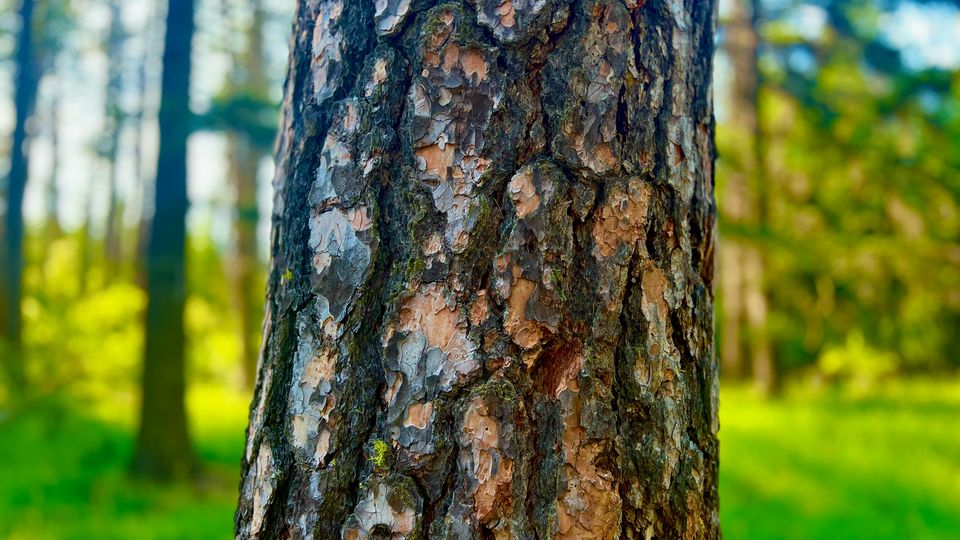
Researchers at the University of Oulu, Finland, have developed a new approach to remediate wastewater using a type of modified pine tree bark to remove residues of antibiotics, antidepressants, and blood pressure medication from wastewater effluent.
The research, described in a doctoral thesis by doctoral researcher Mahdiyeh Mohammadzadeh, presents a useful, low-cost way to protect aquatic ecosystems from the hazards of pharmaceutical pollution.
“Widespread consumption of pharmaceuticals and their presence in the aquatic ecosystem is an environmental concern,” Mohammadzadeh told Technology Networks. “The need for cost-effective and sustainable wastewater treatment methods prompts the utilization of bio-based adsorbents such as pine bark, [which is] a forestry residue.”
Why are antibiotics in wastewater a problem?
Antibiotics and other drugs are frequently detected in municipal and industrial wastewaters, with wastewater from hospitals, animal slaughterhouses, and residential areas being particularly notable sources. If insufficiently treated, such wastewater can drive antibiotic resistance in polluted areas.
“Pharmaceuticals are considered contaminants of emerging concern, especially antibiotics. When released into the wastewater treatment plants, they accelerate the spread of antibiotic-resistant genes and antibiotic-resistant bacteria. Since conventional wastewater treatment methods are unable to fully remove the pharmaceutical residues, they end up in the environment and pose potential hazards to human health and the aquatic ecosystem,” explained Mohammadzadeh.
The European Union’s Urban Wastewater Directive (2024) has spurred calls for more effective treatment methods for urban wastewater, particularly for removing “micropollutants” such as chemical and drug residues.
Water treatment facilities already use methods to remove micropollutants; however, their effectiveness is limited. One study of 12 micropollutant drugs found that, even with quaternary treatment processes that can achieve 80% removal, the level of the drugs remaining in wastewater could still pose environmental risks.
“Commercial sorbents are costly, which limits their application,” Mohammadzadeh added. “Therefore, there is a need for cost-effective, sustainable, and efficient adsorbents.”
Modified tree bark effectively filters pharmaceuticals from water
Pine bark is a byproduct of the timber industry and is already commonly used as a sustainable and inexpensive decorative material in landscaping and soil erosion control. Scientifically, pine bark is of interest as it is abundant in polyphenolic compounds that can be easily chemically modified, enhancing its versatility.
In a small-scale test, the University of Oulu researchers set up 4 small columns containing different biosorbent materials to study their effectiveness at removing certain residues from water over 33 days. Two columns were filled with a mixture of biochar and activated carbon—both commonly used industrial adsorbents—with the other two containing a combination of biochar and pine bark that had been modified using magnetite (iron oxide).
The columns were then used to treat water which had been mixed with 12 pharmaceutical drugs, including: antibiotics (such as trimethoprim), antidepressants (venlafaxine), painkillers (diclofenac), blood‑pressure medicines (losartan), and other commonly used pharmaceuticals. The modified pine bark material performed well in this test, demonstrating that it could be used as a potential low-cost alternative to activated carbon.
“Activated carbon is more effective in the removal of pharmaceuticals; however, magnetite-pine bark also presented high adsorption efficiencies for various pharmaceuticals in comparison to activated carbon in small-scale columns,” Mohammadzadeh said.
The researchers then carried out a four-month pilot-scale trial, using a combination of biochar and the magnetite-pine bark to treat real wastewater samples. While micropollutants were present in very low concentrations in the treated wastewater, many fell below detection limits.
In the pilot trial, antibiotics that had been present in very high initial concentrations were significantly reduced; six antibiotics were removed to below detection limits. The painkiller naproxen was also completely removed to below detection limits, while the painkillers tramadol and ketoprofen were removed at 89.0% and 81.9% efficiencies, respectively. Depending on the compound, removal efficiencies could exceed 90%, as was the case for the antidepressant venlafaxine (93.7%) and the diuretic furosemide (93.5%), among others.
“The pilot-scale study for four months confirmed the efficiency of magnetite-pine bark in the removal of various pharmaceuticals from real wastewater effluent, and it showed that this biosorbent has the potential to be applied in large scale after being studied in a large-scale pilot,” said Mohammadzadeh. “To scale up this process, longer-term studies are needed to optimize the regeneration process of biosorbent further to reduce iron release from the biosorbent after regeneration, and reduce biotoxicity after regeneration.”
About the interviewee:
Mahdiyeh Mohammadzadeh is a doctoral researcher at the University of Oulu. She holds a bachelor’s degree and a master’s degree in chemical engineering and defended her doctoral thesis at the University of Oulu in January 2026. She will soon obtain a doctoral degree in process and environmental engineering. Mohammadzadeh’s research focuses on the removal of pharmaceutical residues from wastewater effluent.
 Add Technology Networks as a preferred Google source to see more of our trusted coverage.


