
COVID Vaccination During Pregnancy May Protect Against Preeclampsia
COVID-19 booster vaccination during pregnancy was linked to significantly lower odds of preeclampsia in a global study.
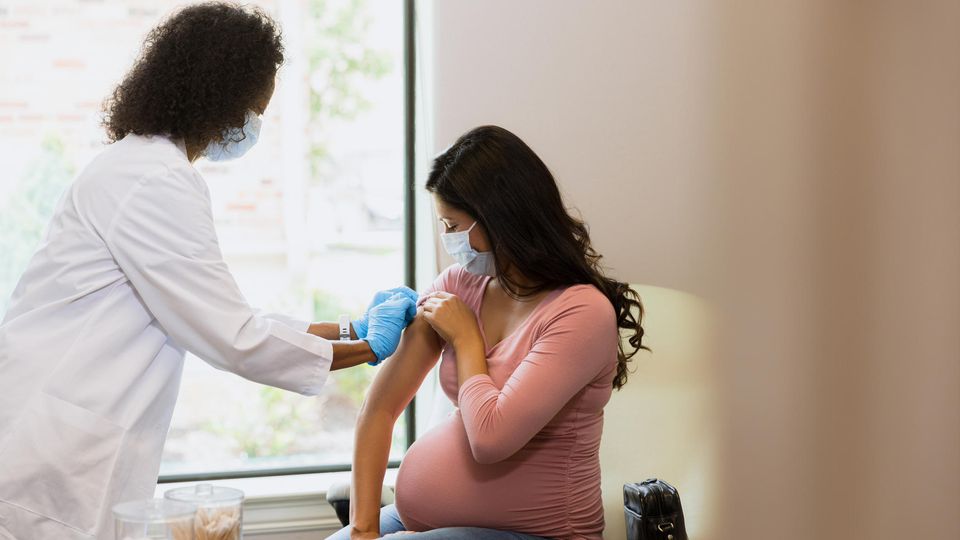
Preeclampsia remains one of the most dangerous and least understood complications of pregnancy.
In a global study across 18 countries, INTERCOVID researchers reported that COVID-19 vaccination during pregnancy may reduce that risk. The analysis of more than 6,500 pregnancies found booster vaccination was linked to significantly lower odds of preeclampsia, even in women who never developed COVID-19.
“We offer evidence from the first large study suggesting that COVID vaccination may protect against one of the most serious pregnancy complications,” said study co-author Dr. Jagjit S. Teji, a neonatologist at Ann & Robert H. Lurie Children's Hospital of Chicago and clinical assistant professor of pediatrics at Northwestern University Feinberg School of Medicine.
Preeclampsia risk may be linked to COVID infection
Preeclampsia is one of the most deadly complications of pregnancy, affecting ~3–8% of pregnancies, and can lead to organ damage, premature birth, and death in severe cases. It is defined by high blood pressure and signs that organs such as the liver and kidneys are under strain.
Despite decades of research, scientists still do not fully understand why it happens.
Prevention options are limited, with a low-dose of aspirin often used in high-risk pregnancies; however, this does not prevent all cases.
When COVID-19 emerged, doctors noticed that pregnant women infected with SARS-CoV-2 were more likely to develop preeclampsia.
Both COVID-19 and preeclampsia involve inflammation and damage to blood vessels. Viral infection can disrupt the placenta and affect blood flow, increasing strain on the mother’s body.
This led researchers to wonder whether infection could increase the risk of preeclampsia, and therefore, could vaccination reduce it?
COVID vaccines are known to protect pregnant women from severe illness; however, they also affect the immune system more broadly, with research suggesting that they may reduce harmful inflammation or stabilize blood vessels.
The new INTERCOVID analysis set out to answer: Does COVID vaccination during pregnancy lower the risk of preeclampsia, and does this happen independently of preventing infection?
COVID vaccine and preeclampsia risk in pregnancy
The team analyzed data from 6,527 pregnant women recruited in 18 countries between March 2020 and June 2022. Participants were compared based on vaccination status. The researchers tracked who developed COVID-19 during pregnancy and who went on to develop preeclampsia.
Statistical models were used to adjust for factors that affect preeclampsia risk, including age, body weight, smoking, medical conditions, and location.
Overcoming Immune Suppression in Pancreatic Cancer With mRNA
In this webinar, explore findings from a recent Nature Communications study demonstrating enhanced immune cell activity, suppressed tumor growth, and improved survival in preclinical pancreatic cancer models.View Webinar
Contracting COVID-19 during pregnancy increased the risk of preeclampsia by 45%. However, among unvaccinated women, the risk increase reached 78%.
Vaccination was linked to a lower risk, and booster vaccinations reduced the odds of preeclampsia by ~33% compared with unvaccinated women. However, the reduction in preeclampsia risk was only statistically significant in women who received booster doses, while the effect was smaller and less clear in women who only received the initial vaccine series.
Risk fell by 42% in women with existing health conditions such as diabetes or hypertension.
The benefits also extended beyond preeclampsia, with booster vaccination associated with a 32% lower risk of severe maternal complications and a 29% lower risk of severe newborn complications or death.
The protective effect appeared even in women who never developed COVID-19, suggesting that vaccination might be doing more than preventing infection.
COVID vaccination and preeclampsia prevention
The findings add to the evidence that COVID vaccination is safe in pregnancy and may provide wider health benefits.

Inflammatory Protein Biomarkers in Clinical Studies
Explore how inflammatory protein profiling revealed treatment effects and distinct Long COVID/ME-CFS signatures, and discover how these approaches can support biomarker discovery, patient stratification and longitudinal research.View Webinar
“Our results support the importance of strengthening COVID vaccination programs during pregnancy, emphasizing boosters and ensuring that pregnant people across the world have equitable access to the vaccine,” said Teji.
“These results go beyond the known benefits of COVID-19 vaccination in pregnancy,” said senior co-author Dr. José Villar, the principal investigator of the INTERCOVID consortium from the Nuffield Department of Women’s & Reproductive Health at the University of Oxford. “We now have evidence that maternal vaccination may influence pathways involved in preeclampsia development, suggesting a broader immunological or vascular benefit of vaccination.”
However, the study was observational, which means that it cannot prove the vaccine directly prevents preeclampsia. Women who choose vaccination may also differ from those who do not; for example, they may be more likely to take preventive medicines such as aspirin.
The biological mechanism also remains unclear. Vaccinated women are less likely to develop severe COVID-19, which itself increases preeclampsia risk.
Future research is needed to further understanding of how vaccination affects the immune system and the placenta.
The study provides strong support for COVID vaccination in pregnancy; however, its most important contribution may be opening new lines of research into preeclampsia itself—a condition that still lacks clear answers.
Reference: Cavoretto PI, Villar J, Farina A, et al. COVID-19 vaccination status during pregnancy and preeclampsia risk: the pandemic-era cohort of the INTERCOVID consortium. eClinicalMedicine. 2026:103785. doi: 10.1016/j.eclinm.2026.103785
This article is a rework of a press release issued by Ann & Robert H. Lurie Children's Hospital of Chicago. Material has been edited for length and content.
 Add Technology Networks as a preferred Google source to see more of our trusted coverage.


