
Researchers Develop Antibodies To Target Autoimmune Inflammation
This discovery may help develop new treatments for autoimmune diseases.
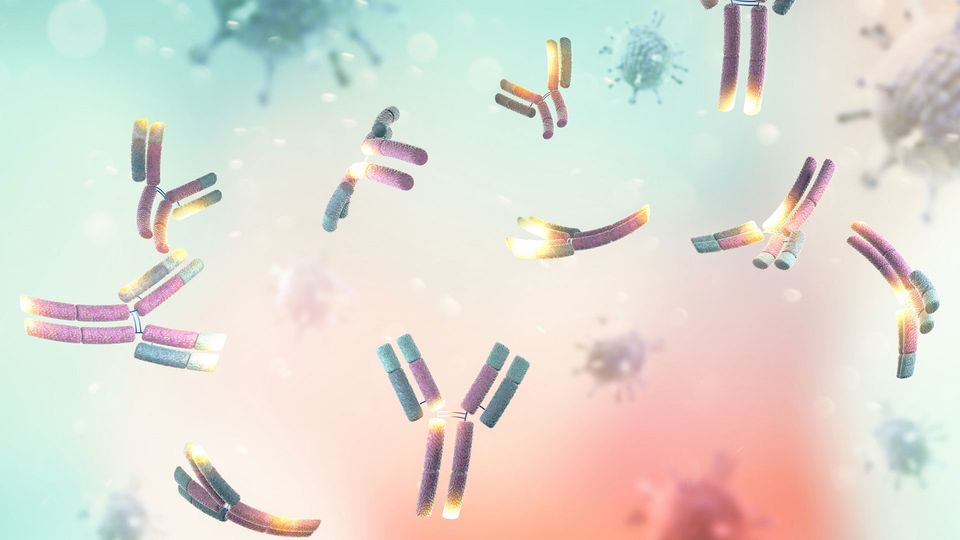
An international team of researchers led by UMC Utrecht has developed two new antibodies that can cleverly inhibit the immune system. This discovery may help develop new treatments for autoimmune diseases, such as rheumatoid arthritis and immune-mediated thrombocytopenia.
The immune system protects the body from viruses, bacteria and other pathogens. In this process, immune cells play an important role. On the outside of these cells are so-called receptors, which recognize antibodies. One of these receptors is FcγRI (also called CD64). Normally, this receptor helps the body clear pathogens: when an antibody binds to a bacterium or virus, it forms an immune complex, which is recognized by FcγRI. The receptor then activates immune cells to clean up the invader, such as by "eating" it or by sending signals that in turn attract and activate other immune cells so they can clean up the bacteria or virus.
In some autoimmune diseases, however, this system does not work properly. Normally, antibodies are tightly controlled so that they do not mark own cells as "foreign to the body"; otherwise, they are cleared by immune cells. In autoimmune diseases, some antibodies escape this control. As a result, antibodies against own tissues circulate in the blood, attaching to body cells and forming immune complexes. These immune complexes activate FcγRI on immune cells, causing the immune cells to attack one's own tissues and cause an inflammatory response. This can happen, for example, in rheumatoid arthritis (RA), where the joints become inflamed. It also happens in immune-mediated thrombocytopenia (ITP), in which own platelets are attacked and broken down at an accelerated rate. This reduces the number of platelets, increasing the risk of bleeding.
More than 30 years of searching for a solution
For more than 30 years, researchers have been trying to develop antibodies that can block FcγRI. The problem, however, is that this receptor binds so strongly to antibodies that previous technologies were unable to break this binding. The UMC Utrecht researchers wanted to develop a solution to this problem. Using modern laboratory techniques, together with Prof. Dr. Matthias Peipp (Kiel University, Germany), the researchers were able to circumvent this obstacle. In the process, they discovered two unique antibodies, C01 and C04, which block the receptor at exactly the right place without the immune system taking action. They published their results this week in the top journal Nature Communications.
The research was led by Prof. Dr. Jeanette Leusen of the Antibody Therapy group at the Center for Translational Immunology (UMC Utrecht) and conducted by PhD student Tosca Holtrop, in close collaboration with experts from universities in Kiel, Leiden, Utrecht and Erlangen. "This research was more than a decade in the making and was a real team effort," says Leusen. "Everyone made a crucial contribution. Without this collaboration, we could never have achieved this."
Promising results
Laboratory studies showed that the new antibodies bind much more strongly to FcγRI than the natural antibodies in the blood. As a result, they can efficiently detach and replace unwanted immune complexes and prevent 90 percent of new immune complexes from binding. Importantly, the new antibodies do not activate the receptor itself, preventing additional inflammation. With the help of Prof. Dr. Roger Schutgens and Dr. Rolf Urbanus (both from the Van Creveldkliniek, UMC Utrecht), a laboratory model for ITP was set up. In this model, both C01 and C04 were able to prevent antibody-bound platelets from healthy donors from adhering to immune cells from ITP patients. In an ITP mouse model conducted by Prof. Dr. Anja Lux (Friedrich-Alexander University, Erlangen-Nuremberg), mice injected with C01 had significantly more platelets than mice that had not received the antibody. In addition, in collaboration with Prof. Dr. René Toes (LUMC), the antibodies were tested in laboratory models of RA. Here, C01 and C04 effectively blocked autoantibody-immune complexes from patients from adhering to different immune cells from healthy donors.
A new avenue for therapy
The discovery of C01 and C04 is thus an important step toward targeted therapies that can reduce harmful inflammation in patients with autoimmune diseases without weakening the immune system. "These antibodies not only give us new insights into how the immune system works," says research leader Jeanette Leusen. "The success of this project is a wonderful example of years of collaboration between researchers from different countries and disciplines. Together, we have developed an approach that offers hope for safer treatments for people with autoimmune diseases, because the antibodies precisely block the excessive inflammatory response without affecting other functions of the immune system."
Reference: Holtrop T, Brandsma AM, Feitsma LJ, et al. Preclinical assessment of two FcγRI-specific antibodies that competitively inhibit immune complex-FcγRI binding to suppress autoimmune responses. Nat Commun. 2025;16(1):10068. doi: 10.1038/s41467-025-65133-z
This article has been republished from the following materials. Note: material may have been edited for length and content. For further information, please contact the cited source. Our press release publishing policy can be accessed here.
 Add Technology Networks as a preferred Google source to see more of our trusted coverage.

