
Scientists Boost Natural Cancer Killers With CRISPR
CRISPR mapping reveals how to boost natural killer cells, paving the way for stronger cancer therapies.
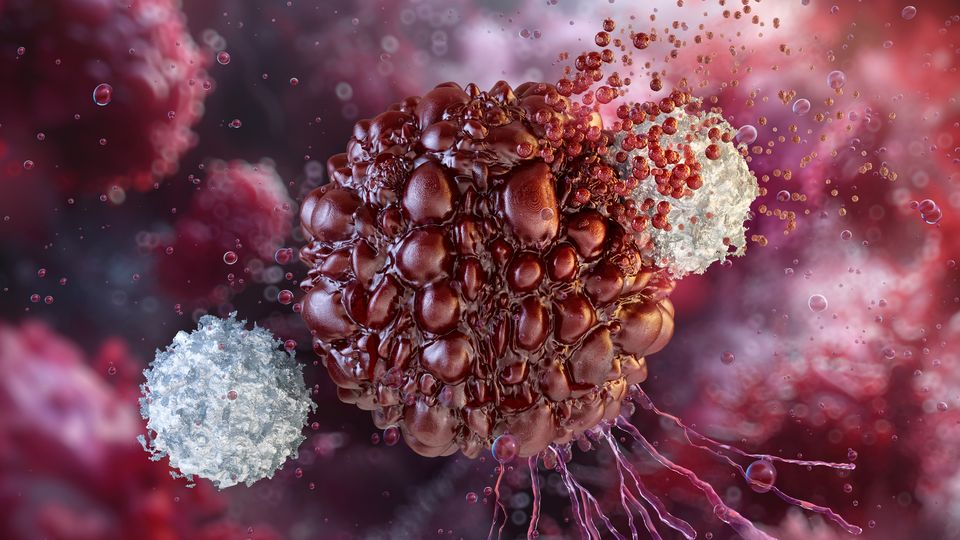
Researchers at The University of Texas MD Anderson Cancer Center have developed the first genome-wide CRISPR screening platform tailored for primary human natural killer (NK) cells. The tool, called PreCiSE, enabled the team to identify key genetic regulators that influence NK cell activity in cancer.
Natural killer (NK) cells
NK cells are a type of immune cell that can kill infected or cancerous cells without prior sensitization.
Tumor microenvironment
This refers to the area surrounding a tumor, which includes various cells, blood vessels, signaling molecules and immune factors.
CRISPR screening
A genome-wide CRISPR screen uses the CRISPR-Cas9 system to knock out genes across the genome in a high-throughput manner.
Published in Cancer Cell, the study outlines how suppressive pressures within the tumor microenvironment limit NK cell function. By using PreCiSE to screen the genome, the researchers found multiple pathways and molecular checkpoints that can be edited to strengthen NK cell responses to cancer.
“PreCiSE is more than a screening tool. It is a roadmap that reveals how tumors suppress our cells and how to reengineer CAR NK cells to resist those pressures across many cancer types.”
Dr. Katy Rezvani.
Natural killer cells are part of the innate immune system and contribute to early defense against malignancies. They can also be engineered to express chimeric antigen receptors (CARs), creating CAR NK cells that are being tested in clinical trials for various blood and solid cancers. However, these therapies often face barriers due to the immune-suppressive environment around tumors.
Chimeric antigen receptor (CAR)
A CAR is an engineered receptor that can be added to immune cells such as T cells or NK cells. It enables them to recognize and attack cancer cells by binding to specific proteins on their surface.
Boosting immune function through gene editing
The PreCiSE screen revealed targets that, when edited, improved both innate NK and CAR NK cell function. These edits led to better metabolic activity, greater production of inflammatory cytokines and expansion of cytotoxic NK cell subsets, even in tumor models resistant to existing therapies.
The researchers focused on three key genes – MED12, ARIH2 and CCNC – for validation in preclinical models. MED12 and CCNC are involved in pathways shared with T cell biology, while ARIH2 appears to be specific to NK cells. The study emphasizes that while these genes are important, the broader value lies in the full map of potential targets revealed by the screen.
In vivo validation showed that disrupting these genes could enhance NK cell resilience and effectiveness in challenging tumor settings. The data provide a roadmap for designing next-generation CAR NK cell therapies that are more resistant to tumor-mediated suppression.
Platform designed for primary NK cells
Unlike earlier approaches that relied on NK cell lines, PreCiSE is optimized for genome-wide discovery in primary human NK cells. This allows researchers to study gene function in a more clinically relevant context and develop therapies with better translational potential.
By targeting regulators revealed through this platform, the researchers aim to design CAR NK cells that are more adaptable across different tumor types and immune environments.
“This has given us significant insight into the next generation of cell therapies that have the potential to be more powerful, precise and resistant to cancer.”
Dr. Katy Rezvani.
The Rezvani Laboratory continues to lead efforts in engineered NK cell therapies and is advancing clinical trials for patients with advanced cancers. The current work provides a basis for further developing CAR NK approaches using gene editing to overcome immune suppression.
Reference: Biederstädt A, Basar R, Park JM, et al. Genome-wide CRISPR screens identify critical targets to enhance CAR-NK cell antitumor potency. Cancer Cell. doi: 10.1016/j.ccell.2025.07.021
This article has been republished from the following materials. Note: material may have been edited for length and content. For further information, please contact the cited source. Our press release publishing policy can be accessed here.
This content includes text that has been generated with the assistance of AI. Technology Networks' AI policy can be found here.
 Add Technology Networks as a preferred Google source to see more of our trusted coverage.

