
How AI BioDesign Will Harness Nature’s Principles for Drug Discovery
The AI BioDesign program will design and test new biomolecules, laying the foundation for the development of novel therapeutics.
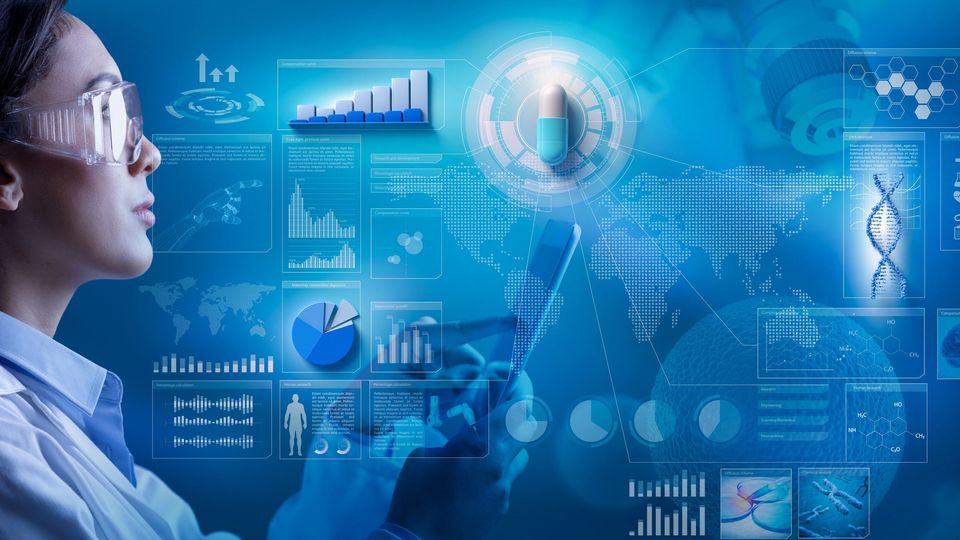
Nature has provided us with powerful tools to solve life science problems. Now, researchers want to apply nature’s rules to design entirely new solutions.
Naturally occurring biological molecules underpin many of the most notable advancements in health and medicine. Among the most well-known examples is Fleming’s accidental discovery of penicillin, a naturally occurring therapeutic that we later isolated and manufactured at scale. Today, penicillins remain among the most prescribed antibiotic classes worldwide.
Alongside therapeutic developments, naturally occurring biomolecules have guided diagnostics. This was exemplified during the COVID-19 pandemic, when lateral flow tests guided isolation efforts to curb the spread of infectious disease. These tests harness large immune recognition molecules, antibodies, to detect coronavirus.
The number of naturally occurring biological molecules is vast, and the space remains largely unexplored. Given the progress that has resulted from understanding only a small fraction of this space, it is no surprise that researchers are now looking to harness computational power to speed up the process.
But they aren’t stopping there.
In a new five-year, multi-institution collaboration, researchers from the Allen Institute, the University of Washington, and the Fred Hutch Cancer Center won’t just explore what is waiting to be found; they will build entirely new biomolecules and proteins that nature never produced. The initiative, AI BioDesign, will coordinate efforts between AI specialists and biologists across the institutions. The collaboration is supported by the Fund for Science and Technology.
Technology Networks spoke with Dr. Sanjay Srivatsan, assistant professor at the Fred Hutch Cancer Center and principal investigator at AI BioDesign, and Dr. Justin English, director of strategy at the University of Washington Medicine Institute for Protein Design and senior scientist at AI BioDesign. They shared how AI BioDesign could inform life science research, particularly drug discovery, and how the program is designed to overcome the limitations of existing AI-powered approaches.
Using nature’s principles for drug discovery
Can you outline how AI BioDesign could advance drug discovery and development efforts?
Across the drug development pipeline, the discovery stage seems to hold the lion’s share of AI tools. With applications ranging from target identification and molecule generation to virtual screening, it is no surprise that AI has compressed timelines during this phase.
Unlike many AI tools in the pharmaceutical field, AI BioDesign isn’t setting out to specifically discover new drugs. Instead, it aims to understand biology and produce relevant data that can be shared to progress the field as a whole.
How will AI BioDesign guide the creation of new biomolecules?
- AI will generate new DNA sequences, which can be used to build novel biological molecules that aim to address longstanding challenges across the life sciences.
- The resulting molecules will undergo further analysis and experimental testing, with specific functions in mind, providing “new building blocks of life” that researchers can elaborate from.
- These novel molecules will increase our understanding of biology, as the resulting data will feed back to inform future research efforts across health, environmental sciences, and technology.
“The goal of this program is to probe and define the principles around the logic that guides assembly and organization of living systems,” he continued. “How do proteins bind to DNA or a small molecule? What are the atomic features of a biomolecular surface that confer specificity, efficacy, or affinity? These are absolutely quintessential principles at the core of developing medicines.”
“Our work, which will be shared openly, will advance how drug discovery workflows proceed.” — Dr. Justin English.
“Our program will also address fundamental questions around how to create entirely new biological systems that can unlock and overcome limits that currently exist in biological processes, from chemical synthesis by enzymes to cellular division speed,” English added, pointing to potential applications for pharmaceutical manufacturing. This is key, as drug discovery alone will not get more medicines to patients without scalable production processes.
“The goal of the program is to fundamentally understand how atoms in biology interact as an engineering principle we can leverage across all domains of life.” — Dr. Justin English.
Comprehensive, accessible, AI-powered datasets
What are the data sources for AI Biodesign, and to what extent does this overcome data silos that have limited AI-powered initiatives so far?
Limited data is frequently cited as an issue by experts working with AI; the output of these tools is only as good as the input they receive and the information available to them. While many scientists agree on the importance of sharing information, it is not always feasible. “A lot of informative data, such as measurements on proprietary compound libraries, sits inside pharmaceutical and biotech companies. It is never released,” noted Srivatsan.
Digitalizing the Pharmaceutical GMP Laboratory Bench
Join this webinar to explore approaches to digitizing GMP laboratory workflows, from guided procedure execution and automated calculations to instrument integration and audit-ready records.View Webinar
Additionally, where data is publicly available, it isn’t necessarily fit for purpose. “Today, the sources of data for biological design are mainly public data repositories,” Srivatsan added, highlighting examples such as the Protein Data Bank, ChEMBL, and BindingDB. “These resources are remarkable, but they are also heterogeneous: they aggregate measurements made in different laboratories, under different assay conditions, against targets chosen for reasons of historical or commercial interest. That makes them powerful for pretraining and much weaker as a consistent signal for what actually binds to what.”
The AI BioDesign program aims to change this. “One of our goals is to address this directly by generating comprehensive, unified datasets,” Srivatsan continued. The team intends to use a consistent experimental protocol to generate datasets spanning a “broad swath of chemical and protein space,” providing scientists with reliable data from which they can draw insights useful to their research. Importantly, the accelerator program is focused on making data available to researchers. “Unlike siloed proprietary data, this will be an open resource,” Srivatsan added.
“The improvements it enables in binding prediction accrue to academic labs, startups, and established pharma alike, and should spur drug development across all sectors.” — Dr. Sanjay Srivatsan.
English explained how this data could be applied to de novo drug design in particular: “Data can be used to extrapolate and generalize how [molecular] interactions are created, enforced, and perturbed. This data will be used to train models that can explicitly predict how any atom anywhere within a biomolecular system will behave, which is required for creating de novo drug-like molecules, or any other interacting elements.”
Challenging the status quo in drug discovery
How could AI BioDesign support drug discovery in areas where therapeutic innovation has been difficult to achieve?
English outlined why traditional approaches have struggled to keep pace with growing disease burden: “Traditional medical interventions are systemically administered molecules that engage with specific drug targets throughout the body to elicit signaling events that remedy, inhibit, or perturb diseased behaviors of cells and tissues. These molecules work on existing hardware that evolution has selected in our bodies to serve specific purposes and manipulate them.”
While the status quo appears to be facilitating meaningful therapeutic progress in some areas, such as oncology, others are being left behind. For example, therapeutic advancements in neurology, including psychiatric conditions and neurodegenerative diseases, have remained particularly challenging. This treatment area faces specific therapeutic hurdles, from safely targeting the central nervous system without causing significant toxicity, to crossing the blood–brain barrier.
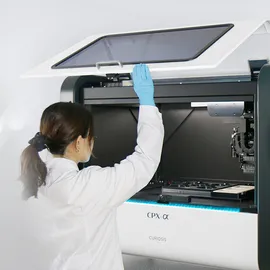
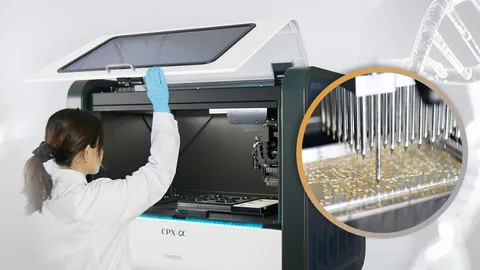
Accelerate High-Throughput Cloning With Automated Colony Handling
This app note explores how automated, image-based colony handling can improve efficiency, support reproducible colony selection, and maintain traceable records throughout high-throughput cloning workflows.View App Note / Case Study
“Improving intervention where standard medicines have failed will require precision,” English added, going on to explain what the solution might look like. “[Improvement requires] medicines that act where they are needed and nowhere else, and functionality, such as molecules that provide entirely new capabilities to cells beyond what their genetically encoded hardware enables.”
English highlighted depression treatment as an example of where traditional medicine falls short. “Serotonin reuptake inhibitors block the recycling of serotonin back into cells from the communication space between neurons (the synapse).” This increases the amount of serotonin available in synapses, subsequently increasing serotonergic signaling. He went on to explain the pitfalls: “This [signaling activity] occurs throughout the body and brain, even while the area where this activity is needed is limited and defined.”
If serotonin levels get too high throughout the body, this can manifest as serotonin syndrome, which can be fatal if left untreated. “Through AI BioDesign efforts, we aim to create molecules that can be guided directly to the specific cells where increased signaling activity is needed, in order to control processes precisely and discretely,” English concluded.
“Ultimately, [AI BioDesign aims to] produce molecules that work where intended, as intended, to enhance or augment natural biology in ways existing molecules cannot.” — Dr. Justin English.
A solution that overcomes more than the science
AI BioDesign combines the computational power of AI with the rigor of real-world confrontation, providing valuable datasets for researchers across various subject areas. The program could tackle a range of life science challenges, from designing novel therapeutics to engineering enzymes that break down microplastics in the ocean.
The program offers more than molecular solutions; it addresses broader research challenges, demonstrating how institutions can collaborate to develop open-source tools that advance the field as a whole.
Srivatsan highlighted an area where he sees particular promise: “I'm most excited about the integrated design of biological elements, the co-design of the central dogma, DNA/RNA, and protein together, by a single model, with the ability to integrate more naturally into existing biological systems like cells.”
 Add Technology Networks as a preferred Google source to see more of our trusted coverage.



