
The Next Generation of Bioconjugate Therapeutics
New bioconjugate technologies are expanding the use of targeted therapies beyond traditional cancer treatments.
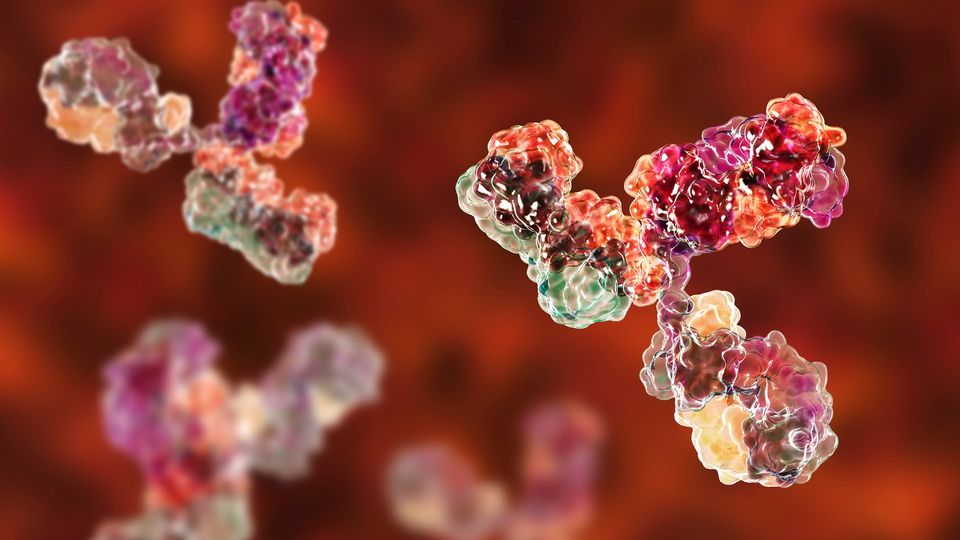
Antibody-drug conjugates (ADCs) are transforming targeted oncology by combining the precision of antibodies with the potency of small-molecule payloads.
Advances in conjugation chemistry, linker technology, and payload development are enabling more sophisticated bioconjugates capable of addressing complex biological challenges, including tumor heterogeneity, drug resistance, and diseases outside of oncology.
To explore these trends, Technology Networks spoke with Anette Sommer, head of Bioconjugates Research, Remon Van Geel, director of Biochemistry, and Anthony DeBoer, vice president and head of Business Development and Licensing at Lonza Advanced Synthesis. Drawing on their experience across research, development, manufacturing, and partnering, they discussed the scientific innovations reshaping the bioconjugates landscape and what these shifts mean for the future of targeted therapeutics.
The field of bioconjugates—particularly ADCs—has advanced rapidly in recent years; how are these shifts shaping the current generation of therapies?
Anette Sommer, PhD (AS):
One byproduct of the maturation of the ADC/bioconjugate category is the emergence of next-generation modalities including antibody-oligonucleotide conjugates, degrader-antibody conjugates, and targeted mRNA-lipid nanoparticles (tLNPs) for in vivo CAR T approaches. These and other new modalities are expected to augment clinical pipelines as ADC designs become more complex and in effect not only for cancer therapy but also for rare genetic diseases, neurodegeneration, and autoimmune disease.
Additionally, as innovators aim to facilitate linker-payload and conjugation strategies, many are shifting from one-off molecules to repeatable platform approaches. This shift is helping to accelerate development timelines while also yielding improvements in comparability and predictability across programs.
The current generation of bioconjugate therapies is also being shaped by manufacturing advances that enable more precise design. Innovations such as site-specific conjugation, bispecific formats, multi-payload constructs, and both high and ultra-low drug-antibody ratio (DAR) strategies are designed to address tumor heterogeneity, overcome acquired resistance, and encourage adoption of the newer therapeutic modalities. Some innovators are developing ADCs that incorporate immunostimulatory or immunosuppressive payloads.
Although various technical and manufacturing remain, next-generation bioconjugates appear to have a promising future.
KP:
Dual‑payload ADCs are gaining attention as a strategy to address tumor heterogeneity—what is driving this interest, and what trade‑offs arise when combining multiple payloads within a single construct?
Remon Van Geel, PhD (RVG):
The rationale for dual-payload ADCs is to deploy payloads with novel modes of action that address tumor heterogeneity, one of the more vexing challenges in oncology. Some of these dual-payload constructs combine payloads with synergistic mechanisms (e.g., simultaneous inducement of DNA damage and inhibition of DNA repair), presenting tumors with multiple, parallel barriers to overcome, and thus significantly lengthening the time required for resistance to develop. Other common strategies for dual-payload ADCs involve combining two cytotoxic payloads with complementary mechanisms of action. For example, one approach pairs topoisomerase inhibition with microtubule inhibition to simultaneously induce DNA damage and disrupt cell cycle progression. Another strategy combines a cytotoxic payload with an immunostimulatory agent, enabling direct tumor cell killing through topoisomerase inhibition while activating the immune system in the tumor microenvironment through TLR7/8 agonism.
Yet, as ADCs are developed with higher DARs or multiple payloads, the difficulty of controlling species distribution increases, directly affecting pharmacokinetics, efficacy, and safety. Site-specific conjugation and well-defined payload ratios are among the strategies innovators are using to maintain consistency. Some are pursuing integrated conjugation approaches that combine site-specific technologies with tailored linker-payload systems to control DAR and payload distribution, enhancing the consistency and manufacturability of dual-payload ADCs.
Advances in conjugate design also make for a more complex chemistry, manufacturing, and controls (CMC) milieu. The rapid pace of molecular innovation, as reflected by the advent of dual-payload architectures and novel payload classes, requires new analytical approaches that can yield deeper insights into subpopulations, payload distribution, and stability over time.
The need for advanced analytics is especially acute at Good Manufacturing Practice scale, as are the demands on purity and clearance control. Additionally, downstream processing is particularly vulnerable to aggregation, heterogeneity, and the potential for yield losses. Adherence to the principles of quality by design, with clearly defined quality attributes that are linked to process parameters, is therefore critical to translating molecular complexity into scalable and reliable manufacturing processes.
KP:
Could bioconjugates be adapted for the targeted delivery of non‑cytotoxic agents such as RNA or proteins?
AS:
Several ongoing research initiatives suggest that adaptation of bioconjugates for targeted delivery of non-cytotoxic agents is entirely possible, a prospect that may expand the potential applications of targeted delivery. For example, LNPs with mRNA as cargo can be functionalized via a bioconjugation reaction with ligands to target specific cell types, effectively creating a new class of bioconjugates.
Use of bioconjugates for protein delivery
also appears to be a viable pathway. At recent global congresses, we reported
on the development of an innovative antibody-protein conjugate, using a multistep
reaction culminating with a dibenzocylooctyne-mediated conjugation to the
protein payload. This process involved derisking the chemical conjugation steps
via a robust residual-clearance strategy, as well as the establishment of
tailored analytical methods to characterize the novel construct for clinical
release.
Our approach helped us overcome some of the typical CMC development challenges for novel conjugates, resulting in a successful Investigational New Drug filing for our customer.
KP:
Which disease areas outside oncology appear most tractable for bioconjugate approaches?
AS:
KP:
How are partnerships with companies like Stipple Bio and Bristol Myers Squibb changing the way ADC programs are designed, scaled, and translated into the clinic?
Anthony DeBoer (AD):
Lonza’s partnerships with Stipple Bio and Bristol Myers Squibb (BMS) epitomize how innovators are reaping the benefits of combining their scientific platforms with our clinically validated ADC design and manufacturing technologies to accelerate discovery and development timelines and deliver impactful treatments to patients.
In the case of Stipple Bio, our multi-target licensing agreement allows Stipple to leverage outcomes from its Pointillist Platform to identify tumor-specific cell surface epitopes, with the aim of developing potent medicines with high therapeutic indices that can avoid on-target/off-tumor toxicity. The agreement grants Stipple Bio target-specific access to Lonza’s ADC technology platform, including GlycoConnect® antibody conjugation technology, HydraSpace® polar spacer technology, and toxSYN® linker-payloads. The collaboration is thus designed to enable the design of next-generation precision oncology ADC therapies.
Under Lonza’s licensing agreement with BMS, the latter company has access to our SYNtecan™ linker-payload technology that provides the TOPO1 inhibitor exatecan, as well as the GlycoConnect,® and HydraSpace® technologies, to advance an ADC against an undisclosed target. BMS is performing the research, development, manufacturing, and commercialization of the ADC. For Lonza, the agreement provides additional validation of the strength and reliability of our technologies as a vehicle for delivering positive clinical outcomes and providing valuable treatments to individuals with unmet medical needs.
 Add Technology Networks as a preferred Google source to see more of our trusted coverage.



