
Light-Based Nanotechnology Enables More Precise Cancer Treatment
Researchers develop light-activated nanoparticles that precisely target tumors while sparing healthy tissue.
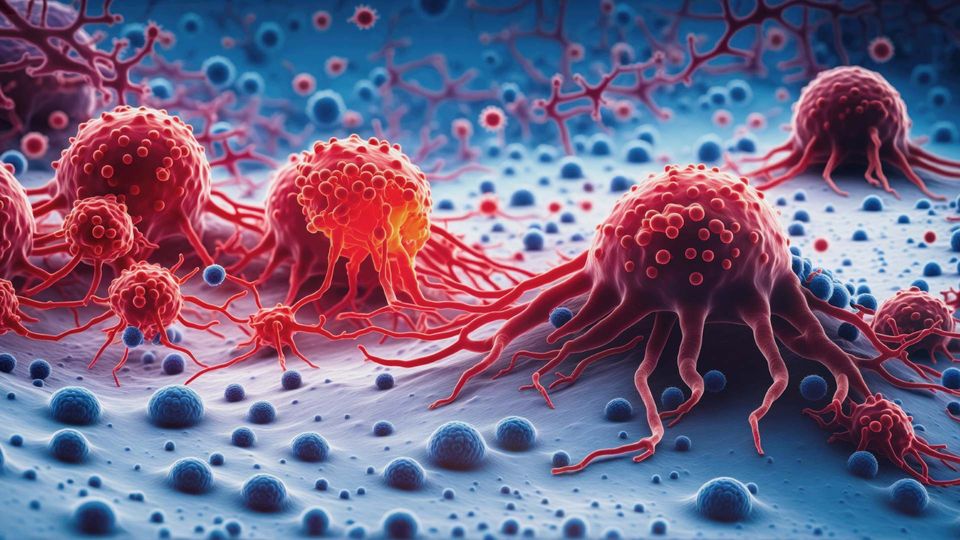
Researchers at NYU Abu Dhabi have developed a new light-based nanotechnology that could improve how certain cancers are detected and treated, offering a more precise and potentially less harmful alternative to chemotherapy, radiation, and surgery.
The study advances photothermal therapy, a treatment approach that uses light to generate heat inside tumors and destroy cancer cells. The NYU Abu Dhabi team designed tiny, biocompatible and biodegradable nanoparticles that carry a dye activated by near-infrared light. When exposed to this light, the particles heat up damaging tumor tissue while minimizing harm to healthy cells. Near-infrared light was chosen specifically as it penetrates the body to greater depth than visible light, thereby enabling treatment of tumors that are not close to the surface.
A key challenge in photothermal therapy is keeping the light-responsive material stable in the body and efficiently delivering it to tumors. Many existing photothermal agents degrade quickly, clear from the bloodstream, or fail to enter cancer cells efficiently.
To address this, the researchers developed nanoparticles made from hydroxyapatite, a mineral found in bones and teeth. The particles are coated with lipids and polymers, which help them circulate longer in the bloodstream and avoid immune detection, allowing more of the therapeutic material to reach the tumors. The particles also take advantage of the mildly acidic environment found in tumors. A peptide (a small protein) on their surface becomes active under these conditions, helping the nanoparticles efficiently enter cancer cells while largely avoiding healthy tissue.
The researchers found that the nanoparticles are highly stable, effectively protect the dye cargo from degradation and accumulate efficiently in tumors. Upon activation by near-infrared light, generate localized heat that destroys tumor tissue and produce fluorescent and thermal signals that allow tumors to be visualized and treatment effects to be monitored in real time.
The findings highlight the promise of this nanoparticle as an integrated system for cancer diagnosis and therapy, and an important step toward safer, more effective light-based cancer treatments.
Reference: Palanikumar L, Yasin FM, Munkhjargal I, et al. Tumor-targeted hydroxyapatite nanoparticles for near-infrared II light-mediated dual-mode diagnostic imaging and photothermal cancer therapy. Cell Rep Phys Sci. 2026;7(1). doi: 10.1016/j.xcrp.2025.103064
This article has been republished from the following materials. Note: material may have been edited for length and content. For further information, please contact the cited source. Our press release publishing policy can be accessed here.
 Add Technology Networks as a preferred Google source to see more of our trusted coverage.

