
New Device Identifies Aggressive Breast Cancer Cells by Stickiness
A microfluidic device sorts tumor cells by adhesion.
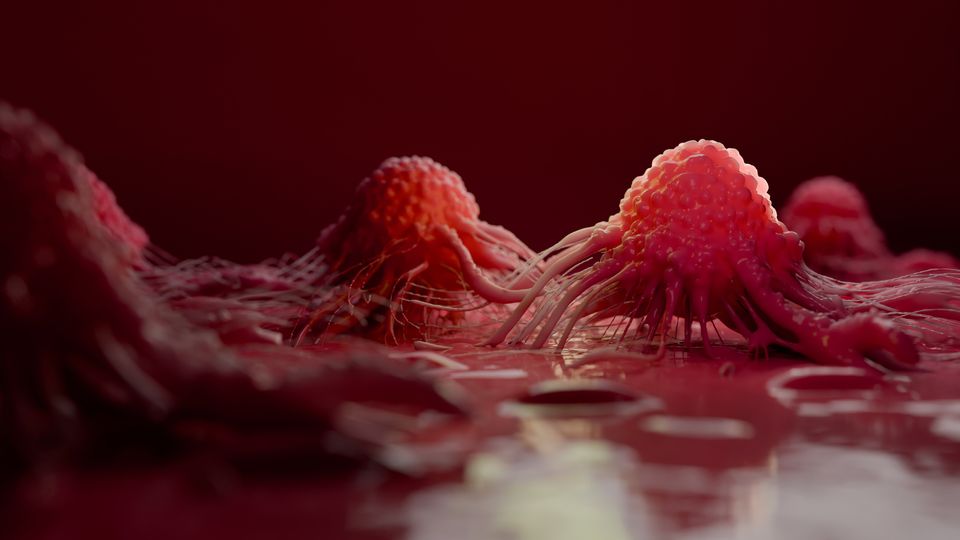
Researchers at the University of California San Diego have developed a microfluidic device that sorts tumor cells based on how well they adhere to surfaces. Their findings, published in Cell Reports, suggest that this physical property could help predict whether early-stage breast cancer is likely to become invasive.
Microfluidic device
A small-scale laboratory system that manipulates tiny amounts of fluid to test biological properties, such as cell adhesionAssessing tumor cell adhesion
The device was tested in an investigator-initiated trial, where tumor cells were pushed through fluid-filled chambers coated with adhesive proteins such as fibronectin. Cells that adhered more strongly were classified as “sticky,” while those that detached easily were labeled as “weakly adherent.”
Want more breaking news?
Subscribe to Technology Networks’ daily newsletter, delivering breaking science news straight to your inbox every day.
Subscribe for FREEFibronectin
A protein found in the extracellular matrix that plays a role in cell adhesion, migration and tissue repair.When tested on samples from patients with different stages of breast cancer, a clear trend emerged: cells from aggressive tumors were weakly adherent, whereas cells from less aggressive tumors had stronger adhesion. This suggests that weak adhesion may be linked to a higher risk of metastasis.
A potential tool for risk assessment
One focus of the study was ductal carcinoma in situ (DCIS), an early-stage breast cancer that may never progress beyond the milk ducts. Currently, clinical decisions rely on factors such as tumor size and grade, but these do not always predict whether DCIS will become invasive. The adhesion-based approach offers a potential way to stratify patients based on metastatic risk, which could help tailor treatment strategies.
Ductal carcinoma in situ (DCIS)
A non-invasive form of breast cancer that remains confined to the milk ducts. While some cases remain harmless, others progress to invasive cancer.“Among DCIS patients, we found some with strongly adherent tumor cells and others with weakly adherent cells,” said study co-first author Madison Kane, a bioengineering PhD student at UC San Diego. “We hypothesize that those with weakly adherent cells are at higher risk of developing invasive cancer and are likely being underdiagnosed at the beginning of their patient care plan.”
Clinical validation and future applications
The research team tested their device on 16 patient samples, including normal breast tissue, DCIS tumors and invasive breast cancers. While normal breast tissue contained strongly adherent cells and aggressive cancers contained weakly adherent cells, DCIS samples displayed a range of adhesion strengths. The team plans to track DCIS patients over the next five years to determine whether adhesion strength is predictive of cancer progression.
If validated in larger studies, this device could provide oncologists with a new diagnostic tool to assess metastatic risk. Patients with weakly adherent tumor cells may benefit from more aggressive treatments, while those with strongly adherent cells could potentially avoid unnecessary interventions.
Reference: Kane MA, Birmingham KG, Yeoman B, et al. Adhesion strength of tumor cells predicts metastatic disease in vivo. Cell Reports. 2025:115359. doi: 10.1016/j.celrep.2025.115359
This article has been republished from the following materials. Note: material may have been edited for length and content. For further information, please contact the cited source. Our press release publishing policy can be accessed here.
This content includes text that has been generated with the assistance of AI. Technology Networks' AI policy can be found here.
 Add Technology Networks as a preferred Google source to see more of our trusted coverage.

