
Key Molecular Mechanism in Cell Communication Identified
Research into extracellular vesicles has uncovered mechanisms vital for intercellular communication, paving the way for innovative therapies.
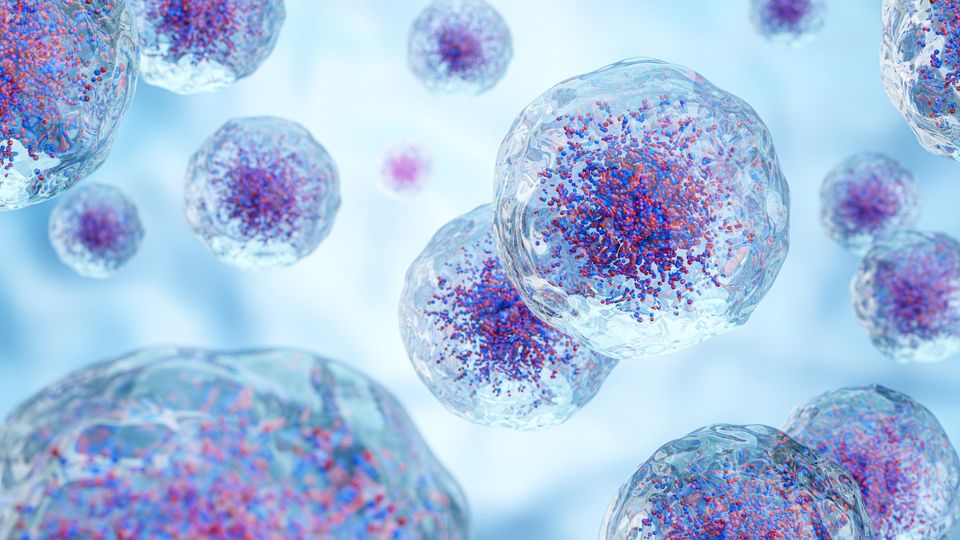
A new study describes a key molecular mechanism that explains how cells exchange information through extracellular vesicles (EVs), small particles with great therapeutic potential. The results, published in the Journal of Extracellular Vesicles, reveal that the Commander protein complex, previously known for its role in membrane recycling, also coordinates the entry and internal fate of vesicles within the cell. This finding sheds light on the process of intercellular communication, which is fundamental for the development of new therapies and diagnostic tools.
The study was led by Professor Albert Lu, from the Faculty of Medicine and Health Sciences at the University of Barcelona and the CELLEX Biomedical Research Centre (IDIBAPS-UB), and María Yáñez-Mó, from the Severo Ochoa Centre for Molecular Biology (CSIC-UAM). Professor Carles Enrich, also from the same faculty (IDIBAPS-UB), participated in the study.
According to Albert Lu, "understanding how receptor cells take up and process extracellular vesicles is essential to understanding how our body communicates at the molecular level." He continues, "Furthermore, this knowledge is key to harnessing the therapeutic and diagnostic potential of these vesicles, since their effectiveness depends on being able to target them and ensure they are taken up by the appropriate target cells."
An innovative methodology based on the CRISPR technique
Extracellular vesicles (EVs) are nanoparticles secreted by all cells that act as biological messengers: they transport proteins, lipids, and nucleic acids. To identify the molecular mechanisms that govern their uptake and internalization into the cell, researchers have used an innovative methodological approach consisting of applying massive genomic screening based on CRISPR-Cas9 technology.
This tool allows researchers to deactivate, one by one, each of the more than twenty thousand human genes in a cell population to analyze their role in a specific process. In this case, the researchers genetically modified the cells so that each group had a different gene deactivated. The cells were then exposed to vesicles labeled with a fluorescent dye, and flow cytometry was used to measure which cells took up more or fewer vesicles. Fluorescence-activated cell sorting (FACS) was then used to separate the cells with greater or lesser uptake capacity, and subsequently, the deactivated genes in each group were identified using massive parallel sequencing.
The results indicate that the Commander endosomal recycling complex, composed of various proteins, acts as a fundamental and general regulator of vesicle uptake. The fact that the study was conducted in different human cell lines suggests that "the mechanism is conserved and potentially universal, although its activity could vary depending on the cell type or physiological context," the researcher adds.
Potential for new regenerative, oncological or anti-inflammatory therapies
Understanding this process has important therapeutic implications, since the ability of these vesicles to cross membranes and reach specific tissues makes them potential natural vehicles for transporting drugs or therapeutic molecules. "Understanding how their entry, intracellular trafficking, and the delivery of their cargo are regulated opens the door to designing vesicles with controlled directionality, improving their efficacy in regenerative, oncological, or anti-inflammatory therapies," Lu emphasizes.
Currently, researchers are working to understand in greater detail the role of the Commander complex in controlling the uptake and intracellular fate of these vesicles, as well as to determine whether this mechanism is maintained in other cell types or tissues. They also want to explore whether alterations in the complex could be involved in cell communication disorders in pathological contexts, such as cancer or neurodegenerative disorders. "In the long term, the goal is to be able to manipulate this pathway to modulate cell-to-cell communication and improve the use of EVs as therapeutic and diagnostic tools," the researcher concludes.
Reference: Palma‐Cobo M, Toribio V, Morales J, et al. Genome‐wide CRISPR/Cas9 screening identifies the COMMANDER recycling complex as a key player in EV uptake. J of Extracellular Vesicle. 2025;14(9):e70166. doi: 10.1002/jev2.70166.
This article has been republished from the following materials. Note: material may have been edited for length and content. For further information, please contact the cited source. Our press release publishing policy can be accessed here.
 Add Technology Networks as a preferred Google source to see more of our trusted coverage.

