
Could Sweat Replace Some Invasive Biomarker Tests?
Advanced proteomics identified up to 4,000 proteins in sweat samples.
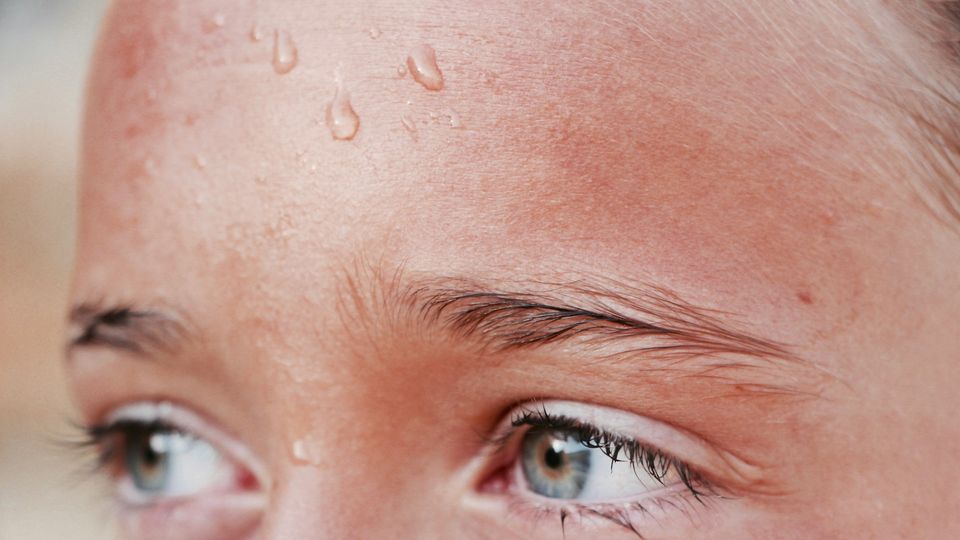
Sweat is typically associated with exercise and temperature regulation.
However, advances in proteomics are revealing that this readily accessible biofluid may contain a wealth of clinically relevant molecular information.
Dr. Gabriel Mazzucchelli, an associate professor at the University of Liège, Belgium, and leader of the MSLab-Omics research unit, has been working to unlock that information through the development of high-sensitivity sweat proteomics approaches.
At the Human Proteome Organization World Congress 2026, Mazzucchelli presented research showing that thousands of proteins can now be measured from small volumes of sweat, opening new opportunities for non-invasive biomarker discovery.
Mazzucchelli spoke with Technology Networks about how sweat proteomics has evolved beyond proof-of-concept studies, where the technology could have the greatest clinical impact, and why the next challenge is developing practical collection systems for large-scale monitoring.
With thanks to Gustav Ceder, who conducted this interview on behalf of Technology Networks during HUPO 2026.
What first convinced you that sweat could offer information that blood-based proteomics might miss or struggle to reveal?
Gabriel Mazzucchelli, PhD (GM):
Sweat is already used in clinics to diagnose cystic fibrosis (CF) through standardized tests to measure chloride. So, our first question was: are we able to detect and quantify other types of signals to be used for personalized medicine?
We started exploring the human sweat proteome using the standardized stimulation and collection method of the Gibson and Cooke test. In the first experiments, we saw that a lot of proteins can be identified in sweat.
The first proteomic analysis of sweat was published in 2011, and most of the work in the field appeared between 2017 and 2024. During that period, the field reached a plateau of about 1,000 identified proteins. Today, we can reach up to 4,000 proteins in the sweat—results we are currently preparing for publication.
What is particularly interesting is that in sweat you have a lot of proteins that are shared with plasma and cerebrospinal fluid (CSF), as well as specific proteins related to the sweat glands and the skin. This means the sweat proteome could give access to all of these proteins without the use of an invasive procedure, such as a lumbar puncture.
And now, with sufficiently sensitive readouts, we may be able to quantify targets that are currently measured in plasma or CSF directly in sweat—that’s the idea.
RLS:
Was there a particular finding that surprised you and changed your perception of sweat as a clinical biofluid?
GM:
It's very easy to identify around 2,000 proteins directly in raw sweat without any fractionation or depletion. With plasma, these steps are usually needed, since it's a very difficult biofluid to analyze for proteins; that's not the case with sweat.
That changed how I see sweat: beyond diagnosis, it’s also well suited to monitoring, because it's non-invasive. With the depth we can now achieve, and because many sweat proteins are shared with other biofluids, we can discover new candidate biomarkers directly in sweat. Then we can think about a future where these become targets for next-generation biosensors and wearables. Combining such repeated measurements with the very rich data from sweat proteomics and with AI could really take human health monitoring to the next level. Of course, we still need to establish how sweat protein levels relate to those in blood.
Looking ahead, I think there is a lot we can do.
RLS:
Do you envision sweat proteomics being used primarily for diagnosis, disease stratification, or longitudinal patient monitoring, and where do you see the biggest opportunity?
GM:
In our pilot study on CF patients, we showed that the proteome differs between healthy volunteers and CF patients. A small panel of proteins was able to stratify the patients, and more interestingly, it could also show whether the treatment was effective or not (article in preparation).
In other words, these proteins are differentially expressed when people are sick, but when they underwent treatment, their levels returned to those of healthy volunteers—but not all of them.
This means that we can try to use this approach to monitor treatment, from a personalized medicine perspective.
RLS:
How close are we to a future where non-invasive sweat testing could be integrated into routine clinical care or at-home monitoring?
GM:
The analytical side is already set up; we have published that. Now the bottleneck is the collection system.
The standardized method that we have used involves pilocarpine iontophoresis, which is a way to stimulate sweating that needs to be done in a hospital.
But we have now been funded by the Walloon Region with €2.8 million to create a new patch that should collect the sweat passively, at rest during the night. It includes an autonomous drying system that stabilizes the sample on its own. This will make it much easier to build very large cohorts without participants needing to visit a hospital.
We are developing a collection system that can be coupled with rapid tests, through a collaboration with Coris BioConcept, and is also compatible with complex analyses such as metabolomics or proteomics. We already have the first functional prototypes, which should be optimized and finalized within two years.
I would also like to thank the F.R.S.-FNRS and the Belgian Foundation against Cancer for supporting our sweat proteomics research.
 Add Technology Networks as a preferred Google source to see more of our trusted coverage.



