
Advanced Cell Models Are Bringing Precision Medicine Closer
How can patient-derived models improve cancer drug discovery? We spoke to Dr. Brinton Seashore-Ludlow to find out.
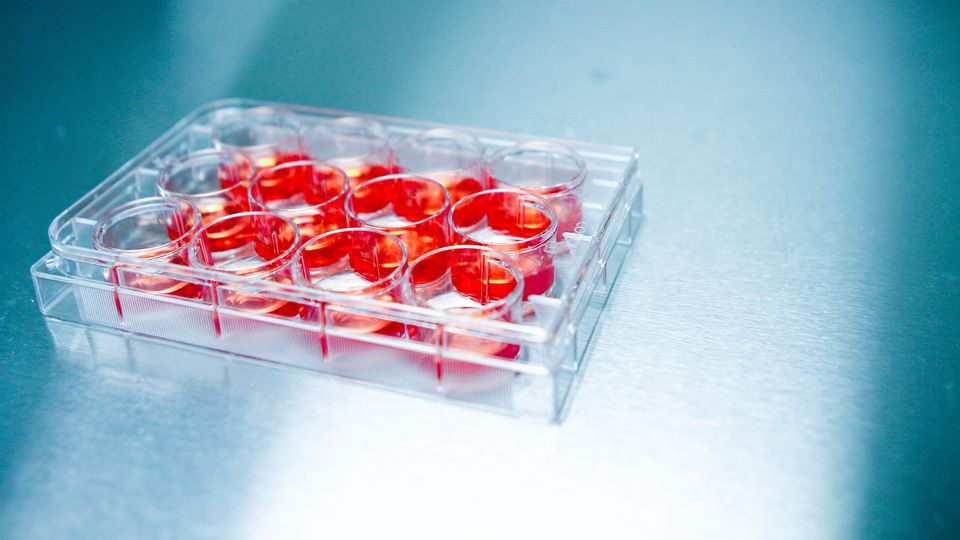
Precision oncology approaches tailor treatments to the molecular and genetic features of a patient’s tumor, increasing therapeutic efficacy and reducing side effects. Developing accurate cell models that support cancer drug discovery is central to improving personalized medicine.
Advanced cell models, which include tumor spheroids, patient-derived organoids, and organ-on-a-chip systems, offer a way to capture the complexity of an individual patient's tumor. They can be used to identify new drug targets, measure drug responses, prioritize drug candidates for clinical trials, and uncover potential biomarkers for patient stratification.
Dr. Brinton Seashore-Ludlow is a senior researcher at the Karolinska Institutet, whose work focuses on developing advanced, patient-derived disease models to understand how cancers respond and adapt to treatment. Ahead of her talk at ELRIG Drug Discovery 2026, Technology Networks spoke with Seashore-Ludlow to learn more about advanced cell models, including how to determine model complexity for drug discovery and how they can be used to connect disease biology and therapeutic responses.
Katie Brighton (KB): Where and why do conventional cell-based assays fall short in cancer drug discovery? What key aspects of tumor biology can advanced cellular models capture to improve drug discovery efforts?
Dr. Brinton Seashore-Ludlow (BSL): This depends on the stage a molecule or candidate has reached in the discovery process. Conventional cell-based assays are often highly reproducible and scalable, but they may not capture the biological heterogeneity of the intended patient population. I think it is important to bring knowledge from precision medicine into drug discovery earlier to help bridge this translational gap.
“The challenge is not simply to make models more complex, but to identify which aspects of disease biology need to be represented, and at what stage of discovery.” — Dr. Brinton Seashore-Ludlow.
Testing across more diverse disease models or patient-near models can be challenging, since each additional test adds cost and complexity. Miniaturization can help reduce these costs, while systematic perturbation and multiparametric readouts can extract as much information as possible from scarce material and help us understand responses in complex models. Ultimately, connecting a response in a disease model to the underlying disease biology is critical, whether through clinically annotated patient samples (while maintaining patient privacy) or through a deep understanding of the disease itself.
KB: What are the major challenges associated with advanced cellular models, and how might they be overcome?
BSL: When using primary patient material, variability in both quality and quantity can be challenging. Drug discovery is a long process, so determining how to preserve and use this limited material to support different stages of discovery is complex. In addition, while it is conceptually very interesting to trace drug responses in multicellular contexts, not all readouts allow us to quantify the response of each relevant cell type independently. Addressing this requires both new method development and careful sample logistics.
KB: How do you determine the level of biological complexity needed in a cell model for a particular drug discovery question?
BSL: I think this depends on both the stage of the drug discovery project and the disease biology. More complexity is not necessarily better—the model should capture the biological features needed to answer the specific question. In practice, cost, reproducibility, throughput, data volume, and ease of interpretation all weigh heavily in this selection.
“The goal is therefore purposeful complexity: introducing additional biology where it provides information that a simpler model cannot.” — Dr. Brinton Seashore-Ludlow.

Discover What Metabolism Can Reveal
This infographic explores how real-time, live-cell metabolic measurements can help reveal the drivers of cellular response and provide deeper functional insight.View Infographic
The opportunity is to make biologically richer models sufficiently scalable and measurable that we can use systematic perturbation not only to identify treatment responses, but also to discover the biology underlying them.
KB: What additional insights can patient-derived ovarian cancer models and high-content imaging reveal about drug responses?
BSL: Patient-derived 3D models allow us to relate drug response to characteristics of the individual patient, which could ultimately contribute to more personalized treatment selection.
High-content imaging adds another dimension. We often say that a picture is worth a thousand words, and images of disease models can encode far more information than a single measure of viability or response. Computational analysis of these images can help us identify phenotypic patterns and understand not only whether a treatment works, but how cells respond.
Hybrid Metabolomics Now Standardized
Attendees will gain practical perspectives on bridging hypothesis-driven and discovery-based science to address a broader range of research questions.View Webinar
When combined with longitudinal imaging, we can also follow how these responses develop and change over time. This also makes these models useful as discovery systems: unexpected response phenotypes can point us toward biology that we did not know to look for beforehand.
KB: How do you identify when to include stromal interactions and elements of the metastatic niche in a model, and what new biological insights do they reveal?
BSL: We include these components when there is a biological or clinical reason to believe that the microenvironment contributes to the phenotype or treatment response we are trying to understand. We have preliminary data showing that stromal and other microenvironmental interactions can alter drug response. In our short-term ovarian cancer models, we also do not deliberately exclude other cell populations, allowing some of these native interactions to be preserved. We are currently studying how the ascites microenvironment influences metastatic processes, as well as how adipose tissue affects drug response.
KB: What do you see as the next major step for advanced cellular models in cancer research and precision medicine, and what impact could that have on how new therapies are discovered and selected for patients?
BSL: I think an important next step is moving advanced cellular models closer to clinical decision-making while rigorously establishing what additional information they provide beyond existing approaches. In pediatric cancer, we are currently testing the feasibility of returning the results from ex vivo drug testing of individual patient samples to the treating clinicians within a clinically relevant timeframe. Integrating these functional results with existing molecular data is part of our current study.
Ultimately, we hope to establish reproducible and interpretable methods that can contribute to evidence-based treatment decisions. Getting there will require critical evaluation and strict technical quality standards.
 Add Technology Networks as a preferred Google source to see more of our trusted coverage.



