
The Evolution of High-Throughput Screening: From Manual to Ultra HTS
Innovations in automation, miniaturization, and data science are driving the evolution of high-throughput screening.
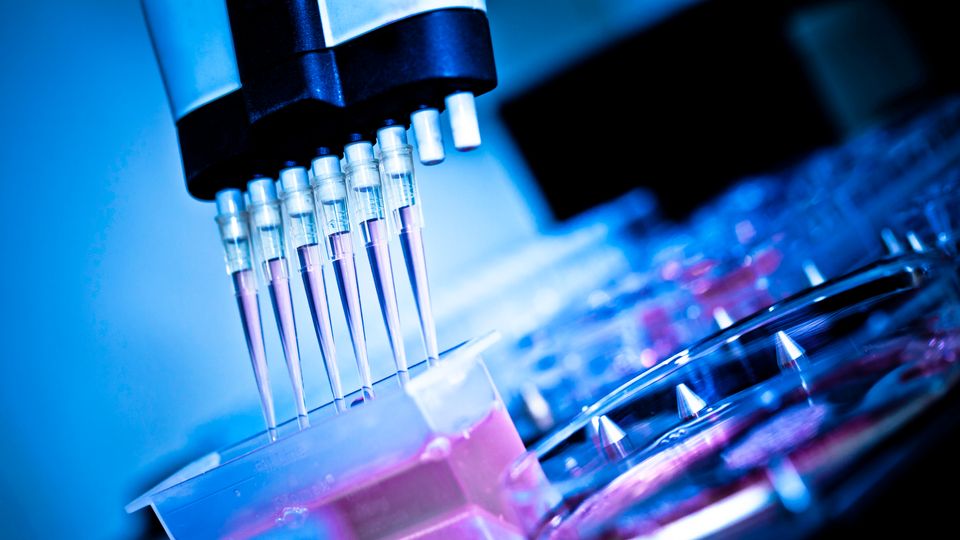
The evolution of high-throughput screening (HTS) technology has redefined how research laboratories evaluate chemical and biological interactions at scale. Early manual screening workflows were slow, labor-intensive, and limited in throughput, constraining discovery efforts. As automation and miniaturization matured, HTS enabled systematic testing of thousands to millions of compounds, transforming drug discovery pipelines and expanding feasible biological targets.
This article traces the history of HTS, describes key technological milestones, and examines the development of ultra‑HTS (uHTS) alongside emerging paradigms reshaping assay design and data interpretation.
From manual screening to automated workflows: The early evolution of HTS
Manual compound testing dominated early discovery programs and relied on hand pipetting, tube‑based assays, and single‑point measurements. Throughput rarely exceeded a few dozen tests per day, limiting the chemical space that could be explored.
The history of HTS (Figure 1) began in the 1980s, when early laboratory automation—96‑well microplates, basic liquid‑handling robots, and programmable workflows—initiated the transition from manual assays to scalable, standardized formats.
By the 1990s, fully integrated HTS platforms combined robotics, miniaturized assays, plate readers, and data management systems, enabling rapid execution of thousands of tests per day. The introduction of 384‑well and later 1536‑well plates accelerated this shift and was a key breakthrough in the evolution of HTS, lowering reagent costs while improving precision.
These advances laid the foundation for the HTS revolution—the point at which systematic, parallelized screening became an essential component of pharmaceutical R&D.

Figure 1: A timeline illustrating the evolution of high-throughput screening from manual workflows to automated HTS and ultra-HTS. Credit: AI-generated image created using Microsoft Copilot (2026).
Core principles of high-throughput screening
High-throughput screening uses automated parallel experimentation to identify biologically active compounds from large libraries. HTS leverages robotics, miniaturization, and advanced detection methods to conduct thousands to millions of experiments efficiently.
Key components of an HTS workflow typically include:
- Automated liquid-handling systems
- Microplate-based assays
- Integrated detection technologies (fluorescence, luminescence, label-free detection)
- Data management and analysis infrastructure
HTS supports biochemical, cellular, and functional genomics assays. It also enables screening of diverse modalities, including small molecules, peptides, biologics, and genetic perturbations.
The rise of ultra-high-throughput screening
As chemical libraries expanded in the early 2000s and 2010s, HTS infrastructure scaled further to maintain feasibility. Ultra‑high‑throughput screening (uHTS) emerged as a natural next step, with capacities to process millions of compounds through extreme miniaturization and full automation (Table 1).
uHTS development continues to refine assay formats through advanced robotics, real-time data acquisition, and optimized detection systems such as FRET, luminescence, and high‑content imaging.
What is FRET (Förster resonance energy transfer)?
FRET is a distance‑dependent, non‑radiative energy transfer mechanism between a donor and acceptor fluorophore in close proximity. This transfer alters fluorescence intensity or lifetime, enabling sensitive measurement of molecular interactions, conformational changes, and nanoscale biological dynamics.
Accelerating Precision Medicine Through Antibody Discovery
This listicle explores how these technologies are reshaping therapeutic antibody discovery, from preserving native antibody pairings and uncovering rare candidates to accelerating selection and optimization.View Listicle
Advantages of uHTS include:
- Maximal throughput with minimal reagent volumes
- Increased assay precision through robotic consistency
- Integration with machine learning for hit identification and predictive modeling
However, uHTS also introduces challenges such as data overload, assay interference at miniaturized scales, and the need for robust quality control metrics.
Table 1: Key differences across manual, automated HTS, and uHTS methodologies.
| Feature | Manual Screening | Automated HTS | Ultra‑HTS (uHTS) |
| Typical Throughput | Tens of assays/day | Thousands–hundreds of thousands/day | Millions of assays/day |
| Plate Formats | Tube assays / 24‑well | 96‑ or 384‑well | 1536‑well or microfluidics |
| Liquid Handling | Manual pipetting | Robotic pipetting | Fully automated, high‑precision robotics |
| Detection Methods | Basic spectrophotometry | Fluorescence, luminescence, label‑free | FRET, high-content imaging, high‑speed readers |
| Data Handling | Manual spreadsheets | Electronic data systems | Real-time data acquisition with analytics |
| Reagent Volume | High | Reduced | Ultra‑low (nanoliter) |
| Limitations | Low reproducibility | Infrastructure cost, data management | Assay interference, data overload |
Achieve Five-Star Quality Control in Biopharmaceutical Development
This infographic explores the analytical techniques, compliance considerations, and emerging technologies shaping modern biopharma quality control workflows.View Infographic
Automation and robotics in modern HTS workflows
Modern screening platforms operate as interconnected systems incorporating multiple robotic subsystems. HTS automation enhances assay precision and reproducibility by minimizing manual intervention and orchestrating complex workflows through integrated software.
Core automated subsystems include:
- Robotic liquid handling for nanoliter–microliter precision transfer
- Plate-handling robots for continuous, unmanned microplate movement
- Automated plate readers for synchronized signal detection
- Environmental control modules to maintain assay stability across large batches
These technologies collectively support robust, scalable drug discovery workflows and enable experimentation at previously infeasible scales.
Emerging paradigms in the evolution of HTS: AI, microfluidics, and next‑generation screening
Beyond ultra‑HTS, new methodological innovations are reshaping screening capabilities.
Microfluidic and droplet-based screening
Microfluidics allows parallel processing of thousands of individual reactions in nanoliter droplets. Recent HTS frameworks increasingly incorporate microfluidic systems for compound testing, enhancing throughput with minimal reagent consumption.
AI‑enabled hit discovery
Machine learning algorithms now support predictive modeling, hit triaging, and noise reduction in large screening datasets. Emerging uHTS workflows incorporate ML‑driven analysis for faster and more reliable identification of active compounds.


Overcome Solubility Challenges With Self-Emulsifying Systems
Self-emulsifying drug delivery systems (SEDDS) have emerged as a compelling, well-established alternative that avoids these trade-offs. This guide explains how they work and what to consider when optimizing them.View How To Guide
High-content and multiplexed assays
High‑content imaging enables morphological and spatial readouts, while multiplexed assays capture multi‑parameter biological responses. These formats extend screening from simple activity measurements to systems-level biological insights.
Together, these developments illustrate how HTS continues expanding beyond its traditional boundaries, incorporating high-resolution biological data and computational interpretation.
Advancing high-throughput screening
The evolution of high-throughput screening from manual assays to automated HTS and ultra‑HTS reflects decades of innovation in assay design, robotics, and data analytics. Historical transitions—from plate standardization to automation and then miniaturization—have enabled systematic exploration of vast chemical and biological spaces. Emerging paradigms, including microfluidics and AI integration, continue to redefine throughput, data quality, and discovery efficiency.
As technological development continues, increasingly sophisticated screening workflows are expected to drive deeper biological insights and accelerate early-stage research, improving the translational potential of laboratory discovery pipelines.
Continued innovation in automation, miniaturization, and data science will further drive the evolution of high-throughput screening and its impact on modern research.
This content includes text that has been created with the assistance of generative AI and has undergone editorial review before publishing. Technology Networks' AI policy can be found here.
 Add Technology Networks as a preferred Google source to see more of our trusted coverage.


