
The Evolving Role of Organoids in Preclinical Research
Discover how organoids are advancing preclinical research while complementing animal models and improving human relevance.
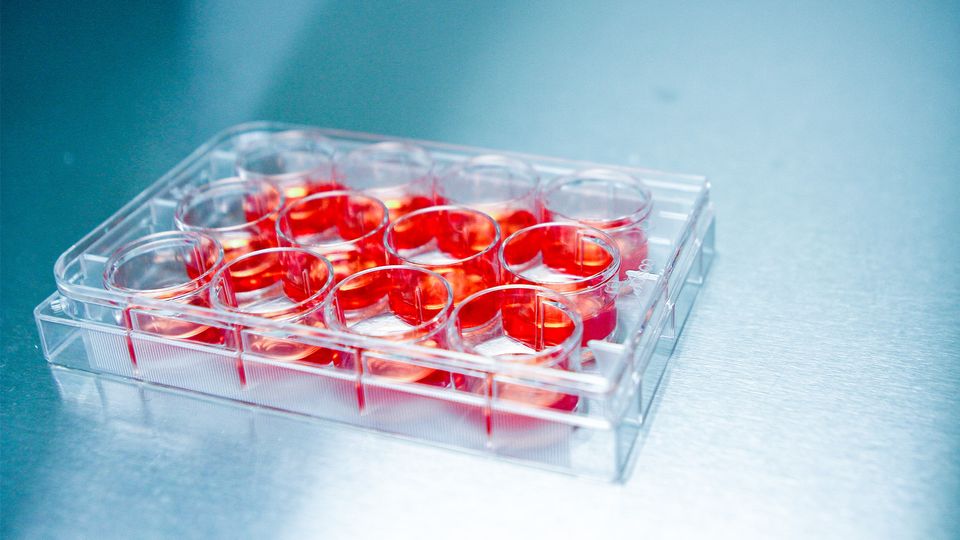
Organoids have emerged as valuable tools for studying human biology, disease mechanisms, and drug responses. As these systems continue to evolve, they are enabling more complex investigations into tissue function, immune activation, and therapeutic efficacy while helping to generate human-relevant data earlier in the research process.
Technology Networks spoke with Dr. Eitan Akirav, preclinical research lead at Bio X Cell, to learn about the strengths and limitations of organoid models, their relationship with animal studies, and the critical role that reagent quality plays in producing reliable, reproducible results.
Organoids are often described as a bridge between traditional cell culture and animal models. What role do they play in translational research today?
Eitan Akirav, PhD (EA):
Organoids play a dual role in translational research by providing an early screening tool for novel drugs, diagnostics, and human disease. Human-derived organoids allow for data collection that is relevant to human disease from the get-go, and those generated from animal cells have the potential to refine, reduce, and in some cases replace complete animal models. This is largely possible thanks to their increasing sophistication and complexity, whereby entire tissues can be modeled.
Organoids are often used after an animal study is completed as a verification tool or to analyze additional effects of a potential drug after the in vivo data is collected. New Approach Methodologies (NAMs) with a more simplified structure, such as spheroids, can be produced in large numbers and with relative consistency, which can help with large-scale screening.
Because organoids can be derived from real cells, they often provide information similar to in vivo, pertaining to toxicity, so drugs, antibodies, and other compounds can be successfully modeled in organoids and in vivo.
KP:
As organoid systems become more sophisticated, what questions can they answer particularly well, and where do in vivo models remain essential?
EA:
As organoid cell composition increases, they allow for modeling of cell–cell interactions. This is particularly important for studying immune activation. Imagine a tumoroid to which activated primary T cells are added. It is now possible to model anti-cancer responses with a high degree of visibility for known or novel drugs such as bispecifics.
Another aspect is epithelial or endothelial disease and indications such as lung disease, intestinal disease, and central nervous system disease. Organoid-based systems, particularly organ-on-a-chip models, provide a barrier model where these monolayer cultures are seeded, and cells, drugs, toxins, etc., can be applied above or below the barrier.
While there are organoid models for pretty much every relevant tissue, in vivo models still offer the best model for a holistic view of the entire physiological system. For example, a reaction that happens in the liver may not just affect the liver, but can also project to other tissues. That’s something only an in vivo animal model can reliably demonstrate.
KP:
What does a well-designed workflow look like when researchers are trying to move from organoid findings to more translationally relevant in vivo studies?
EA:
This is something many researchers think about, but often find hard to implement.
In research, it is important to change as few parameters as possible because increased variables add complexity to data analysis. For example, if I am testing a novel drug’s effect on the immune system, but there are toxins or other off-target effects in my model, the data can be hard to decipher. You may find a garbage-in, garbage-out scenario.
So, in a well-designed workflow, particularly one that moves from NAMs to in vivo and back, it’s important to choose reagents that can follow through interchangeably. I know this sounds trivial, but it is often overlooked.
KP:
Rather than viewing organoids and animal models as competing approaches, should researchers be thinking more about how the two can complement one another?
EA:
Absolutely. Even the biggest supporters of organoid research, including those in academia, government, and industry, acknowledge that animal models provide a tool that will likely be hard, if not impossible, to replace.
On the other hand, organoids are crucial in providing alternative tests to animals, not just as a tool to replace them, but to provide human-relevant data from the start. The 90% failure rate often discussed in translational research for human disease can, in my opinion, be significantly improved if we collect toxicity and efficacy data using organoid systems.
As organoids gain traction as a valuable translational tool, we should see a synergistic relationship between them and animal models. It would benefit the scientific community as a whole, cutting time costs in the long run.
KP:
How important is reagent quality when working with highly sensitive systems such as organoids and organ-on-chip models?
EA:
In all biological systems, whether immune-related or not, introducing impurities can have significant effects. Historically, there has been a tendency to think that reagents tailored to post-culture analysis, such as staining antibodies for fluorescence-activated cell sorting or immunohistochemistry, for example, are suitable for cultures. That is something that is no longer the case, as lipopolysaccharide and other toxins can have a significant impact on the results.
Because organoids offer an excellent tool to probe the biological effects of new drugs or disease models, using multiomics approaches and imaging, high-grade, high-quality reagents are crucial to avoid situations where expression data, whether gene, protein, or epigenetic, are derived not by the drug itself but rather by impurities in the reagent.
Lastly, in most organoid systems, the media in which the cells are cultured is static. Impure reagents would affect not only the data but also the viability of the culture. Organoids are often cultured for weeks or months to achieve native form and complexity. It would be a shame to lose these complex and valuable systems prematurely.
 Add Technology Networks as a preferred Google source to see more of our trusted coverage.



