
The Ultra-Trace Challenge: How Water Analysis Is Evolving Beyond Targeted Detection
Labs are moving beyond targeted testing to uncover hidden environmental threats.
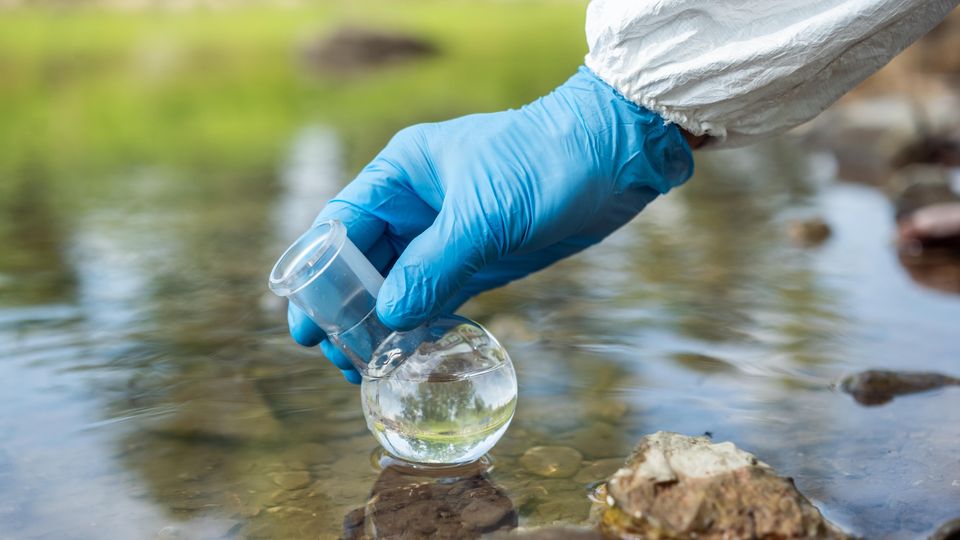
Emerging contaminants are pushing water analysis beyond conventional targeted testing approaches. As laboratories confront PFAS, microplastics, and increasingly complex environmental mixtures, technological advances are changing how scientists detect and interpret contamination.
The ultra-trace era of water analysis
Water analysis is no longer primarily about measuring known contaminants. Increasingly, labs are being asked to identify previously unrecognized threats, interpret complex environmental signals, and generate actionable insights from large datasets.
Modernizing GC-MS Workflows: Sustainable SVOC Analysis and Automated Extraction
This webinar explores how robotic extraction workflows can reduce technical variation, decrease solvent consumption, and improve operational efficiency while maintaining full EPA 8270 compliance for SVOC analysis in water samples.View Video
Until recently, environmental monitoring largely focused on measuring contaminants that were already known and prioritized by regulators. The methods used for these analyses were developed to measure specific compounds, and regulatory agencies established monitoring priorities. Targeted workflows enabled labs to obtain the data needed to assess environmental quality and compliance.
It is increasingly challenging to apply this model to a new generation of contaminants, including per- and polyfluoroalkyl substances (PFAS), pharmaceutical residues, endocrine-disrupting compounds, and microplastics.
These contaminants often occur at vanishingly small concentrations, exist within complex environmental matrices, and remain only partially characterized. Labs are challenged to analyze a growing list of contaminants with increasingly lower limits of detection to generate the data needed to assess potential risks to the environment and human health.
The challenge extends beyond measurement to interpretation. Labs are facing a shift from targeted contaminant testing toward broader environmental intelligence. In addition to investigating unknown compounds, they must interpret large datasets and identify environmental signals that may represent emerging threats.
Often, traditional targeted workflows that are designed to detect predefined analytes capture only a small subset of the chemicals present in environmental samples, thereby limiting their ability to fully characterize complex samples.
“Targeted analysis will only provide information on the specific compound you are looking for,” said Dr. Susan Richardson, professor of chemistry at the University of South Carolina. “This information is useful because it provides quantitative data, but it misses the bigger picture of other unknown chemicals that can also be present.”
Understanding these unknown compounds is critical, as Richardson noted that “it might be that these unknown compounds are more toxic or more important than the ones in the targeted analyses.”
As such, water analysis is evolving from contaminant monitoring toward a broader goal of generating environmental intelligence. This can enable scientists to identify previously unknown risks and create a more comprehensive understanding of environmental health.
According to Dr. Arjun Venkatesan, associate professor of civil and environmental engineering at the New Jersey Institute of Technology, this shift is transforming environmental monitoring programs from passive data-collection exercises into decision-support tools.
He noted that monitoring programs are becoming “more predictive, integrated, and decision-oriented,” serving as “early warning systems that provide actionable insights to utilities, regulators, and communities, enabling proactive rather than reactive environmental management.”
Few contaminant classes illustrate this transition more clearly than PFAS, which have become a key challenge for environmental laboratories.
PFAS and ultra-trace detection
As a contaminant class, PFAS (referred to as “forever chemicals” because of their environmental persistence) have had a profound impact on environmental analytical chemistry.
Thousands of PFAS compounds have been identified, with many occurring at trace or ultra-trace concentrations in complex environmental samples. They have exposed the limitations of conventional workflows, as their analysis requires enhanced sensitivity, reproducibility, and contamination control.
At the same time, regulatory agencies worldwide continue to lower acceptable exposure limits, placing pressure on laboratories to obtain accurate measurements at increasingly low concentrations.
Meeting these demands requires more than increased instrument sensitivity, as there are many factors that can impact analyses. For example, at ultra-trace levels, laboratory materials, solvents, and analytical systems can contribute to background contamination.
Further, matrix interference can complicate quantification, and the structural diversity of PFAS compounds creates challenges for extraction, separation, and method standardization. Labs must therefore demonstrate analytical confidence and reproducibility across methods, instruments, and testing sites.
To address these challenges, environmental laboratories are adopting increasingly sophisticated analytical workflows. Advances in liquid chromatography-tandem mass spectrometry (LC-MS/MS) have improved sensitivity and selectivity to enable the detection of PFAS at parts-per-trillion concentrations.
Improved separation techniques help to resolve structurally similar compounds, and improved extraction and cleanup procedures reduce the effects of matrices and create more reliable measurements.
Contamination control is equally important. Evaluating potential PFAS sources within analytical systems, reducing carryover, and minimizing background contributions from consumables can all improve confidence in ultra-trace measurements.
PFAS have exposed analytical challenges that extend beyond their contaminant class. Environmental labs are facing pressure to detect smaller signals in more complex matrices while maintaining confidence in the accuracy, reproducibility, and interpretability of the results.
PFAS may be considered a model for the broader analytical challenges for environmental monitoring. Addressing these challenges increasingly requires analytical approaches capable of looking beyond predefined contaminant lists.
The shift from targeted testing to environmental discovery
Targeted methods remain essential for regulatory monitoring, but transformation products, previously unidentified contaminants, and complex chemical mixtures may evade these workflows.
To address these limitations, labs are increasingly turning to discovery-oriented analytical approaches. This has led to greater interest in non-targeted analysis, suspect screening, and high-resolution mass spectrometry (HRMS)-based discovery workflows.
Rather than focusing on predetermined analytes, these methods can capture a broad range of compounds in environmental samples, enabling further investigation.
“High-resolution mass spectrometry and non-targeted analysis have greatly expanded our knowledge of what is in water and the environment,” explained Richardson.
Innovative mass spectrometry technologies offer highly accurate mass measurements that can help determine molecular formulas and narrow the range of possible chemical structures. They may be combined with suspect screening workflows, spectral libraries, computational toxicology approaches, and sophisticated data-analysis tools to expand the scope of environmental investigations.
Now, rather than confirming the presence of known contaminants, researchers can explore signals that may indicate emerging hazards, unrecognized exposure pathways, or contaminants not yet included in monitoring programs.
While these technological advances make it easier to generate data, interpretation challenges remain. HRMS workflows, for example, can generate thousands of spectral features from a single sample. Researchers must then determine which signals correspond to environmentally relevant compounds, and which represent naturally occurring chemicals, analytical artifacts, or lower-priority contaminants.
“One of the biggest challenges is distinguishing meaningful signals from analytical artifacts and ensuring that the reported findings are scientifically defensible,” said Venkatesan.
Richardson agrees that identifying meaningful environmental signals remains a significant challenge. “This is the bottleneck,” she said. “There is no good way to know for sure whether newly identified compounds are truly meaningful until they have been evaluated through toxicity testing or quantified in environmental samples.”
Researchers rely on a variety of strategies to address this challenge. Computational toxicology, AI-assisted spectral interpretation, and large spectral databases may be used to prioritize compounds for further investigation. Concurrently, improving data harmonization and standardizing identification confidence helps labs compare results across studies and monitoring programs.
Navigate Today's Environmental Testing Challenges With Greater Confidence
This compendium provides practical guidance across a range of environmental applications, with particular emphasis on water testing and contaminant detection.View Compendium
Environmental monitoring has therefore become more discovery-oriented, focusing on determining which compounds pose the most meaningful risks to environmental or public health. Analytical success will depend not only on the ability to detect signals, but to accurately interpret them.
Looking ahead: microplastics, AI, and continuous monitoring
The next phase of water analysis extends beyond dissolved chemical contaminants. Microplastics and nanoplastics present different analytical challenges as they exist as chemical pollutants and as heterogenous physical particles. As a result, their size, shape, composition, and behavior within the environment can vary significantly, complicating efforts to develop standardized monitoring approaches. Often, they require chemical and physical characterization, creating further analytical complexity.
Labs must simultaneously face the challenges these contaminants present and mounting operational pressures. Expanding contaminant lists, increasing sample volumes, and larger, more complex datasets must be addressed while managing staffing constraints and demand for faster turnaround times.
New analytical and computational approaches can help overcome some of these challenges. Raman spectroscopy and Fourier-transform infrared (FTIR) imaging, for example, can help characterize microplastics with greater specificity. Automated particle-analysis platforms can also reduce the manual effort required to process large numbers of samples.
As datasets continue to grow in size and complexity, AI is also being applied to environmental workflows. As mentioned, AI-assisted data interpretation may be used to prioritize compounds for further investigation and accelerate spectral interpretation within very large datasets.
Automating workflows offers the added benefits of improved consistency and efficiency, by reducing manual work associated with data processing and review.
Despite growing interest in continuous environmental surveillance, significant technological challenges remain. “To achieve widespread continuous environmental surveillance, significant advances in sensor technologies will be required,” said Venkatesan.
“While reliable sensors exist for parameters such as pH, dissolved oxygen, conductivity, and turbidity, sensors capable of continuously monitoring trace contaminants and human health biomarkers are still in relatively early stages of development.”
Although significant technical barriers remain, advances in sensing technologies are already expanding the scope of environmental surveillance. These include real-time sensors, continuous monitoring systems, and distributed monitoring networks. They may offer a more complete view of environmental conditions compared to traditional periodic sampling methods.
These technologies and methods demonstrate a shift in environmental monitoring from periodic contaminant testing to increasingly automated, distributed, and possibly predictive monitoring systems.
In this context, detecting contamination will be important, but contextualizing environmental signals, prioritizing risks, and responding quickly based on the data to inform operational and regulatory decision-making will become equally important.
Environmental intelligence
Labs are tasked with detecting contaminants at lower concentrations, characterizing increasingly complex environmental mixtures, and interpreting larger volumes of data than ever before. Together, several technological and methodological advances are transforming water analysis into a more sensitive, data-intensive, and exploratory process.
While analytical sensitivity is critical, the ability to identify meaningful signals within complex datasets and translate those findings into actionable information is becoming increasingly important.
“For many contaminants, we can already measure concentrations at extremely low levels,” said Venkatesan. “The greater challenge is understanding what those measurements mean in terms of sources, environmental fate, exposure risks, treatment effectiveness, and public-health impacts.”
This evolution is paired with growing emphasis on discovery, interpretation, automation, and AI-assisted analysis.
Water analysis is evolving from a process used to confirm known risks to one used to identify threats that have yet to be fully defined. The future of environmental monitoring will depend not only on detecting contaminants but also on generating the environmental intelligence needed to understand, prioritize, and respond to an increasingly complex set of environmental threats.
 Add Technology Networks as a preferred Google source to see more of our trusted coverage.



