We've updated our Privacy Policy to make it clearer how we use your personal data. We use cookies to provide you with a better experience. You can read our Cookie Policy here.
Laboratories consume substantial amounts of energy, water, solvents, and single-use materials.
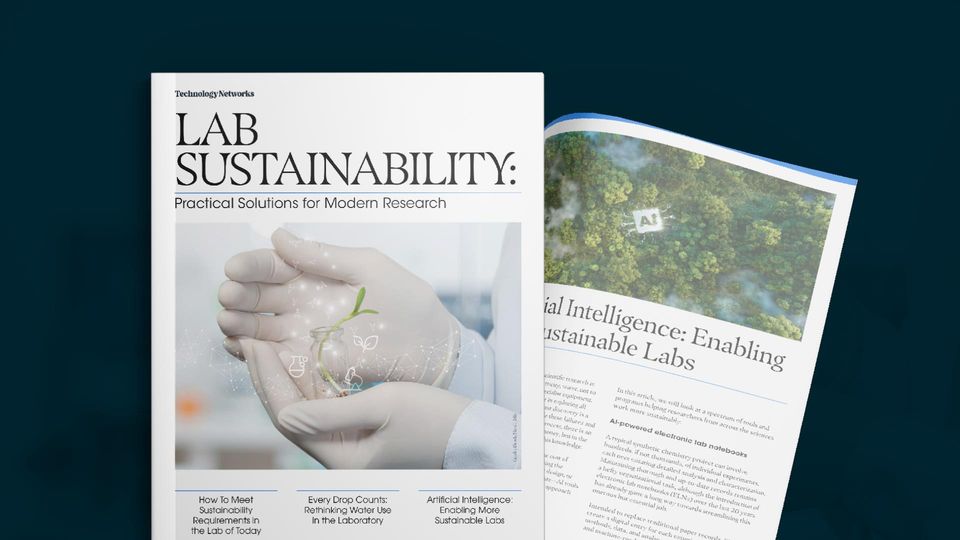
From smarter experimental design and water management to greener analytical workflows and AI-supported decision-making, practical changes can reduce resource use and waste.
This eBook explores the approaches laboratories can use to embed sustainability into everyday research while supporting efficiency, reproducibility, and long-term operational improvements
Download this eBook to discover:
Practical strategies to reduce energy, water, solvent, and consumable use
How greener analytical approaches, smarter experimental design, and digital tools can improve efficiency
Ways to embed sustainable practices into laboratory workflows, procurement, infrastructure, and culture
SPONSORED BY
LAB
SUSTAINABILITY:
Practical Solutions for Modern Research
Artificial Intelligence:
Enabling More
Sustainable Labs
Every Drop Counts:
Rethinking Water Use
in the Laboratory
How To Meet
Sustainability
Requirements in
the Lab of Today
Credit: iStock/Natali_Mis
CONTENTS
5
How To Meet Sustainability
Requirements in the Lab of Today
9
Every Drop Counts: Rethinking Water
Use in the Laboratory
13
Achieving Greener Analytical
Workflows With Supercritical Fluid
Chromatography
16
Artificial Intelligence: Enabling More
Sustainable Labs
22
How Green Is Your Lab?
25
Top Five Tips for
a Sustainable Lab
LAB SUSTAINABILITY: PRACTICAL SOLUTIONS FOR MODERN RESEARCH 3
TECHNOLOGYNETWORKS.COM
FOREWORD
Sustainability is no longer a peripheral consideration in science. As laboratories
around the world face increasing pressure to reduce their environmental impact while
maintaining scientific excellence, researchers, technicians, and institutional leaders
are rethinking how science is conducted, managed, and supported.
This eBook explores how meaningful progress can be achieved through a
combination of practical action, cultural change, and technological innovation.
Drawing on expert perspectives, it examines strategies for reducing waste, conserving
water and energy, adopting greener analytical methods, and leveraging emerging tools
such as artificial intelligence to enhance efficiency and decision-making.
As the demands on research continue to evolve, the laboratories that thrive will be
those that embrace innovation while stewarding resources wisely.
The Technology Networks editorial team
Designed for GC.
Made for you
Introducing Intura, the most advanced GC gas
generator solution on the market today, utilizing
new technologies to bring your GC the reliable,
consistent, high purity hydrogen (99.99999%
purity), nitrogen and zero air you need to perform
routine and non-routine analyses, day after day. Scan here to fi nd out more
Your local gas generation partner
peakscientifi c.com
5 LAB SUSTAINABILITY
How To Meet Sustainability
Requirements in the
Lab of Today
Nicholas Philip Gaunt, PhD
Sustainability in the lab is not just about turning off the
lights at the end of the day. It’s about creating a culture
where greener practices are built into everything you
do, from how you design an experiment to the way you
dispose of its by-products. For bench scientists, this can
feel overwhelming at first. After all, labs are resourcehungry
by nature, full of plastics, solvents, energyhungry
equipment, and single-use consumables. But the
truth is, many of the biggest wins for sustainability don’t
require huge investment or disruption.
Think of this guide as a starting point: a practical
toolkit of habits and hacks you can build into your
daily workflow. None of them will single-handedly
save the planet, but together they will add up. And, in
the process, they may make your science smoother,
cheaper, and even more reproducible.
Smarter plastics use in the lab
Single-use plastics are one of the biggest environmental
burdens of modern research. Pipette tips, conical tubes,
and petri dishes pile up quickly, with many destined for
incineration. Cutting down doesn’t mean compromising
sterility or safety, it’s about being smarter in what you
use, reuse, and recycle.
Start with the basics: pipette tip boxes. Many
manufacturers offer refill systems, where sterile inserts
slot into reusable racks. Instead of throwing away bulky
boxes, you can keep reusing the same rack.
Credit: iStock/gorodenkoff
TECHNOLOGYNETWORKS.COM
LAB SUSTAINABILITY: PRACTICAL SOLUTIONS FOR MODERN RESEARCH 6
The same goes for reusable glassware. Swapping
disposable plastic culture bottles or reagent containers
for glass alternatives (where safe and practical) is one of
the easiest changes you can make.
To take it further, set up a plastic reuse cycle
within your lab:
∙ Identify consumables that can be sterilized like
centrifuge tubes or certain bottles.
∙ Create a reuse station near your autoclave or
dishwasher.
∙ Assign rotation so that items are washed, checked,
and returned to stock weekly.
It’s worth checking if your institute or supplier offers
a recycling scheme for lab plastics. Quite often, the
companies that supply now also collect and recycle tip
boxes, Falcon tubes, and various packaging materials.
Adding a labelled recycling bin next to your plastic
waste container is often all it takes to change habits.
Tip: Keep a tally of what you reuse or
recycle for a month. You’ll be surprised
at how quickly the numbers add up, and
having comprehensive sustainability data
makes it easier to convince your peers or
seniors to support bigger initiatives.
Waste less, save more
Staying on how quickly the numbers add up, every
scientist has been guilty of making “just a bit extra”
buffer or medium, only to throw it away weeks later.
Over-preparation is one of the most common, and most
avoidable, sources of waste in the lab.
A greener approach starts with planning volumes more
carefully. For buffers that degrade quickly, make smaller
batches and top them up only as needed. Yes, it takes
a little more time in the moment, but it avoids liters of
unused reagent going to waste.
Another simple win is the use of aliquoting. By splitting
reagents into smaller working volumes, you can easily
prevent repeated freeze-thaw cycles that degrade
chemicals, meaning they last longer and you use less.
The financial benefits are equally compelling. The prices
of certain solvents, specialty reagents, and even plastics
are rising. Many labs that adopt stricter waste tracking
report a noticeable drop in expenditure within months.
Sustainable science isn’t just better for the planet, it’s
better for your hard-fought for grant budget.
Tip: Set up a chemical sharing scheme
across departments. Before you order that
new bottle of expensive antibody, check if
another group has it in their freezer. Not
only does sharing reduce waste, but it could
strengthen collaboration.
Energy efficiency in everyday lab work
Labs are notoriously energy-intensive spaces,
sometimes consuming five times more energy than a
typical office building of the same size. But not all of
this is unavoidable, much of it comes from inefficient
equipment use.
For example, take ultra-low freezer settings. By
lowering the setpoint from –80 °C to –70 °C, you can
cut energy use by up to 40% without compromising
sample integrity. Even better, organize your freezer
storage so that you can find samples quickly and reduce
door-open time.
Fume cupboards are another hidden energy sink. An
active fume cupboard with an open sash can consume the
same energy as several houses. In the labs that I called
home throughout my bench career, we tried to make
“shut the sash” a lab mantra, and posted visual reminders.
TECHNOLOGYNETWORKS.COM
LAB SUSTAINABILITY: PRACTICAL SOLUTIONS FOR MODERN RESEARCH 7
Timers and smart plugs are cheap ways to avoid leaving
shakers, heating blocks, or lights running overnight. And
when it comes to lighting, LED retrofits are the easy,
quick-win – low-hanging fruit that pay off quickly.
Tip: Start with an energy audit. Even
something as simple as tracking which
instruments are left on unnecessarily can
identify quick wins and make the case for
new policies.
Embedding sustainability into experimental
design
Going green isn’t just about cleaning up after yourself,
it’s about thinking ahead. Building sustainability into
your experimental design is one of the most powerful
steps you can take.
Green chemistry principles can guide you to minimize
the use of hazardous solvents, reduce reaction scales,
and prioritize safer alternatives. For example, replacing
phenol-chloroform extraction with magnetic beadbased
nucleic acid purification eliminates toxic waste
while often improving reproducibility.
When planning an experiment, ask yourself:
∙ Can this be scaled down to use less reagent?
∙ Is there a safer alternative solvent or buffer?
∙ Can I simulate this step digitally (e.g., molecular
modeling) before committing to the wet lab?)
In teaching labs, simulations or virtual experiments can
often replace physical runs that consume resources,
without compromising learning outcomes.
Tip: Add a “sustainability checkpoint”
to your experimental planning. Just like
you have to consider safety in the lab, ask
yourself what the environmental footprint
of your workflow will be.
Smarter sourcing and procurement
What comes into the lab matters as much as what
leaves it. Greener procurement starts with choosing
suppliers who prioritize sustainability, many now
provide certifications or detailed environmental impact
statements for their products.
Whenever possible, buy in bulk or refill formats. This
reduces packaging waste and cuts down on transport
emissions. Similarly, sourcing locally (for media,
plastics, or dry ice) reduces the carbon footprint
of shipping.
Don’t overlook the hidden lifecycle of your products.
Reagents that require cold-chain shipping or highenergy
manufacturing processes carry a larger footprint
than simpler alternatives. By factoring this in, you can
make more informed choices.
Tip: Ask yourself if the group really needs
this. Could we share with another group?
Is there a greener supplier? Embedding this
pause into your ordering routine will save
both money and waste.
Keeping it compatible
Going green doesn’t mean throwing caution to the
wind. Some sustainability shortcuts can backfire if they
compromise data quality or safety.
∙ Reusing plastics: Only reuse items that can be safely
sterilized. Don’t cut corners on sterility for the sake
of sustainability.
∙ Reducing fume cupboard use: Always prioritize
safety when handling volatile or toxic chemicals.
The “shut the sash” rule applies only when the hood
isn’t in active use.
TECHNOLOGYNETWORKS.COM
LAB SUSTAINABILITY: PRACTICAL SOLUTIONS FOR MODERN RESEARCH 8
∙ Switching solvents: Greener alternatives are great,
as long as you confirm they don’t interfere with
your assay readouts. Some substitutes can alter
reaction kinetics.
∙ Energy savings: Freezer temperature shifts should
be validated with your sample type; certain
biomolecules may degrade faster at higher setpoints.
Tip: Keep a compatibility log in your lab.
When you trial a new greener method, note
whether it affected yield, reproducibility, or
safety. We learn more from our failures in
the lab than our successes, and preventing
any repeated mistakes helps build a
collective knowledge base.
Final considerations: Beyond the bench
Meeting sustainability requirements in today’s labs
isn’t just about individual habits; it’s about culture and
infrastructure. Many funding bodies and journals now
require statements on sustainability, and institutions are
adopting frameworks like My Green Lab certification to
track progress.
Emerging technologies are also helping. AI-driven lab
scheduling can optimize freezer use or instrument time,
while cloud-based chemical inventory systems prevent
over-ordering. Even automation is playing a role, with
robotic systems designed to minimize reagent use
and waste.
For researchers, the personal payoff is clear, as greener
practices save money, reduce errors, and make your
experiments more reproducible. For any production
or research institutions, they can demonstrate a
commitment to environmental responsibility that could
boost reputation, as well as attract additional funding.
Above all, sustainability in the lab is not a box-ticking
exercise, but a mindset shift. The goal, at this stage, is
not perfection, but progress in small, cumulative steps
that transform the lab culture over time.
So, if you start with even one of the tips in this guide, you’re
already part of that shift. And if every bench scientist did
the same, the collective impact on the scientific industry
and academic institutions would be enormous.
9 LAB SUSTAINABILITY
Every Drop Counts:
Rethinking Water Use in the
Laboratory
Abigail Williams
As the supply of global freshwater resources continues
to face increasing pressure due to climate change,
population growth, and competing demands, universities
and research organizations have a particular responsibility
to demonstrate good environmental stewardship and use
water efficiently in their laboratories.
So, what types of strategies can organizations undertake
to make water use more sustainable in labs? What
challenges do they face when implementing these
strategies? And what issues and trends relating to the
sustainable use of water in labs can we expect in the
coming years?
Making laboratory water use more efficient
As Edyta Singhvi, lead technician in the University of
Westminster’s College of Liberal Arts and Sciences,
explains, laboratories are incredibly resource-intensive
spaces, typically consuming “three to ten times more
energy and up to four times more water per square
meter than standard office or academic spaces.” To
address this issue, Singhvi and her team have adopted
the Laboratory Efficiency Assessment Framework
(LEAF), a pioneering laboratory sustainability program
developed by University College London (UCL), which
provides a structured framework to improve operations
in a number of areas, including water sustainability.
Credit: iStock/simonkr
TECHNOLOGYNETWORKS.COM
LAB SUSTAINABILITY: PRACTICAL SOLUTIONS FOR MODERN RESEARCH 10
“Since adopting LEAF, we have moved beyond highlevel
goals to implement standards that have genuinely
changed our daily habits. By focusing on technician-led
solutions, we’ve made sustainable water use the default
way we work at the University of Westminster. This
approach has also created a platform where the entire
department feels empowered to contribute to ongoing
improvements,” she says.
While implementing these changes, Singhvi and her
team have “consciously moved away from individual,
ad hoc workflows toward a team-managed model
that prioritizes efficiency.” A major part of this shift is
centralized batching, which has consolidated all washing
and sterilization services so that dishwashers and
autoclaves run only at maximum capacity, drastically
cutting water and energy use per cycle.
The team also reviewed how staff managed teaching at
science practicals to determine exactly where standard
tap water is sufficient, and where purified water is
actually necessary, ensuring that “the significant
resources required for purification aren’t wasted when
they aren’t needed for a successful result.”
The financial benefits of water conservation
Another organization leading the way in this area is the
University of Edinburgh, which has included sustainable
water use in a list of its key priority and action areas.
“Despite enjoying relatively good water availability
compared to many other parts of the UK, the Edinburgh
region can still suffer from water scarcity, an issue that
will be amplified in future with climate change. Water
also has a financial cost, so it makes sense to use it
sparingly,” says Andrew Arnott, climate, biodiversity
and sustainability manager at the University
of Edinburgh
The university has engaged lab users on efficient
cleaning and sterilization practices when washing
glassware at sinks, as well as when using dishwashers,
autoclaves, and purified water, via its Sustainable Lab
Awards. In a more ambitious move, it has also worked
towards the phasing out of single-pass “mains to drains”
water use for process cooling, or the generation of
vacuum in labs, by using vacuum pumps, waterless
condensers, and closed loop cooling systems that have
co-benefits of reduced flood risk and more precise
temperature control—technologies that Arnott says
“can deliver thousands of pounds of savings annually
from reduced water consumption, with typical payback
periods of under five years.”
An evidence-based approach to water
efficiency
Elsewhere, Plymouth Marine Laboratory (PML) has
used the LEAF process to identify high purity water
production and usage as the operational area with the
single greatest environmental footprint. As Dr. Rachael
Rees, science facilities manager at PML, explains, when
it began the process in 2021, PML operated three
separate systems that produced reverse osmosis (RO)
and ultrapure water for laboratory use, but through an
in-depth consultation with researchers found that all
scientific activities “could be fully supported by two
systems without compromising integrity of data.”
“This evidence-based approach enabled us to
decommission the third system that was aging, relatively
inefficient, and approaching the end of its operational
life,” she says.
According to Rees, decommissioning the redundant unit
“delivered multiple sustainability benefits,” including
reduced electricity consumption and associated
carbon emissions, and lowered operational and
maintenance costs.
PML has also begun collecting reject water—the portion
of water discharged by a system during the purification
process before the required water quality is achieved—
from its purification systems for reuse in non-scientific
activities, like cleaning.
“This simple initiative helps reduce overall water
consumption and ensures that a valuable resource is not
unnecessarily wasted,” says Rees.
TECHNOLOGYNETWORKS.COM
LAB SUSTAINABILITY: PRACTICAL SOLUTIONS FOR MODERN RESEARCH 11
RACHAEL REES, SCIENCE FACILITIES MANAGER AT
PML, DEMONSTRATES THE COLLECTION OF REJECTED
ULTRA-PURE WATER FOR USE IN OTHER OPERATIONAL
TASKS IN THE LABORATORY.
CREDIT: RACHAEL REES / PML.
Another university that promotes sustainable water
usage in labs is the University of Leeds, where the
medicinal chemistry department has invested in a
cooling unit to recirculate water in a closed system for
its rotary evaporators, rather than having them attached
to a water source directly
According to Laura Wilkinson, sustainability
programme officer at the University of Leeds the new
system “uses approximately six liters of water compared
to the previous use of 250,000 liters per year, an
enormous saving.”
Meanwhile, Dr. Andrea Hodgetts, head of research
sustainability at UCL, explains that laboratories across
UCL use a range of strategies to support sustainable
water use, including in the chemistry department,
where the potential to reduce water usage in the lab by
isolating infrequently used taps was identified.
“These taps require flushing for three minutes each
week to remove the risk of Legionella. Although the
hand wash and washing up sinks are regularly used,
the need for the other taps was reduced by introducing
circulating chillers and condensers. 84 taps were
isolated, removing the requirement for flushing.
Assuming a flow rate of six liters per minute, this saves
over 1500 liters of water every week,” she says.
Innovative solutions for sustainable labs
For Singhvi, one of the biggest challenges in promoting
sustainable water usage has been the lack of clear
data on the university’s current water spending,
which “makes it difficult to set a firm baseline for
improvement.” To fix this, her team is working with
the sustainability team to install water meters at key
locations to properly monitor usage. It is also supporting
the estates team in sourcing automatic flushing systems
to meet Legionella compliance requirements, which
will “replace the wasteful habit of leaving taps running
manually with a precise, automated system.”
“Ultimately, aligning our work with LEAF standards has
allowed our technical team to act as architects of more
sustainable labs. What started as a series of technical
changes has turned into a permanent platform for
innovation,” adds Singhvi.
In Rees’s view, another key challenge lies in
‘”overcoming concerns that changes to established
practices may affect data quality,” and advises that the
most effective way to address this challenge is through
evidence-based decision making.
Where opportunities exist to reduce the use of highpurity
water, she urges laboratories to “validate proposed
changes and demonstrate that they don’t compromise data
quality,” and believes that retaining this evidence “helps
build confidence among laboratory users and supports the
long-term adoption of more sustainable practices.”
“For laboratories embarking on similar initiatives, my
advice would be to start by understanding your current
water use and identifying where the greatest opportunities
for improvement exist. Engage laboratory users early,
involve them in discussions around potential changes and
support decisions with robust evidence,” she says.
For Wilkinson, another challenge is the need to improve
understanding of the lab experiments, equipment and
operations employed in the day-to-day running of lab
spaces, to “aid understanding of what measures can
be taken.” In her view, “the point of the work isn't to
hinder research activities, but to challenge the way they
TECHNOLOGYNETWORKS.COM
LAB SUSTAINABILITY: PRACTICAL SOLUTIONS FOR MODERN RESEARCH 12
operate, if that is required, while assisting the labs to
purchase the most sustainable lab equipment.”
Meanwhile, Hodgetts stresses that many solutions to
reduce water cost money and “may require additional input
from estates teams, who may have limited capacity.” Here,
measuring the potential savings “can help with developing
business cases that feed in departmental budgeting or grant
applications to support implementation of measures.”
“Collaborating with estates teams can support larger
projects such as room refurbishments, tap removals and
capping, and installation of autoclaves with heat plate
exchangers, which allows for recirculation of water used
for cooling the chamber. Such projects help to reduce
water use, a goal of many organizations,” she says.
Why cultural change matters
Looking ahead, Arnott predicts that heightened
awareness of water scarcity will bolster the appeal of
waterless and closed loop systems in an effort to ensure
business and organizational continuity and reduce
vulnerability to water shortages.
“Furthermore, as more of our students arrive in our
institutions from increasingly water-stressed regions
they will carry with them a concern about water
wastage, and it will become increasingly unacceptable to
ask our students to follow practices which waste such a
precious resource,” he says.
“I would therefore expect to see more waterless devices
coming to market to replace equipment which uses
large amounts of water—this already exists for waterless
condensers, closed loop chillers, closed loop vacuum,
and dry autoclaves, but perhaps more opportunities
exist,” he adds.
Rees predicts that we are likely to see increased
monitoring and measurement of laboratory water
use and, as organizations become more data-driven
in their sustainability efforts, sub-metering and smart
monitoring systems “will likely be employed to help
laboratories better understand where water is being
consumed and identify opportunities for improvement.”
From a technology perspective, Rees expects continued
improvements in the efficiency of water purification
systems, including reduced reject-water volumes, more
energy-efficient purification processes, and enhanced
system monitoring.
“Perhaps the most significant change, however, will
be cultural rather than technological. Sustainable
water use will increasingly become part of everyday
laboratory decision-making rather than a standalone
environmental initiative,” she says.
MEET THE INTERVIEWEES:
Andrew Arnott is the climate, biodiversity and sustainability
manager at the University of Edinburgh. He was previously the
project coordinator for the University’s sustainable laboratories
programme, working to make labs more sustainable by increasing
energy efficiency, reducing waste and improving the design of lab
buildings. He now works on strategies, policies and large-scale
practices to decarbonise the University and have a positive impact
on biodiversity and ecosystems locally and globally.
Andrea Hodgetts is the head of research sustainability at
University College London (UCL). She has a passion for problemsolving
and loves taking on new challenges. She uses these
skills alongside her experiences as a researcher, project- and
partnership manager to identify the ways in which she can reduce
the environmental impact of research.
Rachael Rees is the science facilities manager at Plymouth
Marine Laboratory, where she leads the strategic development
and operational excellence of the organisation’s science facilities.
With responsibility for a 14‑strong team of laboratory managers,
Rachael ensures that PML’s equipment, laboratories and scientific
activities are capable of delivering innovative, environmentally
responsible and world‑leading marine research.
Edyta Singhvi is the lead technician in the University of
Westminster’s College of Liberal Arts and Sciences. She is an
accomplished scientist and technical team leader with a proven
track record of driving innovation and delivering impactful results.
She is skilled at leveraging advanced scientific expertise, strategic
thinking, and effective collaboration to solve complex challenges
and advance cutting-edge research and development.
Laura Wilkinson is the sustainability programme officer -
engagement at the University of Leeds. She leads the University's
Sustainable Labs programme, helping laboratory staff across
campus to embed sustainability in their research and teaching,
sharing best practice, and encouraging uptake of LEAF membership,
and supporting its accreditation in all Schools and Faculties.
13 LAB SUSTAINABILITY
Achieving Greener Analytical
Workflows With Supercritical
Fluid Chromatography
Blake Forman
As sustainability becomes an increasing priority across
pharmaceutical development, environmental testing,
and natural product research, analytical scientists are reevaluating
the environmental impact of their workflows.
Chromatography—central to these workflows—
has traditionally relied on significant volumes of
organic solvents, raising concerns around toxicity,
waste, and energy consumption. Supercritical fluid
chromatography (SFC) has re-emerged as a compelling
alternative, offering comparable performance while
substantially reducing environmental footprint.
Prof. Caroline West, full professor of analytical
chemistry at the University of Orleans, France, has
been at the forefront of SFC and separation science
research for more than a decade. With deep expertise in
chromatography, she has witnessed the transformation
of SFC from a niche, preparative technique into a robust
analytical tool.
In this interview, West discusses why SFC is considered
a greener alternative, the technological advancements
driving its adoption, and how analytical labs can become
more sustainable.
Credit: iStock/ArisSu
TECHNOLOGYNETWORKS.COM
LAB SUSTAINABILITY: PRACTICAL SOLUTIONS FOR MODERN RESEARCH 14
Supercritical fluid chromatography:
A greener mode of chromatography
What is supercritical fluid
chromatography?
Supercritical fluid chromatography (SFC)
is an analytical separation technique that
uses a supercritical fluid—most commonly
supercritical carbon dioxide—as the primary
mobile phase, mostly combined with small
amounts of organic solvent, to separate and
identify chemical compounds within a mixture.
SFC’s reputation as a greener analytical method stems
primarily from its reduced reliance on traditional
organic solvents. Instead, it uses supercritical carbon
dioxide (CO2) as the main mobile phase component.
"A large part of the solvent volumes used in liquid
chromatography can be replaced with CO2; while CO2
is not entirely desirable, it’s at least less toxic than many
of the solvents we normally use,” explained West.
In liquid chromatography (LC), organic solvents
such as hexane or acetonitrile are commonly used,
which can pose risks to laboratory staff and require
careful disposal. By contrast, CO2—often sourced as
a byproduct of industrial processes—reduces both
exposure hazards and solvent waste.
Importantly, SFC does not eliminate environmental
concerns entirely. However, its use in closed-loop
systems and its lower toxicity profile significantly
reduce overall environmental impact compared with
conventional solvents.
West noted that replacing solvents like hexane with
CO2 achieves comparable separations while reducing
waste and risk: "You would have nearly the same
chromatographic separation, but it requires a lot
less solvent."
“In terms of the exposure to the chromatographer, but
also the amount of solvent you need to produce and the
amount of waste you need to treat afterwards, SFC is
much better,” she continued.
Instrumentation breakthroughs: Enabling
modern analytical SFC
The widespread adoption of SFC in analytical
laboratories has been driven by major improvements
in instrumentation over the past 15–20 years.
Earlier systems lacked robustness, sensitivity, and
reproducibility, restricting their use primarily to
specialized applications.
Modern SFC systems now deliver performance that
rivals high-performance LC, making them suitable for
routine analytical applications.
"The instruments we have for analytical SFC are now of
the same quality as analytical LC," said West.
These advancements include improved pumps, pressure
control systems, detectors, and integration with mass
spectrometry, all of which have enhanced reliability and
analytical precision.
From preparative to analytical SFC
Historically, SFC was primarily used for preparativescale
separations, particularly in chiral chemistry.
Analytical-scale SFC was primarily used as a precursor
to scaling up separations.
This was largely because analytical instruments lacked
the reliability needed for routine quality control (QC) or
high-throughput environments. "You wouldn't use SFC
in QC labs because the instruments were not robust
enough," West explained.
Today, that limitation has been resolved, opening the
door to analytical SFC across multiple sectors, including
pharmaceutical QC, environmental testing, and bioanalysis.
TECHNOLOGYNETWORKS.COM
LAB SUSTAINABILITY: PRACTICAL SOLUTIONS FOR MODERN RESEARCH 15
Emerging applications of SFC
SFC’s application scope has expanded significantly,
particularly in areas requiring high sensitivity and
complex sample analysis.
West pointed to several key growth areas:
∙ Natural products research
∙ Bioanalysis
∙ Environmental analysis
Interest in natural products has driven demand for
efficient separation techniques. "There is a lot of interest
in natural medicine products from China, for instance,”
said West.
Meanwhile, advances in interfacing SFC with
mass spectrometry (SFC–MS) have unlocked new
opportunities in trace-level analysis. "You usually get
excellent sensitivity with SFC–MS, even better than
LC–MS," West stated.
This enhanced sensitivity makes SFC–MS particularly
attractive for detecting low-abundance compounds in
complex biological or environmental samples.
Sustainability challenges: Instrument size
and energy consumption
Despite its advantages, SFC still faces sustainability
challenges—particularly related to instrument size and
energy consumption.
West emphasized the need for more compact and
energy-efficient systems: "I would like smaller
instruments, but smaller instruments that also have
lower energy consumption. Currently, I think our
instruments are too big. It's not just a question of the
footprint in the lab; it's the electricity you're consuming
to have them working."
Reducing instrument size would require innovations in
several components:
∙ Lower flow-rate pumps
∙ Smaller chromatographic columns
∙ More precise back-pressure regulators
Addressing these engineering challenges could
significantly reduce both laboratory energy use and
physical footprint.
Beyond chromatography: Reducing the
environmental footprint of laboratory
workflows
West highlighted that the environmental burden
of analytical laboratories often sits outside the
measurement step.
"A lot of the environmental footprint is in the sample
preparation, which typically involves a lot of plastic
consumables," said West.
Single-use plastics, solvent-heavy protocols, and
inefficient workflows contribute significantly to waste
generation.
One promising solution lies in integrated workflows:
"When you have sample prep online with the analysis,
this is better because it allows you to reduce the
consumption of solvent and plastic material.”
These systems streamline processes, minimizing manual
handling and material use.
This content includes text that has been created with the assistance of
generative AI and has undergone editorial review before publishing.
Technology Networks' AI policy can be found here.
MEET THE INTERVIEWEE
Prof. Caroline West is a full professor in analytical chemistry at the
University of Orleans, France, where she is teaching separation
science and data analysis. Her main scientific interests lie in
fundamentals of chromatographic selectivity, both in the achiral
and chiral modes, in SFC and LC.
16 LAB SUSTAINABILITY
Artificial Intelligence: Enabling
More Sustainable Labs
Victoria Atkinson, PhD
By its very nature, cutting-edge scientific research is
a resource-intensive process: electricity, water, not to
mention specific chemicals and specialist equipment.
There’s an element of trial and error in exploring all
new ideas, and behind every important discovery is a
string of failed experiments. But while these failures and
wrong turns are a crucial part of the process, there is an
associated cost—not just in time and money, but in the
resources consumed in the pursuit of this knowledge.
Scientific progress should not come at the cost of
sustainability and—whether it’s streamlining the
experimental process and tailoring project design, or
optimizing lab operations and reducing waste—AI tools
are transforming the way many researchers approach
their work.
In this article, we will look at a spectrum of tools and
programs helping researchers from across the sciences
work more sustainably.
AI-powered electronic lab notebooks
A typical synthetic chemistry project can involve
hundreds, if not thousands, of individual experiments,
each necessitating detailed analysis and characterization.
Maintaining thorough and up-to-date records remains
a hefty organizational task, although the introduction of
electronic lab notebooks (ELNs) over the last 20 years
has already gone a long way towards streamlining this
onerous but essential job.
Intended to replace traditional paper records, ELNs
create a digital entry for each experiment, storing
methods, data, and analyses in an easily searchable
and machine-readable format. These digitized records
Credit: iStock/Petmal
TECHNOLOGYNETWORKS.COM
LAB SUSTAINABILITY: PRACTICAL SOLUTIONS FOR MODERN RESEARCH 17
foster ready collaboration between teams and provide
the perfect input for machine learning models, often
prompting the user for missing information or to
highlight duplicate experiments.
However, for computational chemist Professor
Jonathan Hirst, this interactive interface presented
an interesting opportunity to go beyond basic recordkeeping
functionality and begin to challenge users on
the design of their experiments. In 2023, his team at
the University of Nottingham launched AI4Green,
the first electronic lab notebook with a central focus
on sustainability. The software integrates the core
functions of an ELN with a panel of simple apps and AI
tools to calculate the green metrics of a planned reaction
and propose sustainable alternatives where appropriate.
The user first sketches the intended reaction, adding
key details such as reagents and quantities to the
accompanying table. The software then automatically
populates the rest of the table with hazards and
chemical data imported from external databases,
highlighting any particular safety or sustainability
concerns. The associated summary also evaluates
various other aspects of the reaction, including
the reagents, temperature, catalyst recovery, and
isolation method, prompting the user to consider each
component and how it influences the sustainability.
In particular, solvents are a key target of these
interventions—it's estimated that as much as 90% of
waste produced during pharmaceutical manufacture
consists of solvent, the majority of which is ultimately
incinerated. “We have some nice solvent selection
tools where you can find a similar solvent with similar
properties which is more environmentally friendly, and
you can compare pairs of solvents side by side using our
flash cards,” said Hirst.
Post-experiment, AI4Green also enables the user to
evaluate their reactions and draw trends from their
data to identify a greener solvent for future iterations,
specifically using the interactive principal component
analysis (PCA) tool. PCA is a data representation
technique that simplifies complex data sets into a
more readable form; chemists often use this method
to visualize the relationship between different solvent
properties. Usually, this is a one-way process based
on existing data, but Hirst’s interactive tool lets the
researcher incorporate their own empirical observations
into this representation. “The user can drag points
together and then the model will update the plot
in a mathematically rigorous fashion within those
constraints to help them identify a green alternative
solvent from the data that they have,” he explained.
AI is becoming an increasingly important part of these
supporting add-ons, and since launching, AI4Green
"The biggest barrier
is really mindset and
chemists’ willingness
to do something
different from what
they've done before.
I think creating a
more open-source
environment is going
to be one of the
critical ways to drive
sustainability and
help people develop
confidence in AI
suggestions.”
— Prof. Jonathan Hirst.
TECHNOLOGYNETWORKS.COM
LAB SUSTAINABILITY: PRACTICAL SOLUTIONS FOR MODERN RESEARCH 18
has incorporated a number of other tools developed for
chemists including AstraZeneca’s open-source AI route
scouting software which helps users evaluate different
pathways when planning a new chemical synthesis. The
group is now working on a machine learning model for
lifecycle analysis, which will ultimately provide chemists
with a much broader overview of the impacts of their
choices, right from reagent sourcing, through
to purification.
But while the coding behind the software is complex,
the user interface isn't. Hirst has designed the ELN
with the needs of the average organic chemist in mind.
“We've deployed it live on the cloud so anyone with
a web browser can register and use it with no specific
skills required at all – we've worked hard to make it
intuitive,” he said. “The biggest barrier is really mindset
and chemists’ willingness to do something different
from what they've done before. I think creating a more
open-source environment is going to be one of the
critical ways to drive sustainability and help people
develop confidence in AI suggestions.”
AI apps assist scientists in making new
materials
Taking it up a notch, AI applications more actively guide
the direction of research to help scientists target the
most productive experiments. Data-driven models can
dramatically accelerate the discovery process—spotting
patterns, analyzing data, and identifying the most
impactful variables. Such tools are particularly valuable
where there is a huge amount of theoretical research
space to explore.
The field of sustainable concrete design is the perfect
example. Concrete, and particularly the cement binder,
is a huge contributor to global CO2 emissions, with an
estimated 8% of the annual total from the manufacture
of cement products. Research groups around the world
are investigating alternative formulations to reduce
or replace this problematic ingredient with greener
alternatives (including fly ash, biochar and even coffee
grounds), balancing sustainability considerations
against mechanical properties and social factors
like cost. However, the sheer volume of possible
combinations, in addition to the extended experimental
times needed to validate properties such as compressive
strength, restricts the rate of progress in this area.
Sequential learning, which combines a machine
learning model with a decision-making rule to
extrapolate from initial data, was therefore an obvious
tool to streamline this process, reasoned materials
informatician Christoph Vӧlker, now head of industrial
AI at Iteratec. In 2021, while based at Bundesanstalt für
Materialforschung und -prüfung in Germany, Vӧlker
and his team developed a sequential learning program
to evaluate alkali-activated binders as an alternative to
cement and found several suitable candidates within
just 11 experiments.
But despite this success, and subsequent applications
of the same methodology, relatively few researchers in
the sustainable concrete space adopted AI-augmented
approaches. The challenge, suggested Vӧlker, is
that actually building and coding these models is a
technically demanding task and remains a barrier,
hindering many researchers from employing artificial
intelligence in their own work.
Aiming to democratize these tools, Vӧlker’s team
therefore developed their sequential learning program
into an open-source and user-friendly app called
SLAMD (Sequential Learning App for Materials
Discovery). The user first outlines the desired
properties of their concrete formulation, inputting
existing experimental results and relevant literature
as basic training data. The program then evaluates
this initial information, making suggestions of the
most promising experiments to try next, according to
various factors weighted by the researcher. Once these
experiments are complete, this data is fed back into the
system for a second iteration, which provides even more
targeted suggestions.
This cycle of inputting training data, machine learning
analysis, and validation by experiment rapidly focuses
the investigation on the most impactful variables and
optimizes the approach to reduce the overall volume
of experiments. Crucially, this smaller experimental
burden not only accelerates discovery, but also
TECHNOLOGYNETWORKS.COM
LAB SUSTAINABILITY: PRACTICAL SOLUTIONS FOR MODERN RESEARCH 19
decreases the environmental impact of the research
process itself, requiring fewer resources, less power, and
less money.
Generative AI and digital twins accelerate
clinical trials
The time, money, and sustainability gains provided
by AI solutions are most significant for large and
experimentally complex studies, such as clinical trials.
“Trials are the last stage of drug discovery and the
majority of the drug development costs will go to this
part,” said Jimeng Sun, a computer science professor
from the University of Illinois Urbana-Champaign and
co-founder of Keiji AI 3,400.
Over the course of the pharmaceutical development
process, an initial screen of hundreds or thousands of
compounds is whittled down to a final pool of just three
or four candidates, but even this small handful is too
expensive and too slow to thoroughly investigate in vivo.
Fortunately, advances in AI are already informing these
critical scientific and financial decisions, with prediction
and analytics models guiding the design and direction
of clinical trials more efficiently than ever before.
“Trial outcome prediction plays a role in what industry
calls portfolio management, i.e., prioritizing which
candidate is most likely to work. The actual experiment
is still necessary, but this is a more systematic way to
determine where to invest and which trials to run,”
explained Sun.
Traditionally, decision makers would look at the
historical track record for trials of similar types of drugs
and benchmark from that figure. Machine learning
methods, on the other hand, combine information from
multiple different sources and use this more complex
spread of data to determine which factors are most
significant for trial success.
Sun’s team employed this approach in their first
prediction model, HINT (Hierarchical Interaction
Network), which used training data from over 8000
past trials to predict the outcome of more than 3,400
recent drug studies.
“We leveraged multiple sources of data—the molecular
structure, the disease indications, the trial protocol—
and then we augmented that with some knowledge
that's related to drug discovery, for example, wet lab
properties, historical track records, etc,” explained
Sun. “All this information was put together through a
graph neural network machine learning model which
considers the interaction of all these components to
finally make a trial prediction.”
Notably, this initial model correctly predicted the
success of Merck’s Sitagliptin (diabetes) and Bayer’s
Afibercept (glaucoma). It also anticipated the costly
failures of the promising drugs Entresto (heart failure)
and Fivipiprant (asthma), which cost an estimated $240
million in unsuccessful trials. The team later developed a
second iteration of this model called SPOT (Sequential
Predictive mOdeling of clinical Trial outcome), which
weights input data according to time and therefore
aligns predictions more closely with the structures and
protocols of modern trials.
Building on the success of HINT and SPOT, they most
recently reported the Clinical Trial Outcome (CTO)
benchmark, which establishes a next-generation dataset
with over 125,000 trials, richer multimodal features, and
continuous temporal updates. This enables more robust,
forward-looking evaluation of trial outcome prediction
models under real-world distribution shifts, setting a new
standard for scalable and deployable clinical AI, said Sun.
But even with a solid prediction of success, the cost and
difficulty of recruiting suitable patients for a trial can
still delay advances in healthcare. A robust phase three
trial requires a few thousand patients, split roughly
50:50 between treatment and control arms. Studying
each individual patient consequently amounts to a huge
investment in both time and money and the challenge
is further compounded for rare or aggressive diseases,
where even finding sufficient patients for a valid trial
can take years. “In these cases, sometimes the control
arm is not even implemented at all because the patients
are just so rare. And of course, for individual patients on
the trials, they will probably prefer the treatment arms,”
said Sun. “But from a scientific point of view, we do still
need the control arms.”
TECHNOLOGYNETWORKS.COM
LAB SUSTAINABILITY: PRACTICAL SOLUTIONS FOR MODERN RESEARCH 20
A digital twin is a dynamic virtual replica of a particular
individual patient, which can simulate that person's
health trajectory following different treatment regimens.
“This is especially useful for control arms. Instead of
using a real patient as a control arm, we can simulate
the patient’s trajectory and compare that directly to the
same patient receiving treatment,” explained Sun. “This
reduces the trial recruitment process. You don't need as
many patients so it can speed up the trials and also put
the patients on the new treatment options.”
In 2023, Sun’s team reported their first digital patient
twin method, TWIN, a generative model that combines
historic data from electronic health records— including
details of prescribed medications, existing treatment
regimens, and any adverse effects—and uses these
to simulate various patient outcomes under different
conditions. “To train a digital twin model, you code
based on a cohort of patients to see what happened
and the model learns from that large number,” Sun
explained. “Once it's trained, the application is then
used for individual patients to simulate what will happen
to that patient.”
This simulation approach is already being trialed by
pharma companies, and Sun hopes this method can help
developers design and refine their trials in the future.
He is currently looking at reducing the training data
demand for producing these patient-specific models. “At
the moment, if you want to simulate a patient trajectory,
you need patient-level data to do that,” said Sun “We're
working on whether we can leverage publications about
other trials with aggregate statistics. Ultimately, we
want to reverse engineer a digital twin model that can
produce individual patient-level data from the statistics
of a cohort.”
Regardless of research field, there are tools available at
all levels of complexity, making the integration of AI into
scientific workflows accessible to everyone. This isn't
just relevant for researchers—departmental support
staff can also incorporate these tools and systems into
their own work, for example, introducing ELNs to
teaching labs or developing a digital twin of building
systems to optimize heating, lighting, and air flow. As
more people familiarize themselves with these tools, the
transformative impact of AI in science will grow, leading
to a more efficient and sustainable future for research.
MEET THE INTERVIEWEES:
Dr. Jimeng Sun is a health innovation professor at the Siebel
School of Computing and Data Science and Carle Illinois College
of Medicine at the University of Illinois Urbana-Champaign, where
he leads groundbreaking research at the intersection of artificial
intelligence and healthcare. His research portfolio spans the
full spectrum of AI-driven healthcare innovation, from clinical AI
systems and drug discovery to AI for clinical trials and machine
learning for biosignals.
Professor Jonathan Hirst received his PhD from London
University in 1993, with Dr. Michael Sternberg at the Imperial
Cancer Research Fund. His research focuses on the application
of computational chemistry to challenging problems in chemistry
and biology, spanning a wide range of topics from the quantum
chemistry of small molecules and the spectroscopic properties of
proteins, to drug design and sustainable chemistry.
"Ultimately, we
want to reverse
engineer a digital
twin model that can
produce individual
patient-level data from
the statistics
of a cohort.”
— Dr. Jimeng Sun
PACKAGING
A lot of lab consumables and reagents are shipped shrouded in
packaging. While cardboard boxes are widely recycled, packages
often include hard-to-recycle polystyrene chips to keep them safe or
insulative polystyrene boxes to maintain their temperature.
Insulative boxes can be reused repeatedly in
the lab for keeping samples and reagents on
ice or for shipping samples on to other labs.
While polystyrene is not taken by many mainstream
recycling centers, collections by specialist recycling
facilities can be arranged in some areas. They may
then be upcycled into other products or purposes.
IT IS ESTIMATED
THAT, ONCE
IN LANDFILL,
POLYSTYRENE
PACKING MAY
PERSIST FOR 500
YEARS OR MORE
BEFORE BREAKING
DOWN!
ISSUES IN THE LAB Sustainability
Click here to view the full infographic
Encourage the use of biodegradable packaging.
Starch-based alternatives to plastic films and
biodegradable packing chips are available and
some companies have even used popcorn as an
environmentally friendly packing material!
22 LAB SUSTAINABILITY
How Green Is Your Lab?
Nicholas Philip Gaunt, PhD
Sustainability in scientific research is becoming an
ever more pressing issue. While investing in energyefficient
equipment is a significant step forward, true
sustainability in the laboratory requires a fundamental
shift in how analysts approach their work. From simple
waste-reducing methods to resource optimization, there
are several key ways lab workers can contribute to a
greener environment.
This article explores both practical implementation and
cultural change, speaking to experts in sustainability
in university laboratories on the challenges and
opportunities in fostering greener habits among the next
generation of scientists.
In speaking to various fellow scientists, one of the
most common sustainability challenges is waste
management. Single-use plastics and their packaging,
solvents, and chemical reagents contribute significantly
to the environmental impact of labs across the world.
Steps are being taken—like the widespread adoption
of the Laboratory Efficiency Assessment Framework
(LEAF)—and by implementing waste-reduction
strategies, scientists can not only benefit the planet but
improve operational efficiency and reduce costs.
"I think it's something we do in every other aspect of
life, so why wouldn’t we apply it to the lab?" said Dr.
Jon Cherry, a lecturer in biological sciences at the
University of Greater Manchester. "The volume of
single-use plastics and chemical waste we go through
demands we take sustainability seriously. But it's not
just about awareness, it’s about taking the time to stop
and think about what we're doing."
"One of the biggest challenges I see is the knowledge
gap between different users of the lab," concurred Dr.
Tapas Sen, a professor of chemistry at the University of
Central Lancashire. "Undergraduates, postgraduates,
and research students all have different levels of
awareness when it comes to waste management."
Guidance, as well as simple steps, such as replacing
disposable plastics with reusable glassware and
participating in recycling programs or “Take Back” schemes
for lab consumables, can make a substantial difference.
Credit: iStock/pcess609
TECHNOLOGYNETWORKS.COM
LAB SUSTAINABILITY: PRACTICAL SOLUTIONS FOR MODERN RESEARCH 23
Additionally, regularly assessing and considering green
chemistry principles when designing experiments can help
minimize hazardous waste generation.
"A great example of this is how we’ve moved away
from using toxic chemicals like phenol and chloroform
for nucleic acid extraction," said Sen. "Instead, we
developed a method using magnetic nanoparticles,
which is safer, more efficient, and completely removes
the need for hazardous solvents."
Lab sustainability, embedding efficient
education
While purchasing energy-efficient equipment is an
important step, the way that equipment is used plays a
crucial role in lab sustainability. Fume cupboards, for
example, are essential for safety but can be major energy
consumers, and can cost upwards of £2,000 more per
year if used incorrectly. Ensuring that sashes are closed
when not in use significantly reduces energy waste.
Similarly, a reduction in freezer temperature from -80
°C to -70 °C can save energy without compromising
sample integrity.
"It’s easy to feel like individual actions don’t matter,"
said Cherry. "But something as simple as reusing a
plastic container can have a huge collective impact. This
year, for the first time, all our microbiology students
reused their cuvettes. They washed and sterilized them
between uses, and that alone, scaled up, is making a
massive difference."
This and other simple behavioral changes, such as
switching off unused equipment, using timers for
non-essential devices, and adopting environmentallyfriendly
lighting collectively contribute to a vastly more
sustainable laboratory.
"Another key aspect is optimizing instrument use," said
Sen. "Instead of running an experiment on an instrument
for just one sample, we ensure that all users plan their
work thoroughly, so multiple samples are analyzed in a
single session. We have seen that this reduces energy
waste significantly."
Additionally, embedding sustainability into education is
critical to driving long-term change. Lecturers and lab
leaders have a unique opportunity to shape the mindset
and habits of emerging scientists. This starts by leading
by example and integrating sustainability into both
theory and practical sessions.
"We have to challenge that attitude and show that
sustainability doesn’t stop at the lab door," added
Cherry. "Outside the lab, we all separate our recycling,
but in the lab, we have unfortunately defaulted to
disposing of everything."
Teaching students about the environmental impact
of lab practices can foster a generation of researchers
who are naturally inclined to seek greener alternatives.
Making sustainability part of lab induction,
incorporating relevant metrics into assessments, and
encouraging students to think critically about their
resource use can all contribute.
Building a greener lab culture
But creating a truly sustainable lab goes beyond
energy-saving devices, it involves smarter procurement,
collective leadership, and a culture of responsibility—all
of which could be their own article. Sourcing reagents
from environmentally conscious suppliers, choosing
bulk-packaged or refillable materials and considering
the lifecycle of lab consumables can all reduce our
carbon footprint.
"...Something as simple
as reusing a plastic
container can have
a huge collective
impact."
— Dr. Jon Cherry
TECHNOLOGYNETWORKS.COM
LAB SUSTAINABILITY: PRACTICAL SOLUTIONS FOR MODERN RESEARCH 24
"When selecting chemicals and materials, we should
look at companies with sustainability certifications,"
suggested Sen. "There are often multiple ways to
synthesize a product—choosing the greenest method
can make a significant difference in reducing waste and
hazardous by-products."
Those running teaching or research labs play a vital role
in modeling good practice and embedding sustainability
into daily routines. "It’s up to lab leaders to make
sustainability part of everyday lab culture," said Cherry.
"If my undergrads and postgrads see that it matters to
me, they’re more likely to take it seriously themselves."
Real change happens when lab sustainability becomes
a shared goal. Training, feedback loops, and dedicated
green champions help embed that ethos across all lab
users. From simulations replacing physical experiments
to student-led recycling initiatives, the shift is
already underway.
"We had a great success story where our students
shifted to washing and reusing materials they would
normally throw away," said Cherry. "It started as a
small change we encouraged during a sustainability
workshop, but has now been adopted across the whole
teaching lab."
Green labs: making every action count
The path to greener labs is ongoing, and every analyst,
technician, lecturer, and student has a role to play.
As sustainability becomes increasingly central to
institutional goals, the lab environment must evolve to
reflect those priorities.
"We often feel like they’re just a small cog in a big
machine," said Cherry. "But if every student or analyst
across the UK made that one small change, like reusing
cuvettes or turning off unused equipment, the impact
would be truly enormous."
By integrating these sustainable practices into everyday
lab work, students, lecturers, analysts, and beyond
can make a tangible impact beyond energy-efficient
equipment choices. A sustainable ethos in research
benefits both scientific progress and the environment,
ensuring that labs play a role in building a greener
future. So, just how green is your lab?
MEET THE INTERVIEWEES:
Professor Tapas Sen is a reader in nanomaterials chemistry at
the University of Central Lancashire (UCLan), where he leads
the n-biomaterials research group and contributes to three of
the university’s research centers. His work spans materials
chemistry with a focus on physical and nanochemical applications.
Passionate about both research and teaching, Professor Sen
has supervised numerous undergraduate and postgraduate
students and collaborates globally on high-impact research across
academic and industrial sectors.
Dr. Jon Cherry is a lecturer in biological sciences at the University
of Greater Manchester, where he teaches on biomedical science
and bioengineering programs. With a background in genetics and
microbiology, he is passionate about embedding sustainability into
lab education and practice. His teaching and research reflect a
strong commitment to responsible science, and he plays an active
role in shaping greener habits among future scientists.
"There are often
multiple ways to
synthesize a product—
choosing the greenest
method can make a
significant difference
in reducing waste and
hazardous byproducts."
— Prof. Tapas Sen
25 LAB SUSTAINABILITY
Top Five Tips for
a Sustainable Lab
Mariana Gil, PhD
From biomedical research to analytical testing and
teaching facilities, labs play a key role in scientific discovery
and innovation. Yet they leave a big environmental
footprint, mainly due to the use of high-energy equipment,
constant ventilation demands, large volumes of single-use
plastics, and disposal of chemical waste.
Fortunately, it is possible to reduce labs’ environmental
impact. Even better, many sustainable practices also have
extra benefits such as long-term cost savings, improved
research efficiency, and increased lab reputation.
This guide outlines key tips to help your lab become a more
efficient and environmentally conscious workplace.
1. How to reduce waste
Labs produce huge amounts of different types of waste,
including plastic, chemicals, and outdated equipment.
A key step toward lab sustainability is ensuring waste
is correctly sorted. For example, clean, uncontaminated
packaging materials and plastics may be recyclable, but
if placed in biohazard waste bins, they will be treated
as hazardous waste and incinerated. Thus, improper
segregation often leads to unnecessary incineration,
increased disposal costs, and environmental harm. Clear
signage, consistent bin placement, and regular staff
training improve compliance. Labs should periodically
review whether materials being discarded as hazardous
truly require that classification. In addition, below are
some easy tips to help you reduce waste in the lab:
Plastic
Plastic waste is one of the most visible sustainability
challenges in labs, accounting for 2% of all plastic waste
worldwide. Pipette tips, tubes, gloves, petri dishes, and
disposable containers are used in enormous quantities,
Credit: iStock/jeangill
TECHNOLOGYNETWORKS.COM
LAB SUSTAINABILITY: PRACTICAL SOLUTIONS FOR MODERN RESEARCH 26
often for convenience or contamination prevention.
While some single-use plastics are unavoidable, many
can be reduced or replaced. For example, you could:
∙ Optimize your experimental design to minimize the
use of tubes, tips, plates, etc. This practice alone can
reduce plastic waste by 65%.
∙ Consider switching to reusable glassware where
appropriate, especially for non-sterile applications.
When applied consistently, this small change
can have a huge impact. For example, a single
researcher using reusable glassware for cell culture
experiments for 10 years would reduce their carbon
footprint by 106 kg.
∙ Reuse plastic containers and autoclave spent
stackable tips for cell culture work.
∙ Purchase consumables in bulk to reduce the
environmental impact of shipping and packaging.
∙ Choose your suppliers wisely; opt for those that
use less packaging, recycle lab plastic (including
personal protective equipment), and take back
packaging. For example, many suppliers provide
pipette tip refill packs instead of full boxed sets,
significantly reducing packaging waste.
∙ Conduct a plastic audit to identify areas where
waste reduction is possible without compromising
experimental quality or safety.
∙ Encourage staff to take only what they need, rather
than stocking up on extra consumables. This simple
cultural shift can make a noticeable difference.
Chemicals
Labs purchase large volumes of reagents, solvents, and
kits, which should be correctly disposed of to minimize
environmental damage. Appropriate chemical waste
management protects both the environment and lab
personnel while lowering operational costs. To reduce
chemical waste, you could:
∙ Implement green chemistry principles such as
the use of reagents with high atom economy to
minimize reaction waste and the substitution of
hazardous chemicals with greener alternatives
(solvent-free methods, aqueous-based alternatives,
and protocols requiring smaller reagent volumes).
This practice not only reduces chemical waste, with
its associated high disposal costs and environmental
burden, but also minimizes the risks associated
with exposure to dangerous substances (fires,
explosions, and negative health effects).
∙ Recycle solvents when possible. Common solvents
such as acetone, xylene, and acetonitrile can be
easily recycled in the lab. For others that require
more complex processes, opt for suppliers that
recycle solvents on a large institutional scale.
∙ Maintain an accurate inventory, share reagents
between groups, and avoid duplicate purchases to
prevent waste from expired chemicals.
Paper
A simple tip to minimize paper waste is to avoid
unnecessary printing. This can be easily done by reading
articles online and promoting the use of digital records
over paper. Electronic Lab Notebooks (ELNs) provide
a practical and efficient alternative to traditional paper
notebooks, allowing researchers to record experimental
procedures, data, and observations in a secure digital
format. ELNs improve organization, make records easier
to search and share, and support collaboration within
and between research groups. They also enhance data
integrity by providing time-stamped entries, version
control, and secure backups, reducing the risk of lost
or damaged records. By transitioning to digital recordkeeping
and ELNs, laboratories can significantly reduce
paper consumption while also improving efficiency,
transparency, and long-term data management.
Old equipment
Outdated lab equipment disposal requires specialized,
compliant, and secure services to handle potential
chemical, biological, or radiological contamination.
TECHNOLOGYNETWORKS.COM
LAB SUSTAINABILITY: PRACTICAL SOLUTIONS FOR MODERN RESEARCH 27
Hence, it’s important to select companies offering
professional recycling or, when possible, resale/
refurbishment services to ensure zero-landfill targets.
2. How to reduce energy consumption
Laboratories rely on energy-intensive equipment
such as ultra-low temperature freezers, incubators,
autoclaves, fume hoods, and centrifuges. Many of these
run continuously, making energy use one of the largest
contributors to a lab’s carbon footprint. Small changes
in daily behavior can quickly add up to major energy
savings across an entire facility. For example:
∙ Using task lamps at your desk instead of overhead
lights and replacing fluorescent bulbs with
LED lamps.
∙ Using smart occupancy sensors for systems
like lighting and heating can reduce energy
consumption by 30%.
∙ Switching off unused equipment and opting for
energy-efficient equipment with eco-modes and
built-in timers for shutdown.
∙ Setting up a sharing system to leverage existing
resources.
∙ Installing variable air volume (VAV) fume hoods
and closing the sash when not in use can reduce
energy consumption by 60%!
Freezers, refrigerators, and liquid nitrogen storage systems
require continuous power and maintenance, making cold
storage one of the most energy-demanding areas in labs.
Some practices toward a sustainable lab include:
∙ Raising the temperature of an ultra-low temperature
freezer from –80°C to –70°C can reduce energy
consumption by 30%.
∙ Scheduling periodic freezer cleaning and
maintenance—such as removing unneeded samples,
cleaning filters, defrosting, and ensuring seals are
intact—improves efficiency.
∙ Good sample management practices—such as clear
labelling, digital tracking, and organized freezer
racks—reduce the amount of time freezer doors
remain open, improving temperature stability and
lowering energy demands.
∙ Upgrading to modern energy-efficient cold storage
models and retiring outdated units provides longterm
sustainability.
∙ Placing freezers in areas designed for cold storage
avoids overburdening the heat, ventilation and air
conditioning (HVAC) system.
3. How to save water
Water is another critical resource often overlooked in
laboratory sustainability. Labs consume large volumes
of water through equipment cooling systems, glassware
washing, autoclaves, and constant-flow processes.
Simple practices can help reduce consumption and
environmental impact:
∙ Single-pass cooling systems, where water runs
continuously to cool condensers or instruments,
use huge amounts of water. Switching to closedloop
or recirculating systems can dramatically cut
water waste. You can also use waterless, air-cooled
condenser devices or even try an ice bucket and an
aquarium pump to create your own recirculating
water bath.
∙ Dishwashers, glassware washers, and autoclaves
are water-intensive devices that should only be
run with full loads and on appropriate settings.
Improved efficiency can also be achieved with
regular maintenance, and newer models offer watersaving
cycles.
∙ Water purification systems also consume high
amounts of water. It is important to use the lowest
grade of water needed for each application (e.g.,
don’t use type I if your experiment can be done with
type III).
TECHNOLOGYNETWORKS.COM
LAB SUSTAINABILITY: PRACTICAL SOLUTIONS FOR MODERN RESEARCH 28
∙ Simple behavioral changes matter too. Installing
low-flow aerators in lab sinks can cut water flow
by up to 50%! Turning off taps fully, reporting leaks
quickly, and using water only when needed all
contribute to conservation.
4. How to get a green lab certification
One effective way to formalize sustainability efforts in
laboratories is by participating in green lab certification
programs such as My Green Lab Certification and
Laboratory Efficiency Assessment Framework
(LEAF). These frameworks provide structured
guidance, measurable goals, and formal recognition
for labs committed to reducing their environmental
footprint, encouraging improvements in energy use,
waste reduction, water conservation, sustainable
purchasing, and staff engagement. Certification offers
clear benchmarks and achievable targets that motivate
teams. They also demonstrate institutional commitment
to sustainability, and enhance a lab’s reputation
when applying for funding, publishing research, or
collaborating internationally, ultimately fostering a
culture of accountability and long-term sustainability.
5. How to build a culture of sustainability
Sustainability is most effective when embedded into
everyday lab culture rather than treated as a one-time
initiative, requiring engagement from all members, from
students to senior researchers:
∙ Appointing a sustainability champion or forming a
small green team can help coordinate efforts, track
progress, and share ideas.
∙ Setting achievable goals—such as reducing glove
use, improving recycling rates, or cutting energy
consumption—keeps progress practical and
measurable.
∙ Integrating sustainable lab practices into staff and
student onboarding establishes good habits early.
∙ Celebrating milestones, whether through reduced
waste, energy savings, or certification achievements,
maintains motivation and reinforces shared
responsibility.
Ultimately, sustainability is about continuous
improvement, collaboration, and thoughtful decisionmaking;
even small, consistent changes can create
meaningful long-term impact, enabling labs to advance
science while upholding environmental responsibility.
LAB SUSTAINABILITY: PRACTICAL SOLUTIONS FOR MODERN RESEARCH 29
TECHNOLOGYNETWORKS.COM
CONTRIBUTORS
Abigail Williams
Abigail is a science and technology writer specializing in
energy, environment and climate change, astronomy and
space, advanced manufacturing, and sustainability. She is
a regular contributor to Physics World, covering subjects
including: astronomy, astrobiology and astrochemistry,
space travel, climate science, chemistry, medical science,
genetics, optics and imaging technology, and robotics.
Blake Forman
Blake pens and edits breaking news, articles, and features
on a broad range of scientific topics. Blake earned an
honors degree in chemistry from the University of
Surrey, which involved a placement year at the Medicines
and Healthcare products Regulatory Agency (MHRA)
laboratory, where he developed new pharmaceutical
testing methods. Blake also holds an MSc in chemistry
from the University of Southampton.
Mariana Gil, PhD
Mariana is the Custom Content Manager at Technology
Networks, where she oversees the creation of written and
video custom content for our clients. She studied biology at
the University of Buenos Aires and holds a PhD in biological
sciences from the Free University of Berlin. She worked at
the German Cancer Research Centre in Heidelberg, first as
a postdoc and then as a senior scientist.
Nicholas Philip Gaunt, PhD
Dr. Nick Gaunt is a distinguished figure in the realms of
science and marketing and holds a BSc (hons) and an MSc
in Chemistry, specializing in Nanotechnology. Pursuing his
passion for addressing global challenges, he completed a
PhD at the University of Exeter.
Victoria Atkinson, PhD
Victoria is a freelance science writer and communicator
specializing in chemistry, sustainability and research
culture. She has a PhD in organic chemistry from the
University of Oxford and was formerly part of the Chemistry
World editorial team. Since turning freelance, Victoria has
published with a variety of journalistic outlets including
C&EN, Live Science, and Physics World, in addition to
producing content for science books and visitor attractions.
Sponsored by
PEAK ScientificPEAK Scientific is a leading nitrogen generator manufacturer and global expert in high-performance nitrogen gas generator and hydrogen gas generator systems for LC-MS, GC, GC-MS and other applications used in laboratories around the world.
Putting our customers first is at the heart of everything we do which is why we help you lower your operational costs, reduce your environmental impact and remove the uncertainty and inconvenience of traditional recurring gas supply with an in-house gas generation solution from PEAK Scientific.
Information you provide will be shared with the sponsors for this content. Technology Networks or its sponsors may contact you to offer you content or products based on your interest in this topic. You may opt-out at any time.