
Retinal Degeneration Mouse Models Capture Human RP59 Pathobiology
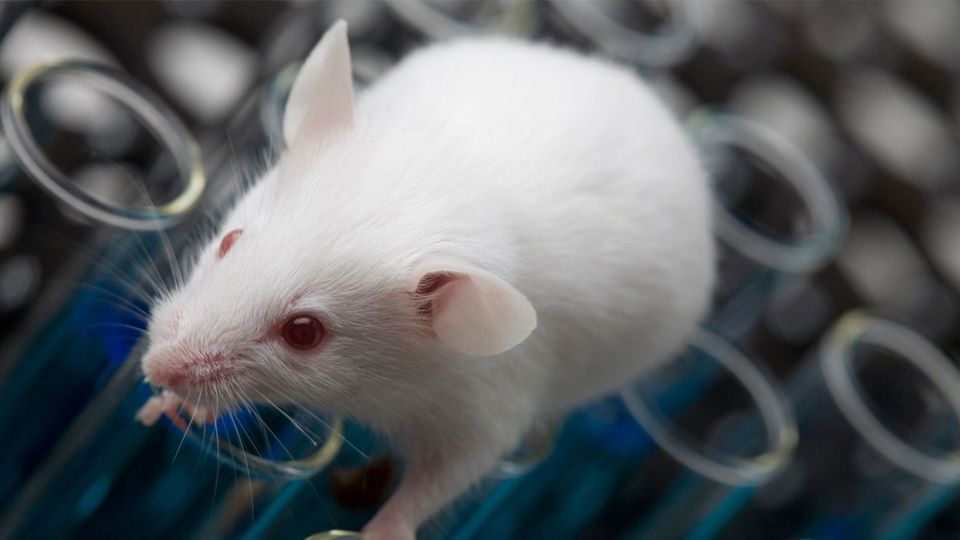
Researchers have created novel mouse models with mutations in the mouse gene for the DHDDS enzyme.
Retinitis pigmentosa retinal degeneration is caused by a family of hereditary mutations in nearly 100 genes that slowly lead to blindness over years or decades.
One of those genes encodes the enzyme DHDDS, part of the pathway that glycosylates proteins in higher cells. Retinitis pigmentosa from DHDDS mutations is called RP59. This is a recessive genetic disease, meaning mutations must be present on both copies of the DHDDS gene to cause disease.
To better understand and potentially treat RP59, Steven Pittler, Ph.D., and colleagues at the University of Alabama at Birmingham have created novel mouse models with mutations in the mouse gene for DHDDS.
Their first model, reported in 2020 and 2023, was a K42E/K42E mutant. The terminology K42E/K42E is genetic shorthand, meaning that both copies of the mouse DHDDS gene had a mutation at amino acid number 42, and those mutations replaced the lysine amino acid (K) with glutamic acid (E). The K42E/K42E allele is seen in human RP59 disease.
The UAB researchers now report two more mouse models — a T206A/K42E mutant and T206A/T206A mutant. T206A means the threonine (T) amino acid 206 of DHDDS has been replaced by alanine (A). At age 12 months, both the T206A/K42E mice and T206A/T206A mice showed changes in retinal structure and function similar to the K42E/K42E mouse model, according to the study published in the journal Disease Models & Mechanisms.
“Because T206A/K42E is one of the prevalent variants reported in RP59 patients, these findings will bring us closer to understanding the mechanism underlying this disease,” said Pittler, a professor in the UAB Department of Optometry and Vision Science. “These results indicate that the DHDDS T206A allele, like the K42E allele, causes retinal disease, probably through a common pathobiological mechanism, and we propose that the physiological basis of retinal dysfunction in RP59 involves defective photoreceptor to bipolar cell synaptic transmission with concomitant bipolar/amacrine cell degeneration.”
Bipolar cells are intermediaries in the layers of the retina from the light gathering cells at the back of the retina to the optic nerve, which then sends that information to the visual cortex of the brain.
A finding that T206A/T206A causes disease similar to the T206A/K42E and K42E/K42E models shows that the T206A allele itself is pathogenic, Pittler says, even though the T206A/T206A allele has not been seen in humans.
In humans, the T206A/K42E allele causes the same phenotype but is less robust than K42E/K42E.
The changes in retinal structure and function in the T206A/T206A and T206A/K42E mice, like those reported earlier for K42E/K42E mice, were reduction of inner nuclear layer thickness and reduced densities of bipolar and amacrine cells. Electroretinography revealed a reduction in b-waves, but spared reduction in a-wave amplitudes. Electroretinography uses an electrode on the surface of the eye to measure the electrical responses of retinal neurons to a flash of light and determine which layers of retinal neurons are defective. The first electrical response, the a-wave, reflects the health of the photoreceptor cells in the outer retina that detect photons. The second response, the b-wave, reflects the health of the inner layers of the retina, which lie downstream from the photoreceptor cells.
Reference: Nguyen MN, Chakraborty D, Messinger J, et al. Dhdds T206A and Dhdds K42E knock-in mouse models of retinitis pigmentosa 59 are phenotypically similar. DMM. 2025;18(7):dmm052243. doi: 10.1242/dmm.052243
This article has been republished from the following materials. Note: material may have been edited for length and content. For further information, please contact the cited source. Our press release publishing policy can be accessed here.
 Add Technology Networks as a preferred Google source to see more of our trusted coverage.

