

To continue reading this article, sign up for FREE to

Membership is FREE
and provides you with
instant access
to email newsletters, digital publications, our full content catalogue & more...
Already have an account?
Bio-Rad Announces the Launch of Anti-Ranibizumab Antibodies
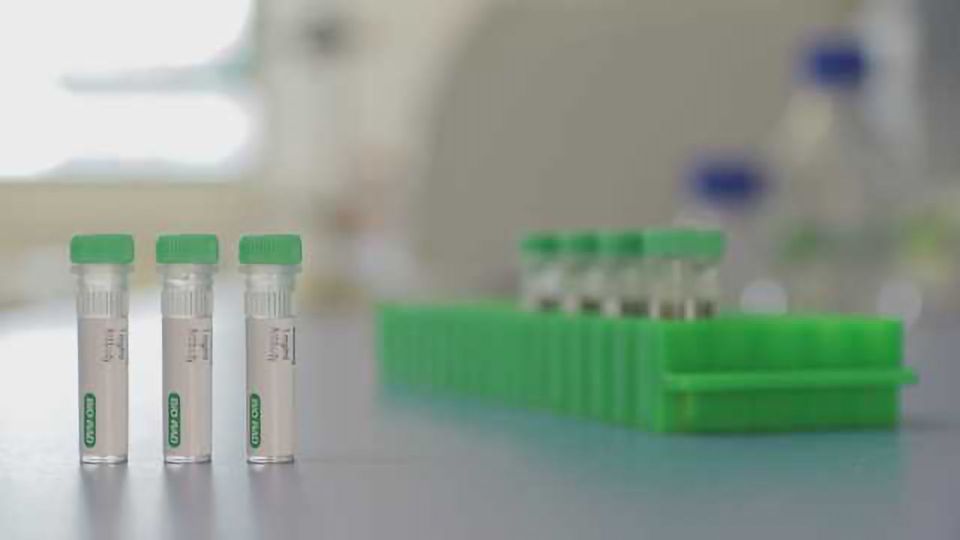
Anti-Ranibizumab Antibodies
Read time: Less than a minute
Bio-Rad Laboratories, Inc., a global leader of life science research and clinical diagnostic products, announced the launch of a range of recombinant monoclonal anti-ranibizumab antibodies that are highly specific for the monoclonal antibody drug ranibizumab (Lucentis) or the complex of ranibizumab with its target, vascular endothelial growth factor A (VEGF-A).
Ranibizumab is used for the treatment of wet age-related macular degeneration (AMD), a common form of age-related vision loss, and for macular edema and diabetic retinopathy. The anti-ranibizumab antibodies are inhibitory, non-inhibitory, and drug-target complex specific antibodies and designed for use in pharmacokinetic (PK) and immunogenicity assays for ranibizumab and biosimilars.
“We are excited to introduce four anti-ranibizumab antibodies that are highly specific for ranibizumab or the ranibizumab-VEGF-A complex,” said Amanda Turner, Bio-Rad Product Manager, Life Science Group. “Ranibizumab is a Fab fragment drug and is present at very low levels in patient samples, which presents challenges for PK assay design and sensitivity. The high affinity ranibizumab-VEGF complex specific antibody is unique to Bio-Rad and overcomes those challenges by enabling the development of a PK antigen capture assay to measure free drug.”
Bio-Rad’s anti-idiotypic antibodies are generated using Human Combinatorial Antibody Library (HuCAL®) and CysDisplay®, a proprietary method of phage display with guided selection methods to obtain highly targeted reagents. The recombinant production method also ensures a consistent and secure supply.
The anti-ranibizumab antibodies are approved for in vitro research and for commercial applications of in vitro testing services that support preclinical and clinical drug and biosimilar development and patient monitoring.
 Add Technology Networks as a preferred Google source to see more of our trusted coverage.

