
Ancient Microbial DNA Found in 1.1-Million-Year-Old Mammoth
Scientists have uncovered microbial ancient DNA from the remains of woolly and steppe mammoths – some over a million years old.
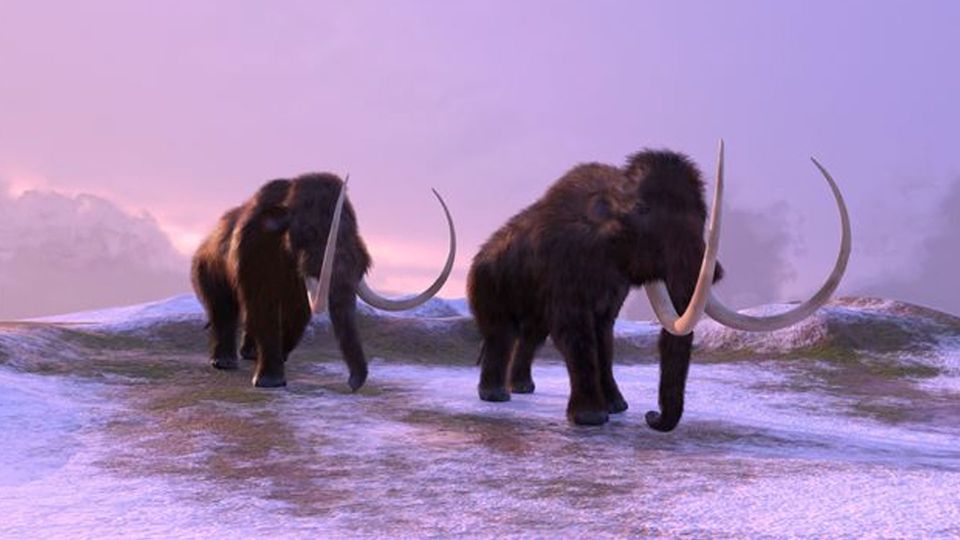
“Imagine holding a million-year-old mammoth tooth. What if I told you it still carries traces of the ancient microbes that lived together with this mammoth?” For Dr. Benjamin Guinet, a postdoctoral fellow at the Centre for Palaeogenetics, and his team, this striking thought experiment has become reality.
In a groundbreaking study published in Cell, researchers at the Centre – a collaboration between Stockholm University and the Swedish Museum of Natural History – have recovered microbial DNA preserved in the remains of both woolly and steppe mammoths, some more than a million years old.
The team analyzed microbial DNA from 483 mammoth specimens, with 440 sequenced for the first time. Among them was a steppe mammoth that roamed the Earth ~1.1 million years ago. Using advanced genomic and bioinformatic tools, the scientists were able to separate microbes that coexisted with living mammoths from those that invaded the carcasses long after death.
Guinet explained that the “results push the study of microbial DNA back beyond a million years, opening up new possibilities to explore how host-associated microbes evolved in parallel with their hosts.”
Six microbial groups consistently associated with mammoths
Genome analyses revealed six microbial groups consistently associated with mammoths, including relatives of Actinobacillus, Pasteurella, Streptococcus and Erysipelothrix.
Notably, one Pasteurella-related bacterium closely resembles a pathogen that still causes fatal outbreaks in African elephants. As African and Asian elephants are the closest living relatives of mammoths, this discovery raises the possibility that mammoths may have been vulnerable to similar infections.
The researchers reconstructed partial genomes of Erysipelothrix from a 1.1-million-year-old steppe mammoth. This represents the oldest host-associated microbial DNA ever recovered, pushing the limits of what ancient DNA can reveal about the relationships between extinct animals and their microbiomes.
“As microbes evolve fast, obtaining reliable DNA data across more than a million years was like following a trail that kept rewriting itself,” noted senior author Dr. Tom van der Valk of the Centre for Palaeogenetics.
van der Valk further detailed in a press release: “Our findings show that ancient remains can preserve biological insights far beyond the host genome, offering perspectives on how microbes shaped adaptation, disease and even extinction in Pleistocene ecosystems.”
A glimpse into the microbial worlds of extinct megafauna
Despite the challenges of degraded DNA and limited comparative data, the study provides an unprecedented glimpse into the microbial worlds of extinct megafauna.
The results suggest that some microbial lineages persisted alongside mammoths for hundreds of thousands of years, spanning vast geographic ranges and evolutionary timescales – from more than 1 million years ago to the final days of woolly mammoths on Wrangel Island about 4,000 years ago.
Dr. Love Dalén, professor of evolutionary genomics at the Centre for Palaeogenetics concluded that “this work opens a new chapter in understanding the biology of extinct species. Not only can we study the genomes of mammoths themselves, but we can now begin to explore the microbial communities that lived inside them.”
Reference: Guinet et al. Ancient host-associated microbes obtained from mammoth remains. Cell. 2025. doi: 10.1016/j.cell.2025.08.003
This article is a rework of a press release issued by Stockholm University. Material has been edited for length and content.
 Add Technology Networks as a preferred Google source to see more of our trusted coverage.


