
Scientists Spot a New Cancer Cell Type in Childhood Leukaemia
Researchers identified a new T-ALL cancer cell type that may help predict treatment response from the day of diagnosis.
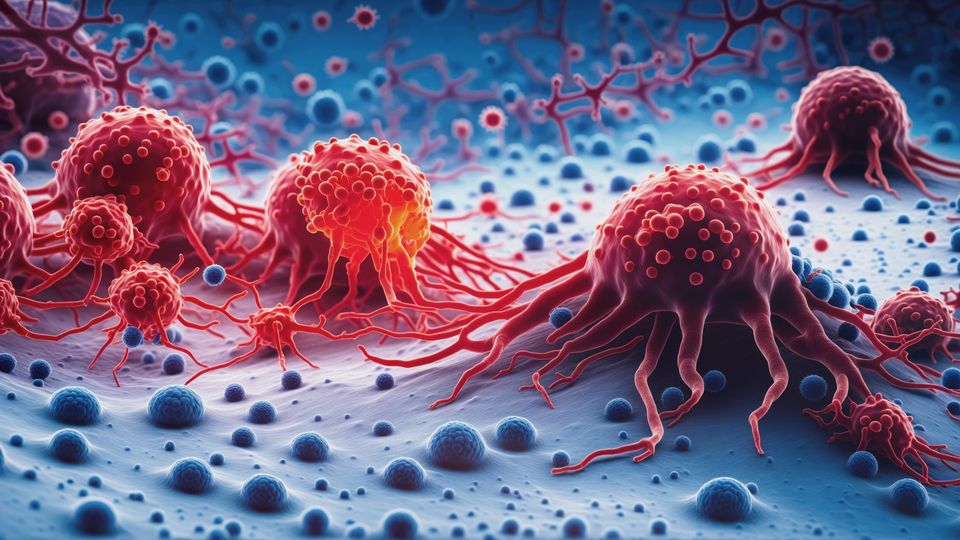
A new type of cancer cell that “warrants urgent investigation” has been discovered in childhood leukaemia and could impact clinical care. Research into new or repurposed treatments that target this new cell type could give hope to children and families worldwide.
A team at the Wellcome Sanger Institute, Great Ormond Street Hospital, Addenbrooke's Hospital, University College London, and their collaborators mapped the origins of T-cell leukaemia. They identified a new subtype of cancerous T-cells that does not respond to current treatments and could be responsible for the high mortality in this type of childhood cancer.
The research, published today (12 November) in Nature Communications, pinpointed the gene that is switched on in these cells, and how to identify them. These cells could be identified by adapting tests that are already used routinely by clinicians and could therefore be easily integrated into clinical care.
Being able to identify children whose cancer will not respond to treatment could directly impact their clinical care. For example, allowing them to avoid chemotherapies that have been proven to be ineffective against resistant cancers and prioritise other treatments.
Acute lymphoblastic leukaemia (ALL) affects the blood and bone marrow and is the most common type of childhood cancer, with 400 children diagnosed in the UK each year. There are two different groups depending on which immune cells are affected: B-cell leukaemia (B-ALL) and T-cell leukaemia (T-ALL).
In general, outcomes for B-ALL have improved over the past few decades due to the development of new immunotherapies and the identification of genomic subgroups that can help tailor treatment.
However, T-ALL makes up around 15 per cent of total cases and is a more aggressive disease. It has higher rates of treatment failure and drug resistance, which occur in about 10 per cent of children with T-ALL.
There is currently no way to identify which T-ALL cancers are more likely to be aggressive or high risk at diagnosis, meaning that clinical care cannot be adapted at the outset. Instead, children go through four weeks of the same chemotherapy and then undergo further tests to see if there are cancer cells remaining in the bone marrow. Being able to predict whether chemotherapy will work is of utmost importance to understand which children need less, and which children need more and different treatment from the outset.
In new research, the team at the Sanger Institute and their collaborators, analysed bone marrow samples from 58 children with T-ALL. They conducted single-cell genomic analysis to map the origins of all T-cells and identified genes that were more active in cancer cells that did not respond to the initial treatment.
The team found a new cancer cell type in children whose cancer did not respond to initial treatment.
In these treatment-resistant T-ALL cancer cells the gene, ZBTB16, is switched on. Once switched on, this gene causes the T-cells to develop into the new type of T-ALL cancer cell that carries the ZBTB16 protein. By analysing genomic data from hundreds of patients with ALL, they found that this genetic switch can happen at any point during T-cell development.
If included in clinical tests, this protein can be used as a marker to identify these cells from the day of diagnosis. It would involve adding an additional panel on a flow cytometry test, which is currently used during cancer care. The team suggests that this could be used to enable clinicians to closely monitor and adapt the treatment of children with T-ALL when possible.
The discovery also suggests a new avenue for future drug development, as treatments that switch off this gene could potentially stop cancer cell growth. Immunotherapy that targets this specific T-ALL cancer cell could also be possible in the future, giving new, effective therapies with fewer side effects for those living with this condition.
Dr David O’Connor, co-senior author at UCL and Consultant in Paediatric Haematology at Great Ormond Street Hospital, said: “Until now, it has not been possible to tailor treatment for T-cell acute lymphoblastic leukaemia in the same way as we can for B-cell leukaemia. Being able to identify children who have T-cell leukaemia that will not respond to initial treatment on the day of their diagnosis is of great importance. While further clinical research is needed, the genetic marker we have discovered can also be identified using an already widely used test, meaning that it could be easily adopted into clinical care if proven effective.”
Professor Sam Behjati, co-senior author at the Wellcome Sanger Institute and Honorary Consultant Paediatric Oncologist at Addenbrooke's Hospital, said: “The discovery of this new type of cancerous T-cell is one of the most exciting findings of my career so far, and warrants urgent investigation so that it can be translated into clinical impact as soon as possible. Using genomics to understand the origins of cancer allows us to find new ways to identify it and opens up avenues for being able to treat it. For example, targeting these newly discovered cancer cells could lead to effective therapies for T-cell leukaemia that currently don’t respond to first-line treatment, something that children, and adults, living with this cancer urgently need.”
Reference: Lim BSJ, Whitfield HJ, Trinh MK, et al. A non-canonical lymphoblast in refractory childhood T-cell leukaemia. Nat Commun. 2025;16(1):9397. doi: 10.1038/s41467-025-65049-8
This article has been republished from the following materials. Note: material may have been edited for length and content. For further information, please contact the cited source. Our press release publishing policy can be accessed here.
 Add Technology Networks as a preferred Google source to see more of our trusted coverage.

