
Human Cell Model Aids Understanding of Tuberculosis
Researchers used a new human cell culture model of alveolar macrophages to uncover the role of TNF in tuberculosis.
Summary
A study utilizing alveolar macrophage-like (AML) cells revealed that tumor necrosis factor (TNF) is critical for fighting tuberculosis but not other infections. The findings challenge existing beliefs about TNF's immune functions and suggest new targets for treating inflammatory disorders, enhancing understanding of the immune response.
Key Takeaways
A human cell culture model of the lung’s most important immune cells, alveolar macrophages, helped make a key finding that is prompting researchers to rethink the role of another immune protein in infectious disease. The research was recently published in the journal Nature.
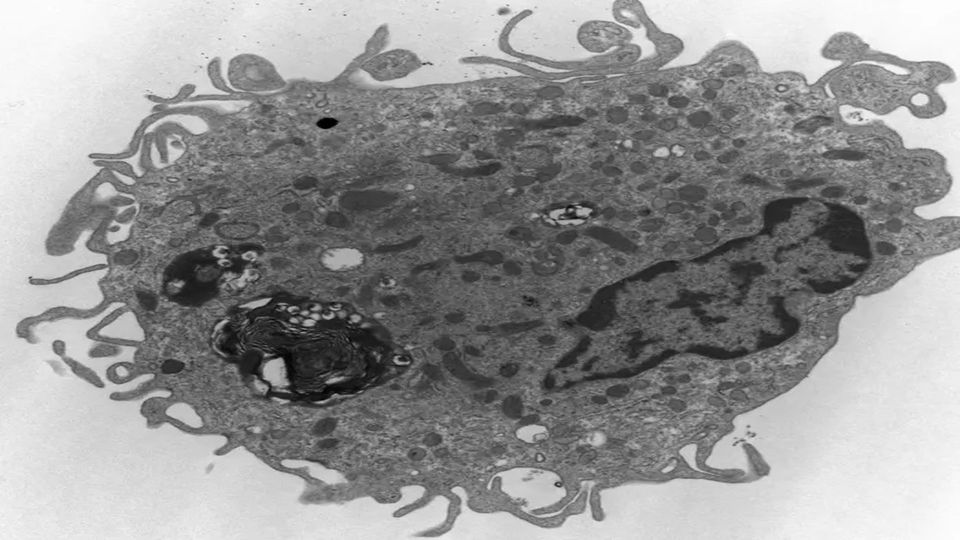
Alveolar macrophages are found deep in the lungs where they remove bacteria, viruses and other harmful pathogens. Collecting these specialized cells from donors in order to study them in detail requires methods that are invasive, expensive and time consuming. Researchers at Texas Biomedical Research Institute (Texas Biomed) developed an innovative way to more easily generate human “alveolar macrophage-like (AML)” cells in the lab that mimic these unique macrophages almost identically. They published about AMLs last year.
Already the model is contributing to global biomedical research.
Want more breaking news?
Subscribe to Technology Networks’ daily newsletter, delivering breaking science news straight to your inbox every day.
Subscribe for FREEInternational collaboration
In the recent Nature study, AML cells were used along with other cell-based models and extensive human genetic studies to gain new insights about an immune-signaling protein called tumor necrosis factor (TNF) and its role in tuberculosis (TB). The highly collaborative, international study was led by researchers at The Rockefeller University in New York; the Laboratory of Human Genetics of Infectious Diseases in Paris, France; and the University of Antioquia UdeA in Medellín, Colombia.
“It is exciting to see scientists around the world begin to use the AML model in their work and see how it can help reveal underlying mechanisms of the immune system that could change how we treat infectious diseases,” said Larry Schlesinger, M.D., Texas Biomed Professor and President/CEO, who co-developed the AML model with Staff Scientist Susanta Pahari, Ph.D.
Key experiments
TNF has long been thought as essential to protect humans and a wide variety of other species from infection. In the current study, the researchers found that TNF is indeed critical to protect against TB, but not against other infectious diseases. This is evidenced by extensive genetic analyses of two cousins in Columbia who do not have functional TNF and have lived into their 20s and 30s with recurrent TB, but are otherwise quite healthy with no other major illnesses.
Experiments using the AML model, together with other cell models, helped confirm exactly why this is the case. Specifically, TNF is responsible for triggering the release of molecules called reactive oxygen species (ROS) within alveolar macrophages to help kill off Mycobacterium tuberculosis, the bacterium that causes TB. When TNF is absent or blocked, ROS is not released and the bacteria are able to spread in the lungs.
A Nature “News and Views” article accompanying the paper noted the project “represents an extensive marriage of clinical and functional research that raises fresh questions.”
For example, perhaps roles that have been attributed to TNF are being carried out by other molecules and could serve as new treatment targets for inflammatory disorders, stated a Rockefeller press release.
“As scientists, we want to make discoveries, but just as satisfying is developing a tool that enables others to make their own breakthroughs and have an even broader impact on human health,” said Dr. Pahari.
The AML difference
Historically, researchers would need to collect alveolar macrophages from donors through invasive and time-consuming lung washes. Other macrophage models have been developed but lack certain features unique to alveolar macrophages. The AML model solves both issues by starting with a simple blood draw from donors. Blood monocytes, a type of immune cell, are combined with ingredients that mimic the lung environment in a cell culture dish. Over the course of a week, the monocytes transform into cells that are very much like alveolar macrophages that can then be used in studies like this one. These AML cells are currently being evaluated in more complex lung-on-chip models and the specialized ingredients tested with stem cells to generate even larger number of AMLs.
Reference: Arias AA, Neehus AL, Ogishi M, et al. Tuberculosis in otherwise healthy adults with inherited TNF deficiency. Nature. 2024;633(8029):417-425. doi: 10.1038/s41586-024-07866-3
This article has been republished from the following materials. Note: material may have been edited for length and content. For further information, please contact the cited source. Our press release publishing policy can be accessed here.
This content includes text that has been generated with the assistance of AI. Technology Networks' AI policy can be found here.
 Add Technology Networks as a preferred Google source to see more of our trusted coverage.

