
Better Data, Not Just More Data: Moving Beyond Endpoints and Into Cells for Drug Discovery
Live-cell imaging with AI-driven analysis can reveal how drug responses unfold over time.
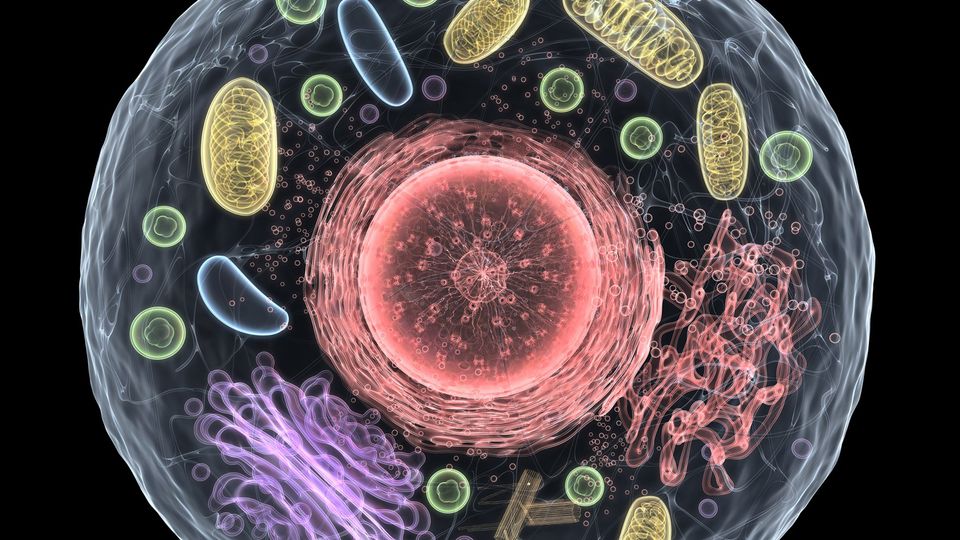
Drug discovery frequently fails because it seeks to treat complex diseases, like oncology or neurodegeneration, as linear, single-target problems rather than dynamic, emergent networks.
Although we can now measure biology at extraordinary scale—from gene expression and protein abundance to target engagement, pathway modulation, morphology and viability—this mass data has not solved the central problem of complex disease.
Cell behavior is rarely controlled by a single node. Cancer, neurodegeneration, metabolic disease, and cardiovascular disease all involve cells under sustained stress, but the consequences differ dramatically. Cancer cells evolve to survive harsh conditions, while heart, brain, metabolic tissues, and other vulnerable cells may fail or become dysfunctional under stress, making functional restoration therapeutically valuable.
The limitation is that the field needs better, reproducible, in-depth, and biologically meaningful and relevant data, leveraging precision and quality. Researchers already have a lot more data than any team can fully interpret. But these data often compress living biology into static snapshots. As a result, they are too complex to interpret biologically, may lack reproducibility across repeated experimentation and laboratories, and can miss the broader sequence of events that explains whether a response was therapeutically meaningful.
The critical question is not limited to “what target is present?” or “what endpoint is changed?” It is how the cell senses its environment and determines its trajectory toward survival, recovery, dysfunction, or death. That process unfolds over time.
The limits of endpoint thinking
Endpoint assays, biochemical and cell-based, have been essential to modern drug discovery. While the insights they provide remain practical, scalable, and informative, they often reduce a time-dependent process to a single observation, which fails to navigate complexity.
A cell exposed to a drug does not simply switch from “untreated” to “treated.” It senses the perturbation, redistributes signaling priorities, activates compensatory pathways, adapts or fails to adapt, and eventually commits to a fate. By the time a late endpoint, such as viability, is measured, the underlying mechanism that drove the cell to that outcome may no longer be visible.
This matters because similar endpoints can reflect very different biological trajectories. For example, two compounds may both reduce cell numbers after 72 hours. However, one may selectively amplify stress in a vulnerable disease state, while the other may cause broad nonspecific toxicity. From a single endpoint, both can look promising. Yet, they are fundamentally different.
The same issue applies to target-driven discovery. Target engagement can confirm that a molecule affects the intended protein, but it does not necessarily show whether the cell interprets that intervention in a way that alters its broader biological trajectory toward durable therapeutic benefit. In fact, drugs that bind the same upstream target can result in totally different intracellular responses, which explains why drugs even within the same class (e.g., binding the same target) may have very different efficacy and toxicity profiles. In complex diseases, the system-level response can matter as much as the target itself.
A cellular response is a trajectory, not a snapshot
Cells continuously process information: oxygen, nutrients, mechanical forces, inflammatory cues, and drug exposure. Inputs are not interpreted in isolation; they are integrated through networks that determine a response.
This view is changing how we think about cellular state, as it is not only a molecular snapshot; it is a context that shapes what the cell is likely to do next. A drug’s effect depends on that context. The same compound may behave differently in a stressed cancer cell, a healthy proliferating cell, or a chronically injured cell.
For drug discovery, this creates an opportunity. If cell behavior can be observed over time, researchers can begin to see not only whether a compound produces an effect, but how that effect develops. Early shifts in morphology, organization, growth dynamics or stress response may reveal a compound’s trajectory long before conventional endpoints become apparent. This is particularly important for distinguishing toxicity from non-toxicity—both have the same endpoint of death, but the journey differs.
Living cells can show how drug effects unfold
Live-cell dynamics is an approach to measuring drug response as a trajectory rather than an endpoint. Instead of fixing, lysing or staining cells at a single time point, live-cell imaging follows cells over time, often across multiple concentrations of a compound, allowing researchers to observe how responses emerge, diverge, and stabilize.
Label-free brightfield imaging is especially attractive because it is nondestructive, scalable, and compatible with repeated measurement. It avoids some of the bias introduced by predefined labels or reporter systems and preserves the ability to track living cells and dynamic biological systems over time. However, brightfield imaging has historically been difficult to analyze because the signal is subtle, contrast can be low, and technical variability can obscure biological effects.
Recent advances in AI for biological imaging are beginning to address these limitations.
In self-supervised learning, instead of telling the model exactly what to look for, researchers can train models to learn meaningful representations directly from the images, then test whether those representations capture biologically relevant differences across dose, time, and mechanism.
Our recent study in Scientific Reports described one example of this approach: Live Cell Dynamics, an internal end-to-end transformer-based pipeline designed to extract information from live brightfield cell images across multiple doses and timepoints. The study showed that self-supervised learning could detect subtle live-cell state changes, improve phenotypic activity and mechanism-of-action classification, reveal polypharmacology from dose-time profiles, and support unsupervised nuclei detection without stains.
This does not mean machine learning replaces biology. It means computation can become a sharper lens for observing biology that is too subtle, multidimensional, or dynamic to interpret manually.
Better biological signal, earlier
The value of live-cell dynamics is not simply that it produces more data; it lies in changing the quality and timing of the signal available for decision-making. Instead of waiting for a late endpoint to confirm effects, dynamic profiling can show specific cellular trajectories that improve early discovery in several ways.
- Early signals can change how compounds are prioritized. A compound may begin reshaping cellular state hours before assays detect a difference. Early identification of changes can separate true biological activity from apparent inactivity and distinguish selective stress modulation from nonspecific damage.
- Mechanism is more than a single endpoint. A late, high-dose readout may collapse distinct mechanisms into the same phenotype. By following responses across concentrations and timepoints, researchers can see drug effects unfold, where mechanisms diverge, and whether a compound’s activity remains coherent across the response landscape.
- Dynamic profiles can expose useful complexity. Many small molecules affect more than one pathway, which can be central to therapeutic effects. Time- and dose-resolved cellular responses can help reveal polypharmacology, guiding more informed candidate selection.

Understand Metabolism to Illuminate What Matters
This infographic explores how to translate metabolic characterization into meaningful biological insight across immunology, neuroscience, and cancer research.View Infographic
The goal is not to make discovery more data heavy. It is to make the data more biologically faithful.
Using AI to read biology
Dynamic cell-based approaches also clarify what AI can and cannot solve in drug discovery. Algorithms can help detect patterns that are too subtle or multidimensional to interpret manually, but they cannot compensate for weak biological inputs. If the underlying data are static, fragmented or disconnected from cellular behavior, AI may simply accelerate assumptions rather than improve them.
The growing use of AI in drug discovery has created excitement, but also understandable caution. Models are only as useful as the biological data and assumptions that shape them.
Live-cell approaches offer a useful counterbalance. They ground computation in observed cellular behavior. The model’s role is to extract, compare, and organize complex biology, while experimental validation remains essential. Crucially, this validation creates a continuous feedback loop, turning experimental insights into new training data that systematically strengthens the model's predictive accuracy over time.
In this framework, AI is not the starting hypothesis—biology is. The most valuable models are those that help researchers see living systems more clearly, not those that substitute prediction for biological understanding.
The future: Better biological signals
For decades, drug discovery has often started with a target and asked whether a molecule can modulate it. That approach has produced important medicines and remains essential. But in complex diseases, a target-first approach may force biology into a narrow frame too early.
Live-cell dynamics offers a complementary starting point. It asks how a living system responds to perturbation, what trajectory the response follows, and whether that trajectory is consistent with a useful therapeutic effect. The shift is not from targets to phenotypes, but from isolated measurements to a systems biology context.
The practical implication is better decision-making earlier in discovery, particularly when navigating the challenging translation from animal models to humans. By grounding discovery in human-relevant cell dynamics, compounds that produce nonspecific damage can be deprioritized sooner, and subtle but meaningful biology can be detected earlier. Ultimately, multi-target programs can advance with a clearer rationale for why and how a molecule should work.
Drug discovery does not need just more data for its own sake. It needs quality data that preserves the logic of living systems. By watching cells respond over time, we can begin to understand drug action not as a static measurement, but as a biological trajectory. In complex diseases, that may be the difference between knowing what happened and understanding why it happened.
 Add Technology Networks as a preferred Google source to see more of our trusted coverage.



