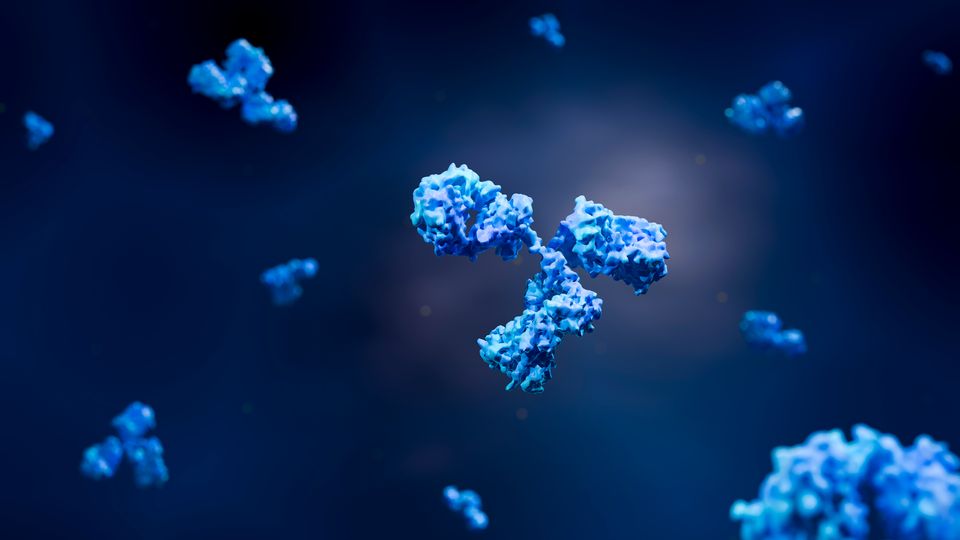
Traditional antibody discovery can be slow, labor-intensive, and difficult to scale, leading researchers to explore new strategies for identifying promising therapeutic candidates.
Emerging approaches combining single-cell biology, next-generation sequencing (NGS), and AI are enabling researchers to identify, characterize, and optimize antibody candidates with greater speed and precision.
This listicle explores how these technologies are reshaping therapeutic antibody discovery, from preserving native antibody pairings and uncovering rare candidates to accelerating selection and optimization.
Download this listicle to explore:
- What single-cell analysis brings to antibody discovery
- How NGS provides a deeper view of antibody repertoires
- Where AI and machine learning are influencing candidate identification and optimization
Listicle
1
Accelerating Precision Medicine
Through Antibody Discovery
Kerry Taylor-Smith
Monoclonal antibodies (mAbs) are lab-made proteins that mimic our immune system’s natural ability to
recognize specific cellular markers associated with disease. These highly precise, guided weapons have
become the cornerstone of modern therapeutics, targeting cancer, heart disease, autoimmune disorders,
infectious disease, and neurological conditions.
Under physiological conditions, our immune system recognizes pathogens like bacteria, fungi, viruses,
and toxins thanks to red flags—or antigens—on their surface. Antibodies bind to these antigens and either
mark the invader for destruction or block it from binding to healthy cells. mAbs work in a similar way but
can also be engineered for specific functions. For example, to deliver drugs or radiation therapy to cancer
cells, or to quieten an overactive immune system in conditions like arthritis.
In recent years, there have been extensive advances in antibody-based therapeutics. As of August 2025,
there were over 1,500 therapeutic antibody products in clinical development worldwide, excluding biosimilar
and combination therapies.
As the therapeutic antibody market expands, discovery methods must become more efficient to
meet demand.
Traditional antibody discovery methods are slow and resource-intensive. For example, hybridoma technology
creates stable cell lines by fusing antibody-producing B cells with myeloma cells, typically sourced
from mice. While this method is robust, it is low-throughput and labor-intensive.
Phage display uses bacteriophages, or simply phages, engineered to express specific surface proteins.
This creates a vast library that can be screened for antigen–antibody interactions of interest; phages are
exposed to antigens, and washing reveals those that have bound selectively and with sufficient strength.
While this enables high-throughput screening of large libraries, native pairings of heavy and light antibody
chains can be disrupted in the process—these are generally essential for the formation of a functional
antigen-binding site.
Next-generation techniques could move antibody discovery to the next level, making it faster, more precise,
and customizable. Here, we take a closer look at emerging technologies, including single-cell biology
and next-generation sequencing (NGS), and examine how AI is speeding up the process.
ACCELERATING PRECISION MEDICINE THROUGH ANTIBODY DISCOVERY 2
Listicle
Single-cell and immune repertoire technologies
for antibody discovery
The mid-2000s saw a shift in antibody discovery approaches. Traditional methods that focused on binding
affinity—how well the antibody binds to the antigen—were replaced by a faster, function-first approach
that favored biological activity.
Next-generation tools, such as single B-cell antibody technology, helped make this possible. It uses the
natural power of B cells, a type of white blood cell, to generate genetic blueprints for specific antibodies,
eliminating the need for a hybridoma.
This creates a faster timeline without compromising throughput and enables the direct examination of B
cells at high resolutions. It also enables the recovery of the naturally paired antibody chain sequences necessary
for optimal antibody function, potentially yielding more potent and specific therapeutic candidates.
When single B-cell antibody technology is paired with microfluidics and miniaturized systems, thousands
of B cells can be screened in parallel. Antigen specificity, biological function, and secretion profile
data can be gathered and analyzed through immune repertoires to increase the chance of identifying
high-quality antibody candidates.
Such systems give control over the cellular environment and enable multistep assays and repeated measurements
on the same cell, resulting in multiplexed functional profiling. For example, microwell-based
systems have enabled multiplexed, time-resolved secretion profiling, facilitating dynamic characterization
of antibody production at the single-cell level. This has transformed microwells into tools for quantitative
analysis rather than simple screening.
By enabling the rapid identification of rare, highly functional antibodies, single-cell technologies may
accelerate the development of targeted therapies for cancer, autoimmune diseases, and emerging
infectious threats.
Next-generation sequencing in therapeutic antibody discovery
NGS is a high-throughput sequencing technology that analyzes millions of DNA or RNA sequences in
parallel. In antibody discovery, NGS is used to sequence genes from immune cell populations and has
become a powerful tool to improve understanding of antibody diversity, affinity, and epitope recognition.
NGS-guided antibody strategies may also uncover rare and potent antibody candidates that traditional
methods have missed.
This means a faster discovery timeline, which can be further improved by combining with machine learning
methods to classify and rank antibody candidates.
When coupled with bioinformatics, NGS has enhanced phage display antibody discovery. Combining NGS
with single B-cell technologies could uncover millions of native human antibody sequences, some of
which could match with therapeutic antibodies.
This could support personalized medicine approaches by providing detailed insights into an individual's
antibody repertoire, which, in turn, could inform the development of tailored immunotherapies, particularly
in oncology, but also in the treatment of rare genetic disorders, genomic medicine, infectious diseases,
and dermatology.
Listicle
ACCELERATING PRECISION MEDICINE THROUGH ANTIBODY DISCOVERY 3
The role of artificial intelligence and machine learning
AI tools, particularly machine learning (ML) models, are increasingly used throughout the antibody discovery
pipeline to accelerate candidate identification and optimization. The growing availability of protein
structure, interaction, and function data provides an ideal source for training sophisticated ML models,
while advances in computational power have improved the efficiency of these complex models and simulations.
As a result, AI has the potential to significantly reduce the time and cost associated with antibody
discovery and optimization.
Some models have revolutionized structural biology by using deep learning to determine protein structures
with high precision in a fraction of the time compared to traditional methods. Others have transformed
3D structural prediction by enabling rapid and accurate antibody structure prediction directly
from sequence data.
ML models can identify likely binders for target proteins, with some achieving experimental success rates
up to 100% (e.g., BindCraft, 10–100%). Others can identify patterns associated with binding affinity and
specificity, and assess physicochemical properties, guiding candidate selection and optimization.
Generative AI approaches, which create new content based on large datasets, have the potential to design
novel antibody sequences with desired properties, such as enhanced affinity or reduced immunogenicity,
potentially expanding the number of candidate therapeutics.
Of course, the models are only as good as the data they are trained on, but their use is already enabling
faster timelines. ML, for example, has accelerated the in silico design of antibody candidates to 1–2
months, compared to the 6–9 months required by traditional methods. This equates to a ~60% reduction
in time and ~50% reduction in cost.
For patients, these advances could mean quicker access to more targeted, effective, and personalized
antibody therapies, with the potential for improved outcomes across cancer, autoimmune diseases, infectious
diseases, and other complex conditions.
Therapeutic antibody discovery: What’s next?
The combination of single-cell biology, next-generation sequencing, and AI-driven design is transforming
antibody discovery from a largely empirical process into a data-rich, predictive science.
This is particularly important as therapeutic monoclonal antibodies are becoming increasingly important
across many indications. Together, these technologies allow researchers to identify, characterize, and
optimize antibody candidates with speed and precision.
As these platforms continue to evolve, they could enable more personalized therapies, faster responses
to emerging diseases, and the development of antibodies against increasingly complex targets, helping
shape the next generation of precision medicine.
About the author:
Kerry Taylor-Smith is an experienced science writer with a passion for turning the complicated into clear, concise, and compelling
narratives. She covers everything from climate change and the environment to health and wellness, material science, astronomy,
and space. She has a BSc in natural sciences from the University of Bath and over a decade of experience writing for various
scientific and consumer publications.