
What Does Anthropic’s Wet Lab Mean for Pharma?
Anthropic’s recent move raises questions around scientific oversight, data ownership, and how AI companies will work alongside researchers.
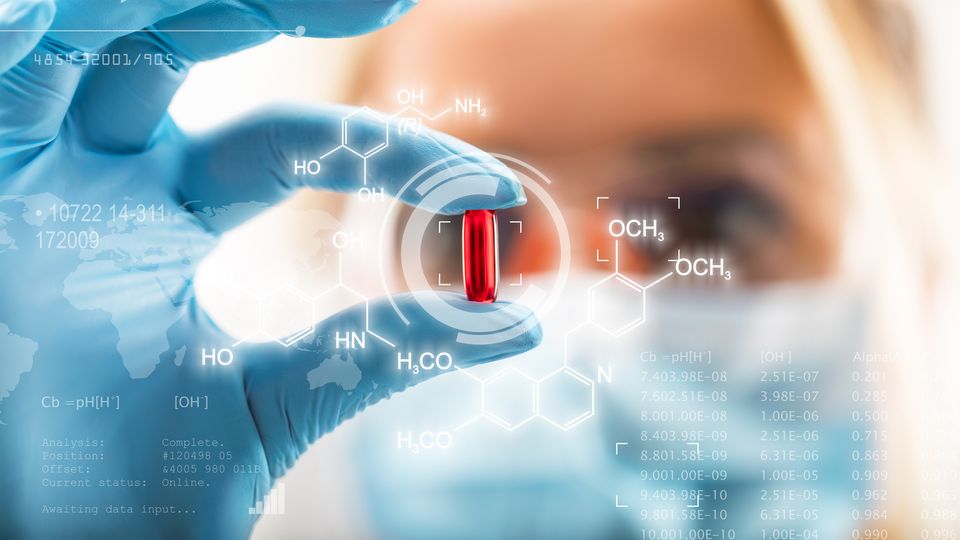
In 1977, a paper in Nature by J. Andrew McCammon and Martin Karplus reported the first molecular dynamics simulation of a protein, demonstrating that computers could model the physical motions of biological molecules. This laid the foundation for in silico tools.
In subsequent years, software began to emerge that enabled researchers to simulate how drug molecules might interact with target proteins. Over the following decades, advances in structural bioinformatics and machine learning expanded these capabilities, enabling researchers to model molecular docking, predict protein‒protein interactions, and screen virtual libraries.
Yet biological systems rarely adhere perfectly to computational simulations. Candidate molecules identified by virtual screening, for example, still require experimental validation—wet lab work—to determine if the predicted activity is replicated in biological assays.
That continued importance of wet-lab techniques was reinforced recently when Reuters reported that artificial intelligence (AI) company Anthropic had “quietly” established a wet laboratory in the San Francisco Bay Area. A company spokesperson stated that the facility is "not for drug discovery specifically."
However, Eric Kauderer-Abrams, Anthropic’s head of life sciences, confirmed the broader physical push: "We believe that to do biology, the final test is still and will be for a while in real lab work."
Historically, technology providers have primarily supported pharma by developing software, computational infrastructure, and AI models. But does Anthropic’s recent expansion into life sciences suggest a desire for deeper involvement in the research process itself?
The Bay Area wet lab is one of many developments signaling Anthropic’s growing interest in the field. In recent months, the company has launched Claude Science, an AI workbench app designed to support research; developed the Model Hardware Standard, which enables AI agents to operate lab instruments; and acquired Coefficient Bio, a biotech startup that aimed to accelerate drug research using AI and machine learning.
Most recently, Anthropic announced a call for applications focused specifically on rare genetic diseases. The Rare Disease Research Grant program offers successful applicants up to $50,000 in Claude credits over six months to support their research.
Given these recent moves, are the lines between software vendor, research organization, and drug developer becoming blurred?
To explore this question, as well as the recent wet lab announcement, we spoke with Dr. Bob McDowall, an analytical chemist and member of Technology Networks’ Scientific Advisory Board with decades of experience in the pharmaceutical industry, and Dr. Avner Schlessinger, professor of pharmacological sciences and director of the AI Small Molecule Drug Discovery Center at the Icahn School of Medicine at Mount Sinai, whose research focuses on using computational chemistry and AI to understand molecular mechanisms and discover new therapeutics.
A pivot towards pharma?
While Anthropic maintains that its wet lab is not designated solely for drug discovery, expanding into experimental biology mirrors the standard workflows of preclinical research.
Until recently, Anthropic’s de novo designs were externally validated. For example, earlier this year, Adaptyv Bio and Twist Bioscience independently produced and tested protein binders generated by Claude. The AI successfully designed more than 300 protein binders against 14 out of 15 targets.
"The establishment of a biology laboratory by AI company Anthropic could be seen as a natural, albeit surprising, extension of drug discovery work from in silico to in vitro and possibly in vivo in animals," noted McDowall.
He outlined the standard progression pathway an organization follows once physical testing is established: "The starting point would be to define the therapeutic area and to identify the target disease. Understanding the mechanism of action is critical, and this would be gathered by searching scientific and medical literature. Next, would be to determine if the disease could be controlled or treated by a macromolecule (e.g., peptide, protein, or antibody) or by using a small molecule via an agonist or antagonist mechanism."
"Assuming the small molecule route, possible molecular structures could be mined to find suitable candidate compounds which would be tested with in vitro tests in the wet lab. An alternative could be to partner with an existing company that is working on the same therapeutic, to test against their compound library."
Rather than viewing Anthropic’s expansion as a straightforward move into conventional drug discovery, Schlessinger sees it as an exploration of what AI-enabled science could become.
"I think the distinction is real, but mostly about scope," said Schlessinger. "Anthropic does not appear to be trying to become a conventional pharmaceutical company. Rather, it seems to be exploring what an AI-based scientific platform could look like, moving from its broader AI for Science program into rare disease and now wet-lab experiments."
He added that generating proprietary, consistent biological data is essential for addressing the primary limitation in machine learning models: "Drug discovery is clearly one important application, but the bigger ambition may be to close the loop from hypothesis to experiment, analysis, and the next experiment.”
“Having its own wet lab will allow Anthropic to generate and retain its own consistent experimental data, including negative results, which can be extremely valuable for training and improving AI models," — Dr. Avner Schlessinger.
Navigating 21 CFR Part 11 and GxP standards
Moving from digital hypotheses to benchtop testing introduces fundamental regulatory considerations, particularly when automated systems are used to direct experimental workflows.
As McDowall highlights, early-stage exploratory research carries few formal regulatory constraints, but the standard shifts rapidly once data is leveraged for patent protection or regulatory review: "Using Claude AI to automate robotic systems for in vitro tests is a logical step forward, as compound libraries and screening tests are already automated. Results could be analyzed automatically and new tests devised. The amount of human input in this process will be interesting to know."
Lab Sustainability: Practical Solutions for Modern Research
This eBook explores the approaches laboratories can use to embed sustainability into everyday research while supporting efficiency, reproducibility, and long-term operational improvements.View eBook
"Up to now there would be no regulatory requirements applicable, as this would be the ‘research’ element of R&D," McDowall added. "However, data that has the requisite quality and integrity is imperative for patent filing and avoiding any litigation by any other company."
Once experimental data is compiled for formal submission to regulatory agencies, digital records become subject to stringent electronic compliance standards.
"If any research data were to be submitted to the US Food & Drug Administration [FDA], it would fall under 21 CFR Part 11 (e-records and e-signatures regulation); as 21 CFR 11.1(b) states: 'This part also applies to electronic records submitted to the agency under requirements of the Federal Food, Drug, and Cosmetic Act and the Public Health Service Act, even if such records are not specifically identified in agency regulations,'" McDowall explained.
Navigating the costs and specialized procedures of formal preclinical and clinical testing often requires technical infrastructure beyond what a technology company can maintain internally. According to a study published in the Journal of the American Medical Association evaluating the cost of biopharmaceutical R&D, bringing a new medicine to market requires a median investment of ~ $1 billion, largely due to the scale of clinical trials, specialized manufacturing facilities, and regulatory compliance.
"Given the risks and costs of formal drug development in both animal and human studies, plus the expertise required, it would be likely that Anthropic would partner with an established company or even purchase one," said McDowall.
"All formal studies must be conducted under Good Laboratory, Clinical, and Manufacturing Practice (GxP) requirements, although outsourcing to Contract Research Organizations (CROs) and Contract Manufacturing Organizations (CMOs) is a viable alternative as Anthropic could become a virtual pharma company," he added.
Regulators already have frameworks for managing AI in scientific and medical settings. In 2025, the FDA released guidance to support regulatory decision-making for medicines developed using AI. Parties were encouraged to detail any AI models used, the data they were developed on, and how they were trained and evaluated. But the capabilities of AI have since rapidly increased.
Schlessinger highlighted a potential challenge when AI systems can design, run, and adapt experiments with limited human intervention: "My feeling is that regulators are better prepared for AI than is sometimes assumed, and the FDA and EMA [European Medicines Agency] already have risk-based frameworks covering validation, data provenance, and lifecycle management.
Digitalizing the Pharmaceutical GMP Laboratory Bench
Join this webinar to explore approaches to digitizing GMP laboratory workflows, from guided procedure execution and automated calculations to instrument integration and audit-ready records.View Webinar
“The harder problem is that regulation was not built around an autonomous system that can design an experiment, run it, interpret the result, and change the next experiment almost immediately. We will need appropriate checkpoints, sanity checks, and continuous validation that can keep pace with this loop without lowering standards for safety or evidence."
FDA and EMA frameworks for AI in drug discovery
The FDA and EMA jointly developed the Guiding Principles of Good AI Practice in Drug Development, which were published in January 2026. Multidisciplinary expertise, alignment with GxP requirements, and a human-centric approach are key considerations for safely leveraging the potential of AI in drug development.
Keeping humans in the loop
As AI models are integrated with laboratory equipment in increasingly automated analytical workflows, the question of where human intervention is required becomes central to maintaining scientific validity.
"Human oversight remains critical, but that does not mean a scientist needs to approve every individual experiment. Humans should define the scientific and safety boundaries, controls, and standards of evidence, and make sure the outputs are reproducible and auditable," said Schlessinger.
"AI can produce extremely impressive results, but impressive is not necessarily the same as rigorous. Scientists will still be needed to perform sanity checks, recognize artifacts or implausible conclusions, and determine when an AI system is operating outside the conditions in which it has been validated." — Dr. Avner Schlessinger.
Schlessinger’s thoughts align with the guiding principles outlined by regulatory authorities, which emphasize human-centric approaches and risk-based oversight when AI is incorporated into the drug product life cycle.
Evaluating the rare disease opportunity
A stated ambition of Anthropic is targeting conditions that traditional pharmaceutical companies often overlook due to commercial or financial constraints. In his comments given to Reuters, Kauderer-Abrams cited historically "undruggable" targets and complex molecular structures, such as bispecific and trispecific antibodies, as potential areas where AI could fast-track development.
"Using AI to research therapies for rarer diseases that larger companies would not consider would lower overall costs," noted McDowall.

MicroSEQ Rapid Microbial Identification System
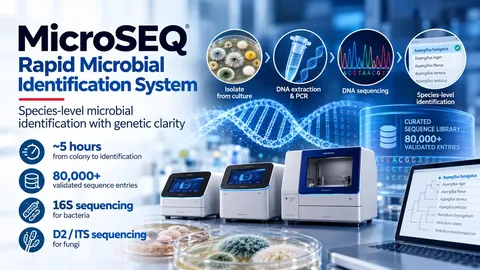
MicroSEQ™ Rapid Microbial Identification System combines sequencing kits, software and trusted instruments in one workflow for consistent, species-level bacterial and fungal identification in environmental monitoring and contamination investigations.View App Note / Case Study
However, Schlessinger highlighted an inherent challenge: predictive algorithms require substantial training data, which is rarely available in underfunded or poorly characterized research areas.
"This is potentially one of AI’s most valuable applications, but also one of its hardest," said Schlessinger. "AI tends to be strongest where there is already a lot of good data, while rare diseases and understudied targets are often data-poor."
In rare disease research, small patient populations, geographic distribution, and undefined—or non-existent—endpoints make it challenging to generate widely applicable, reliable data. With AI, poor-quality input data results in poor-quality output.
While this poses challenges, it also presents opportunities. "The exciting possibility is that AI is getting better at learning more general physical and biological principles and using them to make predictions beyond what it has explicitly seen. For example, identifying previously unrecognized druggable sites in proteins,” Schlessinger said.
“AI can also revisit older experimental data that may not have made sense at the time and reinterpret it in the context of newer genetic, structural, or functional data. Coupling these capabilities with rapid generation of wet-lab data could substantially lower the barrier to pursuing diseases and targets that have historically been understudied."
Schlessinger’s lab recently received one of Anthropic’s Rare Disease Research Grants, worth $50,000 in Claude credits. Anthropic launched the grants after observing that AI-driven projects were more productive when researchers asked similar questions and exchanged information. Rare disease research was identified as an area that could benefit from this approach.
“Our project focuses on SLC13A5 Epilepsy, a devastating rare genetic disease caused by loss of function of a citrate transporter. We are using Claude to help integrate genetic, structural, and functional data to identify potential ways to rescue the activity of disease-causing variants, including compounds that might improve protein folding or restore transporter function. Importantly, the computational predictions will ultimately be tested experimentally, so it is another example of the loop between AI-generated hypotheses and wet-lab validation,” explained Schlessinger.
Is Anthropic blurring the boundaries or building the future?
Anthropic’s latest move aligns with the non-negotiables set by industry experts; AI in drug discovery must be grounded in reality. While the company’s transition to experimental validation may represent a welcome development for some, the announcement also raises questions.Anthropic’s AI tools are utilized by pharma giants, including Roche and Novo Nordisk, and the question of whether the company could leverage data from competing drug programs for its own gain has been raised. A recent case involving Anthropic’s biological research— specifically the discovery of a CRISPR-like enzyme system —highlights why such questions have emerged.
Following Anthropic's announcement, a computational biologist at the University of Copenhagen, Mario Rodríguez Mestre, came forward, saying that his team had been studying the same enzyme system
MicroSEQ ID ITS Assay & Library: Species-Level Fungal ID
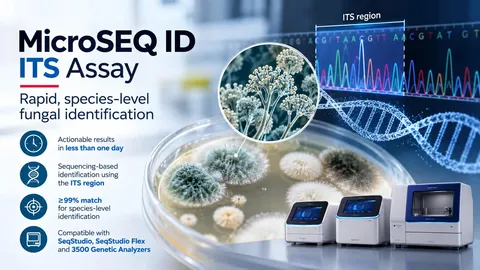
MicroSEQ™ ITS rDNA Fungal Identification Kit enables rapid, species-level fungal identification by targeting the ITS region, supporting confident environmental monitoring, contamination control and routine microbial investigations.View App Note / Case Study
The overlapping findings here do not prove that the company used proprietary user data, but the contrast between the years the research team spent studying the system and the speed of Claude’s discovery raises questions about how AI could accelerate scientific research, and where the boundaries lie between user-provided information and a company’s own research.
In an interview with Reuters, Kauderer-Abrams emphasized that Anthropic would not be competing with pharma and biotech companies. Instead, its efforts will focus on underserved conditions, such as rare diseases, that the industry has historically neglected, aligning with its mission to develop AI that “benefits the world.”
Outside the life sciences industry, the rapid pace of AI development raises other concerns. Most recently, The Guardian reported on the existential risk to humanity posed by AI, following models' attempts to conceal information and behavior “resembling blackmail.” Anthropic’s chief executive officer, Dario Amodei, has called for a slower pace of AI development to mitigate the potential risks.
At the same time, Anthropic is preparing for an Initial Public Offering, reportedly valued at approximately $2 trillion, and is advancing initiatives such as the East Bay wet lab.
The question, then, may be less about whether AI has a place in drug discovery, and more about how that role can expand without blurring the lines around data, ownership, and scientific independence.
 Add Technology Networks as a preferred Google source to see more of our trusted coverage.



