
Alzheimer's and Parkinson's Diseases Share Synaptic Dysfunction Mechanism
A molecular cascade that causes synaptic dysfunction is shared by Alzheimer's and Parkinson's.
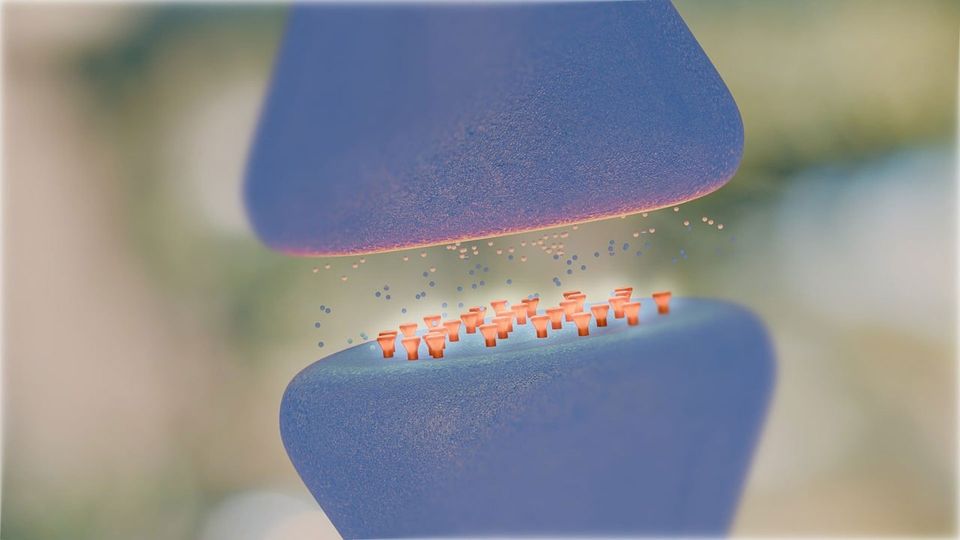
Parkinson’s and Alzheimer’s diseases are the two most common neurodegenerative disorders, affecting millions of people worldwide. Published in the Journal of Neuroscience, new research from the Okinawa Institute of Science and Technology (OIST) suggests a shared molecular cascade between the two diseases which causes synaptic dysfunctions, advancing our understanding of how their symptoms are produced.
The researchers investigated how brain cell communication across synapses is disrupted by disease-related protein buildup. They found a pathway that interferes with synaptic vesicle recycling, which is crucial for normal brain signaling. First author Dr. Dimitar Dimitrov of OIST's Synapse Biology Unit says, “Synapses are communication hubs in the brain involved in different neuronal circuits controlling different functions. Therefore, protein accumulation in synapses of one neuronal circuit may impact memory, while in another it may impair motor control. This helps to explain how a shared mechanism of synaptic dysfunction can lead to the distinct symptoms of both Alzheimer’s and Parkinson’s diseases.”
Brain communication and the importance of vesicles
Brains rely on neurotransmitters to send signals between cells. These chemical messengers are produced within brain cells and stored and transported in small membranous packets called synaptic vesicles. Vesicles move and fuse with cell membranes, releasing the neurotransmitters into the synaptic cleft, where they diffuse to reach receptors on nearby cells. For sustained signaling, vesicles must be retrieved from the membrane, refilled with neurotransmitters, and then reused.
In this study, the researchers identified a molecular cascade which interrupts the vesicle retrieval process, disrupting normal brain function.
“When disease-related proteins accumulate in brain cells, they cause over-production of protein filaments called microtubules, which are normally essential in cell structure and function,” explains Dr. Dimitrov. “When over-produced, these microtubules trap a protein called dynamin, which is responsible for the retrieval of emptied vesicles from cell membranes, playing a crucial role in vesicle recycling. With less dynamin, vesicle retrieval and recycling slow, thereby interrupting signaling and communication between brain cells.”
Therapeutic implications for Alzheimer’s and Parkinson’s diseases
By revealing this new shared mechanism, the authors identify several different steps which could be drug discovery targets. “Preventing disease-related protein accumulation, stopping microtubule over-production, or disrupting microtubule-dynamin bindings—our new mechanism identifies three potential therapeutic targets common across Parkinson’s and Alzheimer’s disease,” says author OIST Professor Emeritus Tomoyuki Takahashi. “Research like this is important to develop new treatments that ease the impact of these diseases on patients, families, and society as a whole.”
This study builds on a long history of neuroscience research by the team, who previously published research on the involvement of microtubules in Parkinson’s disease and of dynamin-microtubules interaction in Alzheimer’s disease. In 2024, they reported a peptide which reversed the symptoms of Alzheimer’s disease in mice. Based on their latest findings, the researchers believe this same molecule could potentially be used to relieve Parkinson’s disease too.
Reference: Dimitrov D, Raja S, Noor H, Takahashi T. Common Mechanism Underlying Synaptic Dysfunction Caused by Preformed Fibril-Induced Accumulation of α-Synuclein or Tau in a Culture Propagation Model. J Neurosci. 2025;45(45). doi: 10.1523/JNEUROSCI.0394-25.2025
This article has been republished from the following materials. Note: material may have been edited for length and content. For further information, please contact the cited source. Our press release publishing policy can be accessed here.
 Add Technology Networks as a preferred Google source to see more of our trusted coverage.

