
“SuperAgers” Show Cognitive Decline Is Not an Inevitable Part of Aging
Scientists have studied them for 25 years – here’s what SuperAgers reveal about brain health.
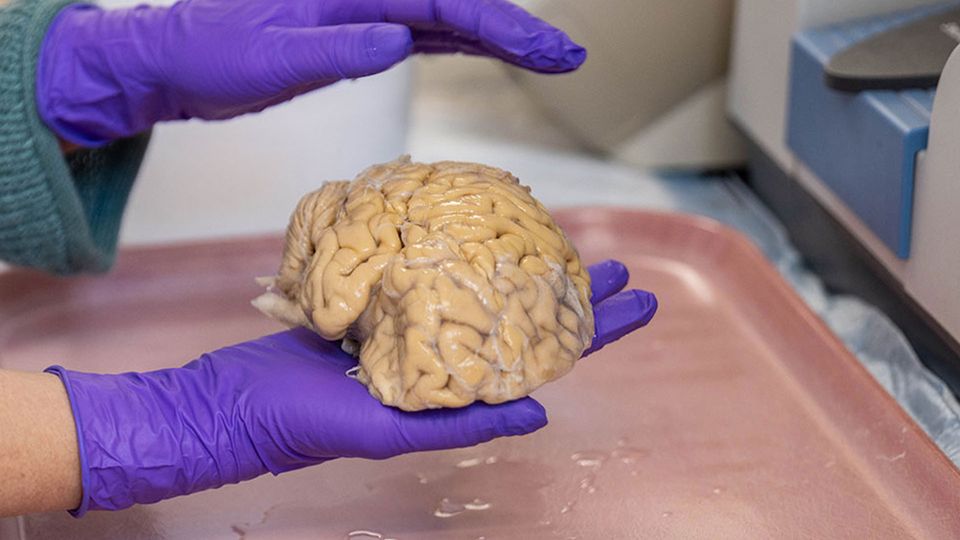
For 25 years, scientists at Northwestern Medicine have been studying people aged 80 years and older – dubbed “SuperAgers” – to uncover what makes them stand out.
In a new study, researchers show that these individuals display memory performance comparable to those at least 30 years younger, defying the long-held belief that cognitive decline is an unavoidable part of aging.
The study was published in Alzheimer’s & Dementia.
Cognitive decline is not an inevitable part of aging
Over this quarter-century of research, scientists have observed key lifestyle and personality traits among SuperAgers compared to other aging adults, such as being social and outgoing. But, as Dr. Sandra Weintraub, professor of psychiatry, behavioral sciences and neurology at Northwestern University Feinberg School of Medicine, explained, “it’s really what we’ve found in their brains that’s been so earth-shattering for us.”
Cognitive and neurobiological decline is often regarded as an unavoidable feature of the aging brain. However, the authors argue that this view oversimplifies the complexity of late-life brain health. “During late life, ‘average’ does not mean ‘intact,’” they explained. Their work on superaging challenges the assumption that decline is inevitable, instead exploring why some individuals maintain exceptional cognitive function well into old age.
By pinpointing the biological and behavioral traits tied to SuperAging, the researchers aim to uncover new ways to build cognitive resilience and delay or prevent Alzheimer’s and other dementias.
“Our findings show that exceptional memory in old age is not only possible but is linked to a distinct neurobiological profile,” said Weintraub. “This opens the door to new interventions aimed at preserving brain health well into the later decades of life.”
SuperAger brains: Resilient and resistant
The term “SuperAger” was first coined by Dr. M. Marsel Mesulam, founder of the Mesulam Center for Cognitive Neurology and Alzheimer’s Disease at Northwestern in the late 1990s.
Since 2000, 290 SuperAgers have enrolled in the program, and scientists have examined 77 donated SuperAger brains. Some contained amyloid plaques and tau tangles – hallmarks of Alzheimer’s disease – while others showed none.
“What we realized is there are two mechanisms that lead someone to become a SuperAger,” Weintraub said. “One is resistance: they don’t make the plaques and tangles. Two is resilience: they make them, but they don’t do anything to their brains.”
Other key findings of the study include:
- SuperAgers demonstrate exceptional memory performance, scoring at least 9 out of 15 on delayed word recall tests – comparable to individuals in their 50s and 60s.
- Their brains retain a youthful structure, showing minimal cortical thinning and an unusually thick anterior cingulate cortex, a region essential for decision-making, emotion and motivation.
- SuperAgers also exhibit unique cellular traits, including a higher number of von Economo neurons, associated with social behavior, and larger entorhinal neurons, crucial for memory, compared to their typically aging peers.
- Despite varying lifestyles and exercise habits, SuperAgers share a notable sociability, maintaining active social lives and strong personal relationships.
“In the future, deeper characterization of the superaging phenotype may lead to interventions that enhance resistance and resilience to involutional changes considered part of average (i.e., ‘normal’) brain aging,” the authors said.
Brain donation fuels discovery after death
SuperAgers undergo annual evaluations at the Mesulam Center and may choose to donate their brains for post-mortem study.
“Many of the findings from this paper stem from the examination of brain specimens of generous, dedicated SuperAgers who were followed for decades,” said co-author Dr. Tamar Gefen, associate professor of psychiatry and behavioral sciences, director of Feinberg’s Laboratory for Translational Neuropsychology and neuropsychologist at the Mesulam Center. “I am constantly amazed by how brain donation can enable discovery long after death, offering a kind of scientific immortality.”
Reference: Weintraub S, Gefen T, Geula C, Mesulam M-M. The first 25 years of the Northwestern University SuperAging Program. Alzheimer’s & Dementia. 2025. doi: 10.1002/alz.70312
This article is a rework of a press release issued by Northwestern Medicine. Material has been edited for length and content.
 Add Technology Networks as a preferred Google source to see more of our trusted coverage.


