
Proteomics Sample Preparation for Mass Spectrometry
Proteomics sample preparation determines data quality from extraction to PTM enrichment before MS analysis.
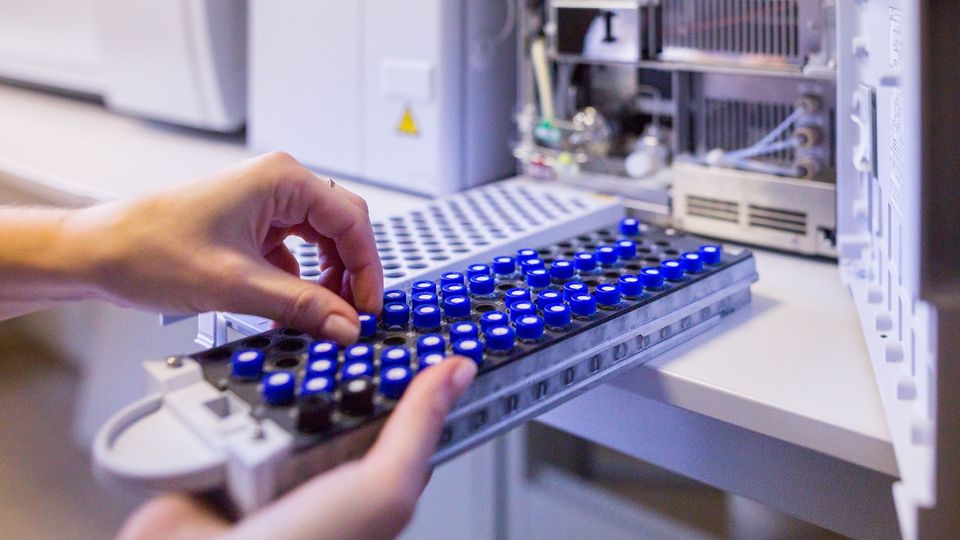
Mass spectrometry has become a cornerstone technology for studying protein expression, interactions, and post-translational modifications (PTMs) across biological systems. Advances in instrumentation and data analysis have dramatically increased sensitivity and throughput. However, the quality and interpretability of proteomic data remain fundamentally dependent on one critical upstream factor: proteomics sample preparation.
Proteomics sample preparation refers to the coordinated steps used to extract proteins, generate peptides, and remove contaminants before mass spectrometry analysis.
For laboratory professionals, proteomics sample preparation represents both an opportunity and a challenge. Complex biological matrices, wide protein dynamic ranges, and chemically diverse PTMs place stringent demands on workflows. Suboptimal protein extraction, incomplete digestion, or inadequate cleanup can compromise identification rates, quantification accuracy, and reproducibility, regardless of downstream analytical performance.
This article provides an overview of proteomics sample preparation for mass spectrometry. It covers core principles and methodological considerations across protein extraction, enzymatic digestion, cleanup, and enrichment strategies, with a focus on balancing robustness, scalability, and analytical depth for both discovery and targeted proteomics applications.
Protein extraction in proteomics sample preparation
Protein extraction is the foundation of effective proteomics sample preparation. The goal is to solubilize proteins efficiently while preserving their chemical integrity and compatibility with downstream processing steps.
Key challenges during protein extraction include incomplete solubilization, co-extraction of interfering substances, and bias against specific protein classes such as membrane or low-abundance proteins.
Common protein extraction considerations
- Sample type: Cells, tissues, biofluids, and environmental samples each require tailored lysis strategies.
- Lysis method: Mechanical disruption, chemical lysis, or enzymatic approaches may be combined.
- Buffer composition: Detergents, chaotropes, and salts influence solubilization efficiency.
- Protease and phosphatase inhibition: Critical for preserving labile proteins and PTMs.
Practical strategies
- Use chaotropic agents (e.g., urea-based buffers) for broad solubilization of soluble proteins.
- Incorporate mild detergents where membrane protein coverage is required, followed by effective detergent removal.
- Optimize lysis conditions to minimize sample heating and artificial protein modification.
Protein extraction efficiency should be evaluated not only by total protein yield, but also by downstream identification depth and reproducibility.
Trypsin digestion in proteomics sample preparation
Enzymatic digestion is a central step in bottom-up proteomics sample preparation, converting intact proteins into peptides suitable for mass spectrometric analysis. Trypsin digestion remains the most widely used approach due to its high specificity and generation of peptides with favorable ionization properties (Figure 1).

Figure 1: Key advantages of using trypsin for reliable and efficient protein digestion. Credit: AI-generated image created using Microsoft Copilot (2026).
Factors influencing digestion performance
- Protein denaturation and reduction: Ensures protease access to cleavage sites.
- Alkylation efficiency: Prevents reformation of disulfide bonds.
- Enzyme-to-substrate ratio: Affects digestion completeness and specificity.
- Digestion time and temperature: Balances completeness with artificial modifications.
Practical methodological guidance
- Perform reduction and alkylation under controlled conditions to improve digestion reproducibility.
- Optimize trypsin concentration to reduce missed cleavages without increasing nonspecific cleavage.
- Consider sequential or extended digestion protocols for complex or highly structured proteins.
Incomplete or inconsistent digestion is a common source of variability in proteomics sample preparation and should be routinely monitored using quality control metrics such as missed cleavage rates.
Filter- and trap-based cleanup strategies
Following enzymatic digestion, peptide mixtures generated during proteomics sample preparation must be cleaned to remove salts, detergents, and other contaminants that interfere with electrospray ionization and chromatographic separation. Filter-aided sample preparation (FASP) and suspension trap (S-Trap)-based approaches (Table 1) have become widely adopted cleanup strategies due to their scalability, detergent tolerance, and compatibility with diverse sample types.
Key principles of filter- and trap-based workflows
Although differing in format, these approaches share common objectives:
- Efficient removal of detergents, chaotropes and low-molecular-weight contaminants.
- On-device digestion and cleanup to reduce sample transfers and handling losses.
- Improved peptide recovery, reproducibility, and compatibility with LC–MS/MS analysis.
Practical considerations for workflow selection
- Sample load capacity and expected protein concentration.
- Compatibility with upstream lysis buffers.
- Hands-on time and throughput requirements.
- Reproducibility across large sample cohorts and suitability for automation.
Building Scalable, Connected Capillary Electrophoresis Workflows
This webinar examines how laboratories can prepare capillary electrophoresis operations for changing workflow expectations.View Webinar
These FASP/S-Trap cleanup workflows are particularly valuable for laboratories processing large sample sets or working with detergent-rich protein extracts, provided protocol parameters are carefully optimized for the specific sample matrix.
Table 1: A comparison of FASP and S-Trap-based cleanup strategies.
| Feature | FASP (Filter-Aided Sample Preparation) | S-Trap-Based Sample Preparation |
| Core principle | Ultrafiltration device retains proteins while contaminants pass through | Protein precipitation and trapping in a porous matrix prior to digestion |
| Detergent tolerance | Moderate – requires careful detergent removal prior to loading | High – compatible with many detergent-containing lysis buffers |
| Digestion format | On-filter digestion | On-trap digestion |
| Sample handling | Multiple centrifugation and buffer exchange steps | Fewer transfer steps after protein trapping |
| Typical sample load | Well suited for moderate protein loads | Broad load range, including dilute samples |
| Workflow time | Longer due to repeated buffer exchange steps | Generally shorter with simplified washing steps |
| Reproducibility | High when carefully optimized | High with strong tolerance to buffer variability |
| Suitability | Effective for clean lysates and standardized buffers | Particularly useful for complex or detergent-rich extracts |
Desalting: Enhancing sensitivity and chromatographic performance
Desalting is an essential component of proteomics sample preparation prior to mass spectrometry analysis, removing residual salts and small molecules that suppress ionization and degrade chromatographic performance.
Why desalting matters in proteomics sample preparation
- Improves peptide ionization efficiency.
- Protects analytical columns and ion sources.
- Enhances reproducibility across analytical runs.
Practical desalting tips
- Match stationary phase chemistry to peptide hydrophobicity.
- Avoid over-drying peptides, which can reduce recovery.
- Elute peptides in mass spectrometry-compatible solvents for direct analysis.
Even minor variations in desalting efficiency during proteomics sample preparation can translate into measurable differences in proteome coverage, particularly for low-abundance peptides.
Next-Generation Analysis for Bioanalysis and Nitrosamines
Explore practical LC-MS/MS workflows for nitrosamine and NDSRI monitoring, impurity confirmation, and quantitative bioanalysis. Learn strategies for trace-level quantitation, compound identification, workflow efficiency, and compliance readiness.View Webinar
PTM enrichment: Targeting biological specificity
PTMs play central roles in regulating protein function, localization, and interaction networks. However, PTM-bearing peptides are often present at low stoichiometry, necessitating targeted enrichment strategies (Figure 2) within proteomics sample preparation workflows.

Figure 2: Key challenges in PTM enrichment workflows. Credit: AI-generated image created using Microsoft Copilot (2026).
Practical enrichment considerations
- Perform enrichment after digestion and desalting to reduce complexity.
- Use orthogonal fractionation where deep PTM coverage is required.
- Incorporate appropriate controls to distinguish biological signal from technical bias.
PTM enrichment workflows should be designed in alignment with the biological question while balancing sample availability, throughput, and reproducibility within proteomics sample preparation pipelines.
Optimizing proteomics sample preparation for reliable results
Proteomics sample preparation is a defining determinant of mass spectrometry performance, influencing identification depth, quantitative accuracy, and reproducibility. From protein extraction and trypsin digestion to cleanup, desalting, and PTM enrichment, each step introduces opportunities for both optimization and variability.
For laboratory professionals, adopting standardized yet flexible proteomics sample preparation workflows enables robust data generation across discovery and targeted proteomics applications. Continuous evaluation of sample preparation performance, supported by appropriate quality controls, remains essential as analytical technologies and biological questions continue to evolve.
This content includes text that has been created with the assistance of generative AI and has undergone editorial review before publishing. Technology Networks’ AI policy can be found here.
 Add Technology Networks as a preferred Google source to see more of our trusted coverage.


