
Single-Cell Proteomics: Methods, Applications, and Advancements
Explore advances in single-cell proteomics that resolve cell heterogeneity.
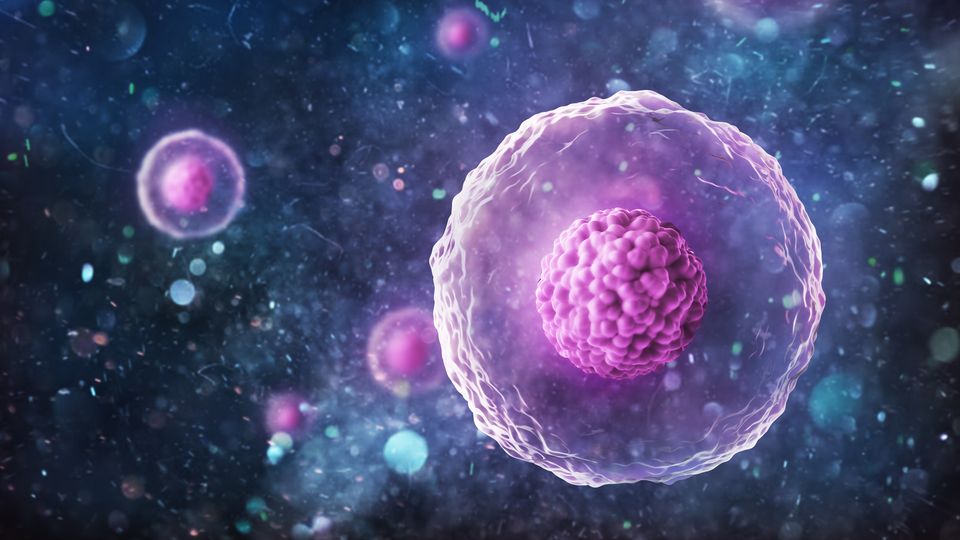
Single-cell proteomics is transforming the study of cell heterogeneity by enabling protein-level analysis in individual cells. In contrast to bulk proteomics, single-cell proteomics captures functional states that are obscured by population averaging. These capabilities are increasingly relevant for laboratories studying complex tissues, developmental processes and disease microenvironments.
Cell heterogeneity
Cell heterogeneity refers to the diversity and variation within cells in a population, characterized by differences in cell behavior. Single-cell studies can help capture this variability.
Recent technical advances in ultrasensitive mass spectrometry (MS), nano-liquid chromatography (LC)-MS and low-input proteomics have driven rapid growth in single-cell proteomics workflows. Improvements in sample preparation, separation efficiency and ion utilization have expanded proteome coverage while reducing measurement variability. Together, these developments support higher-throughput studies of dynamic protein regulation at cellular resolution.
Workflow design and sample preparation in single-cell proteomics
Robust single-cell proteomics workflows (Figure 1) depend on minimizing sample loss and technical variability across each processing step. Single cells contain low picogram levels of protein, requiring specialized handling strategies to preserve analyte integrity and maintain quantitative performance.

Figure 1: Typical steps within a single-cell proteomics workflow. Credit: AI-generated image created using Microsoft Copilot (2026).
Miniaturized lysis and digestion protocols have reduced adsorption losses associated with conventional tubes and surfaces. Common strategies rely on low-volume reaction vessels and simplified reagent compositions to support efficient proteolysis. Automation has further improved reproducibility by standardizing processing conditions across hundreds to thousands of cells.
Key workflow considerations in single-cell proteomics include:
- Cell isolation: Fluorescence-activated cell sorting (FACS), microfluidic capture or laser-based methods.
- Lysis and digestion: Low-volume enzymatic digestion to minimize peptide losses.
- Peptide cleanup: Minimal handling and adsorption-reducing materials.
- Batch design: Use of reference channels or controls to support normalization.
Guidance for implementing low-input proteomics workflows emphasizes the importance of workflow standardization and quality control to enable meaningful comparisons across experiments.
Table 1: Typical technical constraints and mitigation strategies for the various steps in a single-cell proteomics workflow.
| Workflow step | Technical constraint | Mitigation strategy |
| Cell isolation | Low recovery rates | Microfluidic capture or optimized FACS |
| Protein digestion | Adsorption losses | Low-surface-area vessels |
| Peptide handling | Sample dilution | Nanoliter-scale processing |
| Batch processing | Technical variability | Automation and reference channels |
Despite these advances, throughput and robustness remain constrained by manual handling and limited multiplexing capacity. Further miniaturization and standardized platforms are expected to improve scalability for large cohort studies.
Ultrasensitive MS and nanoLC-MS for single-cell proteomics
Mass spectrometry sensitivity is a primary limiting factor in single-cell proteomics. The small amount of analyte available from individual cells necessitates optimized ion transmission, low-flow chromatographic separation and high-efficiency ionization.
NanoLC-MS has become a component of single-cell proteomics workflows due to its ability to enhance peptide concentration at the ion source. Reductions in flow rates increase electrospray efficiency, improving peptide detectability and sequence coverage. Advances in column packing and stationary-phase chemistry have further increased separation performance for low-input samples.
Ultrasensitive MS instrumentation has improved ion optics, detection efficiency and acquisition strategies, enabling identification of hundreds to thousands of proteins per cell in optimized workflows. Data-dependent and data-independent acquisition methods have been adapted to balance proteome depth with measurement reproducibility.
Key performance drivers include:
- Low-flow chromatography: Improves ionization efficiency for trace peptides.
- Optimized ion optics: Enhances transmission of low-abundance ions.
- Acquisition strategies: Trade-offs between coverage and quantitative precision.
- Instrument stability: Critical for large-scale single-cell datasets.
Limitations remain in duty cycle constraints and stochastic sampling of low-abundance peptides. These effects contribute to missing values across datasets, complicating downstream analysis of cell heterogeneity.
Carrier proteome strategies and low-input proteomics
Carrier proteome strategies have emerged as a practical solution to improve peptide detectability in low-input proteomics. In these workflows, peptides from bulk samples are added to single-cell samples to enhance ion accumulation during MS analysis. The carrier proteome increases signal intensity while preserving relative quantification of peptides derived from individual cells.

Accelerating Precision Medicine Through Antibody Discovery
This listicle explores how these technologies are reshaping therapeutic antibody discovery, from preserving native antibody pairings and uncovering rare candidates to accelerating selection and optimization.View Listicle
This approach improves peptide identification rates but introduces trade-offs related to ratio compression and quantitative bias. Excessive carrier amounts can suppress ion sampling from single-cell peptides, reducing quantitative accuracy. Careful optimization of carrier-to-sample ratios remains essential to balance sensitivity and fidelity.
Advantages and limitations of carrier proteome strategies include:
Advantages
- Increased peptide identification rates
- Improved sequence coverage
- Enhanced proteome depth for rare cell populations
Limitations
- Potential ratio compression
- Increased interference from co-isolated peptides
- Dependence on optimized carrier levels
Low-input proteomics strategies beyond carrier approaches include improvements in peptide labeling efficiency, chromatographic peak sharpening and data analysis pipelines designed for sparse datasets. Collectively, these developments support improved coverage of low-abundance proteins, including those associated with regulatory and signaling processes.
Applications of single-cell proteomics in resolving cell heterogeneity
Single-cell proteomics provides functional insights into cell heterogeneity (Figure 2) that extend beyond transcript-level measurements. Protein abundance and post-translational modifications reflect integrated regulatory states, enabling refined classification of cellular phenotypes in complex biological systems.

Figure 2: Examples of single-cell proteomics applications. Credit: AI-generated image created using Microsoft Copilot (2026).
Applications of single-cell proteomics include characterization of:
- Immune cell diversity: Functional states within phenotypically similar populations.
- Tumor microenvironments: Proteomic gradients across spatial niches.
- Developmental trajectories: Protein-level transitions during differentiation.
- Drug response heterogeneity: Variable pathway activation within treated populations.

Exploring Host–Pathogen Interactions With Single-Cell Metabolomics
This webinar explores why some macrophages remain uninfected during mycobacterial infection despite being located next to infected cells.View Webinar
These applications reveal functional diversity that informs mechanistic models of tissue organization and disease progression. However, current proteome depth remains lower than bulk proteomics, limiting coverage of low-abundance regulatory proteins across large cohorts.
Integration with single-cell transcriptomics and spatial profiling approaches supports multimodal analysis of cell heterogeneity. Cross-platform alignment remains analytically challenging due to differences in measurement depth, dynamic range and technical noise.
Data analysis challenges in single-cell proteomics
Computational analysis of single-cell proteomics data faces unique challenges related to missing values, low signal-to-noise ratios and batch effects. Standard proteomics pipelines often require modification to accommodate sparse and heterogeneous datasets.
Key analytical considerations include:
- Normalization strategies: Correction for batch and run-order effects.
- Imputation methods: Managing missing peptide measurements.
- Dimensionality reduction: Preserving biological structure in sparse data.
- Cell clustering: Robust identification of proteomic subpopulations.
Statistical frameworks adapted from single-cell transcriptomics provide useful starting points but require further validation for proteomic measurement properties. Benchmarking studies highlight variability across workflows, emphasizing the need for standardized data formats and quality control metrics.
Implications of single-cell proteomics for laboratory research
Single-cell proteomics has advanced rapidly through improvements in ultrasensitive MS, nanoLC-MS, carrier proteome strategies and low-input proteomics workflows. These developments support increasingly detailed interrogation of cell heterogeneity in complex biological systems. Continued innovation in instrumentation, workflow miniaturization and data analysis is expected to improve scalability and quantitative robustness, strengthening the role of single-cell proteomics in laboratory research and mechanistic discovery.
This content includes text that has been created with the assistance of generative AI and has undergone editorial review before publishing. Technology Networks' AI policy can be found here.
 Add Technology Networks as a preferred Google source to see more of our trusted coverage.


