
Could Bacteria Trigger Heart Attacks?
Dormant bacterial biofilms in arteries may reactivate and trigger plaque rupture, raising heart attack risk.
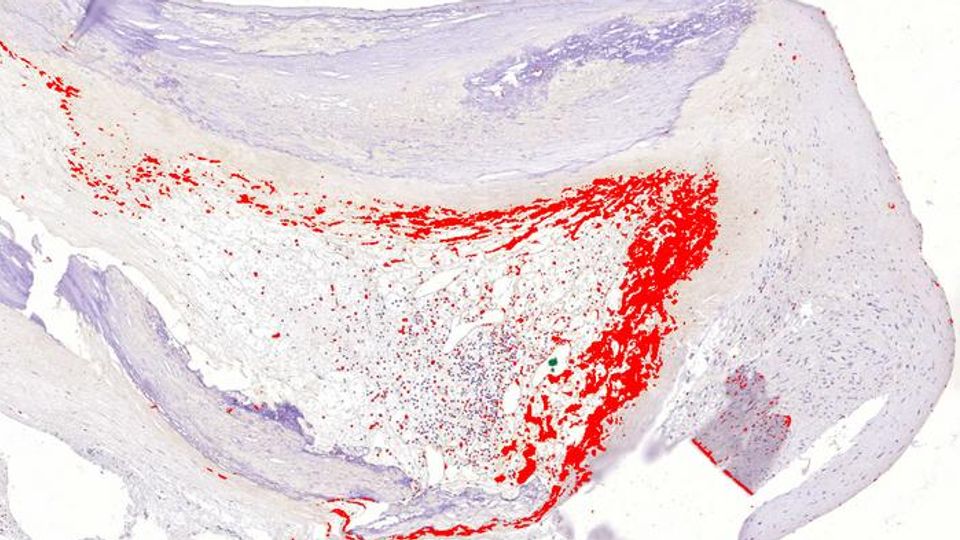
A joint study by researchers in Finland and the UK has found evidence that myocardial infarction, commonly known as a heart attack, could have an infectious component. The research challenges existing views on coronary artery disease, suggesting that long-term bacterial colonization within arterial plaques may play a role in plaque rupture.
“Bacterial involvement in coronary artery disease has long been suspected, but direct and convincing evidence has been lacking. Our study demonstrated the presence of genetic material – DNA – from several oral bacteria inside atherosclerotic plaques.”
Dr. Pekka Karhunen.
The study focused on the presence of bacterial biofilms in atherosclerotic plaques, which are accumulations of cholesterol and other substances on the inner walls of arteries. These biofilms, formed over years or decades, were found to be asymptomatic and largely inaccessible to both the immune system and antibiotics.
Atherosclerotic plaque
A deposit of fat, cholesterol, calcium and other substances that builds up in the walls of arteries.
Biofilm
A structured community of microorganisms, such as bacteria, that are embedded in a self-produced matrix.
Researchers discovered DNA from multiple oral bacterial species inside the plaques, suggesting a link between chronic oral infection and coronary artery disease. These bacteria appeared to be dormant, surviving within a gelatinous matrix that protects them from immune detection.
Infection may reactivate dormant bacteria
The team proposed that a secondary infection, such as a viral illness, could disrupt the biofilm and reactivate the bacteria. This reactivation may trigger a localized inflammatory response. Such inflammation can weaken the fibrous cap that covers the plaque, increasing the risk of rupture.
When the cap ruptures, the plaque contents are exposed to circulating blood, leading to clot formation (thrombosis). If the clot significantly reduces or blocks blood flow, myocardial infarction can occur.
Thrombosis
The formation of a blood clot inside a blood vessel, which can block blood flow.
Antibodies reveal hidden bacterial structures
To validate their findings, researchers developed an antibody specific to the bacteria detected in the plaques. Using this approach, they were able to visualize the biofilm structures in arterial tissue. In individuals who had suffered a myocardial infarction, bacteria were observed to have emerged from the biofilm. In these cases, the immune system appeared to mount a response to the released bacteria, which may have contributed to the inflammatory process and plaque rupture.
Implications for diagnosis and prevention
The study's findings suggest new approaches for identifying individuals at risk of myocardial infarction. They also indicate that bacterial biofilms could become a target for future diagnostic and therapeutic interventions. One possibility raised by the research is that vaccination strategies could be developed to prevent or manage bacterial colonization in coronary arteries. However, such applications would require further investigation.
Reference: Karhunen PJ, Pessi T, Hörkkö S, et al. Viridans Streptococcal biofilm evades immune detection and contributes to inflammation and rupture of atherosclerotic plaques. JAHA. 2025;14(16):e041521. doi: 10.1161/JAHA.125.041521
This article has been republished from the following materials. Note: material may have been edited for length and content. For further information, please contact the cited source. Our press release publishing policy can be accessed here.
This content includes text that has been generated with the assistance of AI. Technology Networks' AI policy can be found here.
 Add Technology Networks as a preferred Google source to see more of our trusted coverage.

