
Why Do Some Neurons Resist Alzheimer’s Damage?
A newly identified brain “waste collector” helps neurons survive toxic tau buildup.
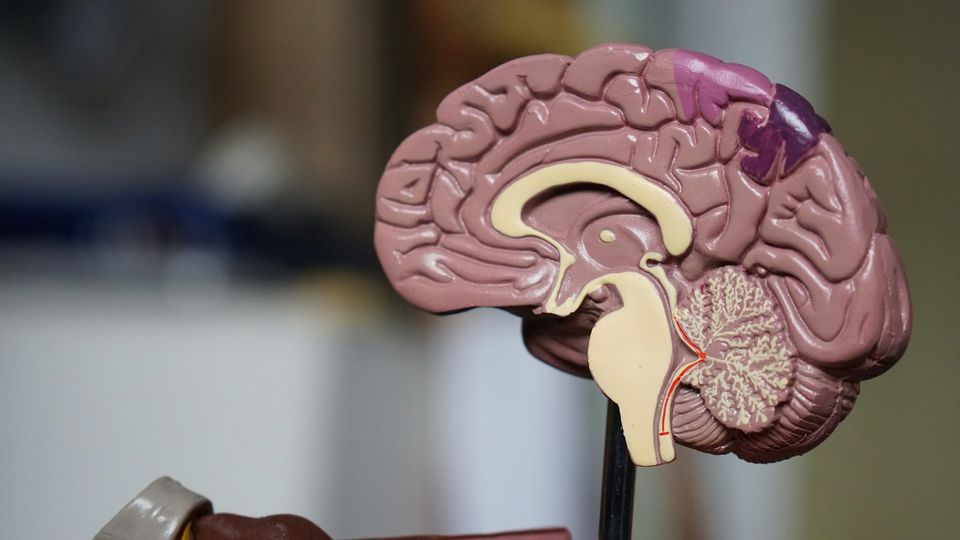
Researchers at UC San Francisco have identified a hazardous waste collector in the brain that disposes of the toxic clumps of tau protein that can lead to dementia.
Neurons with more of this garbage collector protein, technically known as CUL5, are less vulnerable to Alzheimer’s disease.
The research helps explain how some brain cells may remain resilient even in advanced Alzheimer’s, and points to new therapeutic strategies that could boost the brain’s natural defenses against neurodegeneration.
“CUL5 is uniquely suited to getting rid of tau,” said Martin Kampmann, PhD, professor of Biochemistry and Biophysics at UCSF. “Maybe a future therapy could enhance the body’s natural mechanism for avoiding neurodegeneration.”
Kampmann is senior author of the paper, which appears in Cell on Jan. 28. The work was spearheaded by Avi Samelson, PhD, when he was a postdoc in Kampmann’s lab; he is now an assistant professor of Neurology and Biological Chemistry at UCLA.
The team made the discovery by developing a petri dish model of human neurons. First, they engineered these cells to produce clumps of tau. Then, using CRISPR gene-editing technology, they disabled each of the cells’ 20,000 genes, one at a time, to see whether any of the genes had an effect on how fast the tau clumps would form.
The screen led the scientists to a protein called CUL5, which tagged tau for elimination before it formed clumps in the cell.
To see if this was really happening in people with dementia, the researchers turned to the Seattle Alzheimer’s Disease Brain Atlas, a rich source of data from brain samples that were taken from deceased Alzheimer’s patients. Even though these patients had died of their disease, some brain cells were much less vulnerable to degeneration. These resilient cells had lots of CUL5 - suggesting that CUL5 prevented tau from forming clumps.
The researchers also found another set of genes that affected how much tau built up. These genes were related to a process called oxidative stress, which causes damage as cells burn energy and gets worse with age. This made tau more “sticky” and likely to clump.
The findings are a boon to a field that has struggled for decades to find new ways to treat dementia.
“It’s the first time we’ve been able to screen human neurons for genes that determine their resilience to tau,” Kampmann said. “We hope that CUL5 can be the first of many new targets for drug discovery against the dementias.”
Reference: Samelson AJ, Ariqat N, McKetney J, et al. CRISPR screens in iPSC-derived neurons reveal principles of tau proteostasis. Cell. doi: 10.1016/j.cell.2025.12.038
This article has been republished from the following materials. Note: material may have been edited for length and content. For further information, please contact the cited source. Our press release publishing policy can be accessed here.
 Add Technology Networks as a preferred Google source to see more of our trusted coverage.

