

Decoding the “Aging Clock” Written in Sperm RNA
An RNA-based “aging clock” in sperm cells has revealed an aging “cliff” in midlife.
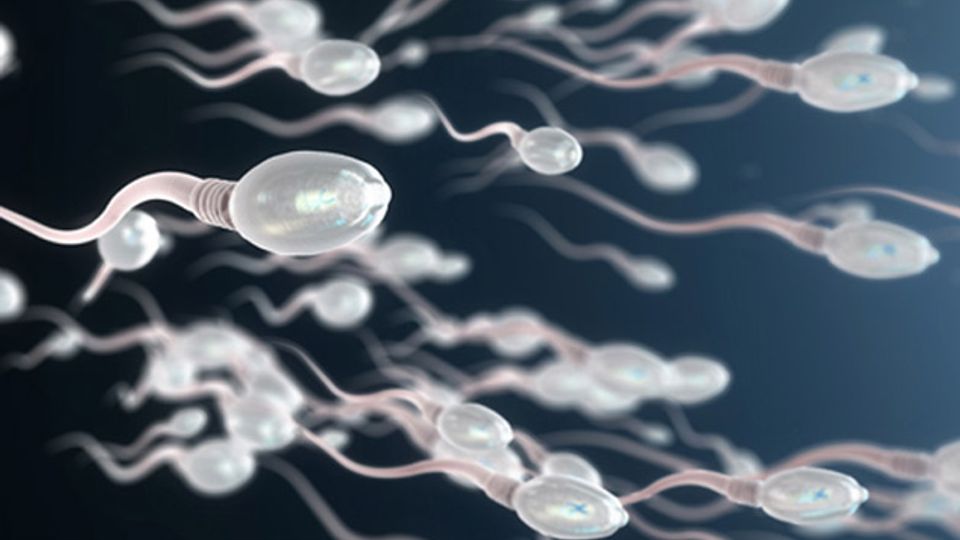
Aging is a significant risk factor for male reproductive health, with exposures to risk factors over a lifetime leading to disrupted testicular function and spermatogenesis that, in turn, result in sperm abnormalities that influence the health of the next generation.
Finding a reliable biomarker of sperm aging could guide reproductive decisions, but the molecular mechanisms that determine sperm fitness as we age remain poorly defined.
Dr. Qi Chen, an associate professor at the University of Utah School of Medicine, focuses his research on sperm biology and epigenetic inheritance, with an emphasis on RNA biology. His recent work has uncovered a previously hidden landscape of small non-coding RNAs in sperm that forms an aging signature in mice and humans.
Shifting the focus of sperm aging from DNA to RNA
What are the most important molecular hallmarks of cellular aging in sperm?
Cellular aging is driven by interconnected “hallmarks of aging”, which include genomic instability, telomere attrition, epigenetic alterations, loss of proteostasis, and mitochondrial dysfunction, among others.
“Altered mitochondrial state and oxidative stress are well-known hallmarks of sperm aging,” said Chen. “I think they matter on two levels: first, they influence whether sperm can successfully fertilize an egg; second—and arguably more consequential—they can reshape the 'information package' sperm delivers to the embryo, with potential impacts on the next generation.”
Traditionally, sperm aging research has focused on DNA. Persistent oxidative stress over a lifetime alters the genome and epigenome of sperm cells, damaging DNA, impairing DNA repair pathways, and modifying gene expression. Aging also generates DNA and epigenetic mutations that can be inherited by the offspring, increasing disease risk.
“More recently, we and others have shown that mature sperm also carry abundant RNAs decorated with chemical modifications,” Chen explained. “The ‘sperm RNA code’ acts as a sensitive sensor that responds dynamically to the paternal environment and paternal aging.”
“Sperm RNAs are not just passive correlates of aging; they act as a causal layer” — Dr. Qi Chen
Chen and his colleagues have identified that rewriting the sperm RNA code can alter gene regulation and change developmental trajectories in embryos, shaping the health of the offspring.
The current picture of sperm aging:
- Focuses on genetic and epigenetic changes with age.
- Is being influenced by the finding that sperm carry abundant RNAs that form the sperm RNA code.
Paternal age shapes offspring health
What do we currently know about how paternal/ sperm age influences offspring health?
Advanced paternal age has been linked to adverse pregnancy outcomes and neonatal complications, such as increased risk of miscarriage, low birthweight, and reduced life expectancy in the newborn.


How to Build an Effective Flow Cytometry Panel
This guide highlights strategies and solutions for building an effective flow cytometry panel to ensure reliable, reproducible data.View How To Guide
Advanced paternal age is also associated with genetic disorders, likely caused by de novo mutations in sperm cells that increase with age. The risk of congenital abnormalities, cancer, metabolic diseases, and neurodevelopmental conditions also increases with paternal age.
“Mechanistically, these consequences can be attributed to altered DNA (e.g., accumulated DNA mutations), or epigenetic mechanisms, where sperm deliver regulatory molecules such as RNAs that influence the early embryo, or a combination of both,” explained Chen.
“In our latest study, we found that introducing a cocktail of RNAs mimicking an 'aged' sperm profile into embryonic stem cells reprogrammed gene expression pathways linked to mitochondrial function, metabolism, and neurodegeneration,” he continued. “This suggests the altered sperm RNA code in older fathers acts as a direct agent that biases early developmental trajectories—likely interacting with multi-layered molecular mechanisms in the embryo.”
How aging sperm impacts offspring:
- Through genetic or epigenetic changes that increase disease risk.
- Altered RNAs reprogram gene expression pathways during early embryo development.
A “clock” to characterize sperm aging
Can you tell us a little more about the RNA aging clock you have developed to measure sperm aging? Are there critical windows where cellular aging accelerates, and what factors influence this?
rRNA-derived small RNAs (rsRNAs) found in sperm heads were key to what Chen and colleagues describes as an “aging clock”. “As age increases, longer rsRNA fragments accumulate while shorter fragments decrease,” explained Chen.
Essential Tips for Designing and Optimizing qPCR Assays
This guide explores the key considerations for developing robust qPCR assays, covering everything from experimental setup to data interpretation.View How To Guide
Changes to RNA biogenesis or processing that occur with age could explain the progressive remodeling of rsRNAs found in mice and humans.
“This signal can only be discovered using PANDORA-seq, an advanced sequencing method that overcomes RNA modification–induced detection biases, enabling the capture of previously undetectable small RNA species,” said Chen.
Profiling how small non-coding RNAs in the sperm head changed throughout the lifespan of mouse sperm cells revealed a non-linear shift in transfer RNA-derived small RNAs and rsRNAs over time.
“There are critical windows where the aging process seems to accelerate,” Chen noted. “PANDORA-seq uncovered a sharp ‘aging cliff’ in mouse sperm RNA profiles at mid-life (between 50 and 70 weeks of age, roughly equivalent to 40-50 years in humans).”

Understand Metabolism to Illuminate What Matters
This infographic explores how to translate metabolic characterization into meaningful biological insight across immunology, neuroscience, and cancer research.View Infographic
“We currently do not know the exact molecular link between the progressive changes in rsRNA length and this sudden ‘cliff’. We hypothesize that the gradual shift acts as a forerunner, accumulating silently until it pushes the system past a tipping point,” he said.
Hallmarks of cellular aging, such as changes to mitochondrial function or accumulating oxidative stress, may contribute to incremental changes to rsRNAs cascading into a “cliff-like” change.
Two individuals of the same chronological age (i.e., the same number of years lived) may have completely different molecular aging trajectories in their sperm, as the sperm RNA code is considered to reflect paternal experiences.
By reframing sperm aging as a biological process, not just a chronological one, this research shapes our understanding of paternal reproductive health.
“An RNA-based biomarker that accurately reflects the sperm’s biological age could be highly informative for reproductive decision-making, opening new doors for precision medicine and preventative care focused on offspring health.” — Dr. Qi Chen.
RNA sequencing in sperm heads revealed:
- rsRNA length progressively changes with age, forming a molecular “clock”.
- rsRNA and tsRNA show a rapid, dramatic shift at mid-life.
Future perspectives for sperm aging research
Chen and his colleagues hope to study whether dietary, lifestyle, or pharmacological interventions could potentially slow or reverse RNA aging signatures in sperm. As the sperm RNA code is dynamic and shaped by enzymes that cleave, trim, and modify specific RNAs, factors that affect these enzymes could alter the RNA code.

Discover What Metabolism Can Reveal
This infographic explores how real-time, live-cell metabolic measurements can help reveal the drivers of cellular response and provide deeper functional insight.View Infographic
“We want to determine exactly whether and how specific lifestyle factors (e.g., BMI, exercise, diet, antioxidant therapies) can actively impact the biological process of sperm aging,” he said.
They are also hunting for the molecular regulators behind the rsRNA length shift during aging. “Identifying these could lead to therapeutic developments that might potentially reverse the aging status of sperm,” said Chen.
The next steps for this work are:
- Identify molecular regulators that cause rsRNA to change with age.
- Understand whether and how lifestyle factors impact sperm aging.
In summary, small non-coding RNAs in the head of sperm cells change with age, with shorter RNA fragments decreasing and longer RNAs accumulating. This shift in the sperm RNA code creates a biological timeline of sperm aging, which Chen and his colleagues used to identify a critical window in midlife where aging accelerates.
Although the exact molecular link between progressive changes in rsRNA and the sudden aging shift remains unknown, this work reflects movement towards an RNA-based biomarker of sperm age that could inform reproductive decision-making.
Key takeaways:
- The sperm RNA code changes with age and reflects paternal experiences, including exposure to factors that influence fertility.
- Changes to the sperm RNA code with age bias early developmental trajectories in the embryos of offspring.
- There are critical windows in life where sperm aging accelerates.
- Finding the molecular regulators of sperm RNA could lead to therapeutic developments that reverse or slow aging.
 Add Technology Networks as a preferred Google source to see more of our trusted coverage.



