

The Expanding Role of Proteomics in Neurology Research
Dr. Anne-Li Lind explores how proteomics is being applied in neurology research.
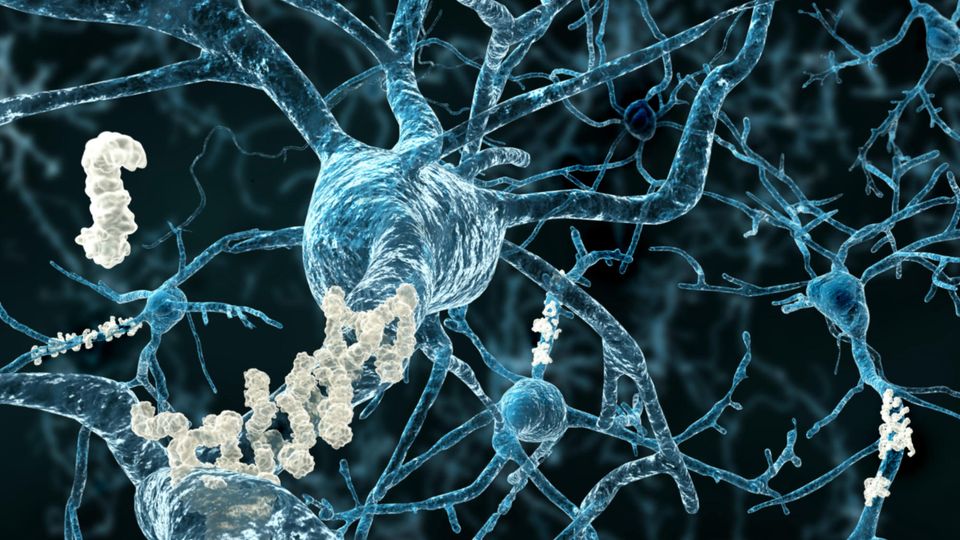
Proteomics has emerged as a key tool for studying complex neurological disorders, offering real-time insights into the mechanisms underlying conditions such as Alzheimer’s disease, Parkinson’s disease, and multiple sclerosis (MS).
Recent advances in high-sensitivity platforms are enabling researchers to detect subtle protein changes before the onset of clinical symptoms, supporting earlier diagnosis and more targeted therapeutic interventions.
To learn more about how proteomics is being applied in neurology research, Technology Networks spoke with Dr. Anne‑Li Lind, lead of neuroscience at Olink Proteomics, part of Thermo Fisher Scientific.
In this interview, Lind explores the remaining biological and technical challenges and describes how integrating proteomics with imaging, genomics, and digital health tools is advancing our understanding of brain health and disease.
What role can proteomics play in understanding and detecting complex neurological disorders such as Alzheimer’s, Parkinson’s, and MS?
Anne-Li Lind, PhD (ALL):
Proteomics offers a dynamic view of biology, allowing us to observe how diseases develop at the molecular level in real-time.
In diseases like Alzheimer’s disease, Parkinson’s disease, and MS, proteomic profiling has helped us map key biological pathways, identify novel biomarkers, and uncover disease processes well before clinical symptoms emerge.
For instance, cerebrospinal fluid (CSF) proteomics has recently led to the identification of five distinct subtypes of Alzheimer’s disease, each of which may respond differently to various treatment strategies.
Technologies such as Olink’s Proximity Extension Assay can support comprehensive protein profiling with high sensitivity. This can support earlier detection and more effective intervention, as well as studies of the underlying mechanisms that drive disease initiation and progression.
AM:
ALL:
The brain is extraordinarily complex, largely inaccessible, and equipped with redundant systems that safeguard its vital functions. These features pose significant challenges for researchers.
First, to understand such a complex system, we often study changes in complex phenomena, such as cognitive function. These measurements are crucial, as cognition reflects what matters most to people.
However, these measurements are influenced by countless biological processes, often making it difficult to pinpoint cause and effect. This complexity is also very hard to model in vitro, although some very helpful model systems, such as brain organoids, are being developed.
Second, unlike most other organs, brain and spinal cord tissue cannot be sampled directly from living humans. Researchers must rely on proxies, such as CSF or blood, to connect symptoms to underlying biology.
Third, while some neurological conditions occur suddenly, most neurodegenerative diseases—such as Alzheimer’s and Parkinson’s—develop slowly over many years. Studying their mechanisms and treatment effects requires long-term research efforts, which can slow progress.
Finally, nervous system health and disease vary widely between individuals, adding another layer of complexity—one that is shared with many other organs but particularly pronounced in the brain.
AM:
ALL:
In 2023, Olink’s platform was central to the rapid discovery of DOPA decarboxylase as a CSF biomarker for dopaminergic dysfunction in Parkinson’s and Lewy body disease.
In addition, Olink’s platform enabled large-scale serum proteomic profiling in MS patients, resulting in an 18-protein assay (Octave MSDA test) for assessment of disease activity, which has undergone both analytical and clinical validation for LDT (laboratory developed test) use.
Recently, researchers at UCSF leveraged Olink technology to find signs of myelin damage detectable in the blood as early as 7 years before multiple sclerosis symptom onset and identified more than 70 new biomarker candidates.
More broadly, Olink panels have significantly expanded the biomarker footprint of dementia and supported the development of new differential diagnostic approaches from leading researchers.
The impact of this technology is reflected in more than 450 community publications, which have broadened the disease maps for dementia, Parkinson’s, and neuroinflammatory disorders.
It is also well established that drug candidates backed by genomic evidence are more likely to succeed, and adding a proteomic layer further improves those odds by capturing real-time biology. For this reason, many of the major biopharma companies leverage Olink technology in their neurology research programs.
AM:
ALL:
Olink’s platform is unique in its scalability, enabling large-scale studies of more than 5400 proteins in a single drop of blood, saving years of biomarker development time and reducing translation costs.
One major advancement is the ability to use Olink to measure key and emerging neurodegeneration biomarkers in a single panel with pg/ml readout. This makes the translation of new promising biomarkers faster and more efficient as it facilitates confident cross-study comparisons through absolute quantification—and eliminates reliance on multiple assays to achieve sufficient biomarker coverage—saving time, cost, and precious patient samples.
This combination allows researchers to gain insights previously out of reach and move from discovery to clinical impact much more quickly.
AM:
ALL:
Each of these tools provides an important window into health and disease. Genomics shows genetic risk, imaging reveals structure, and digital health measures enable high-frequency tracking of functional metrics in the home environment.
Proteomics adds the missing piece: real-time biological insights that are accessible and actionable. Compared with imaging, analyzing blood and other biofluids is typically less invasive for patients, more affordable, faster, and more scalable.
Compared with digital health, proteomics is closer to the real biology we want to study and impact. Proteomics also captures the dynamics of biology compared with genomics, since our genes do not change with age, although our health usually does.
When combined with these other modalities, proteomics provides a comprehensive and actionable view of health and disease. This integrated approach not only supports earlier and more effective interventions but also enables personalized feedback at the individual level.
AM:
ALL:
One major gap and opportunity that is actively pursued by the research community is translating findings from CSF to more readily accessible blood-based biomarkers. To contribute to this effort, Olink has developed a new protein biomarker panel optimized for plasma and tested for CSF to help bridge this gap more quickly.
Another challenge is the relative scarcity of high-quality samples from globally representative populations. Here, new multiplex, sensitive, and sample-sparing technologies are helping us harvest insights by ensuring precious biobanks, which take years and decades to build, are not depleted by analyses of a few biomarkers. Instead, we get a rich picture of human biology, from just a couple of microliters.
Olink is, of course, proud to be chosen as a key enabler of proteomic insights from such large initiatives, including the landmark UK Biobank project. Our reliable, sensitive detection scales without compromising robustness or reproducibility, in a way that was just not possible in the past. I find that very inspiring.
AM:
ALL:
The greatest opportunities lie in detecting and treating pathological processes earlier (before function is lost), tracking this biology more precisely, and tailoring treatment to individual biology. This can help us more actively prevent diseases and treat them at earlier stages, with substantial implications for global human health.
Expanding research to more genetically diverse populations will be crucial, ensuring findings are relevant globally. Ultimately, these are very exciting times, where proteomics will help build precision neurology and precision psychiatry so that diagnosis and treatment are guided by each patient’s unique clinical and molecular signature.
The introduction to this interview includes text that has been created with the assistance of generative AI and has undergone editorial review before publishing. Technology Networks' AI policy can be found here.
 Add Technology Networks as a preferred Google source to see more of our trusted coverage.



