

Astrocytes Help Coordinate Brain Activity via GABA Regulation
Astrocytes regulate ambient GABA to coordinate neurons for proper visual information processing, MIT study finds.
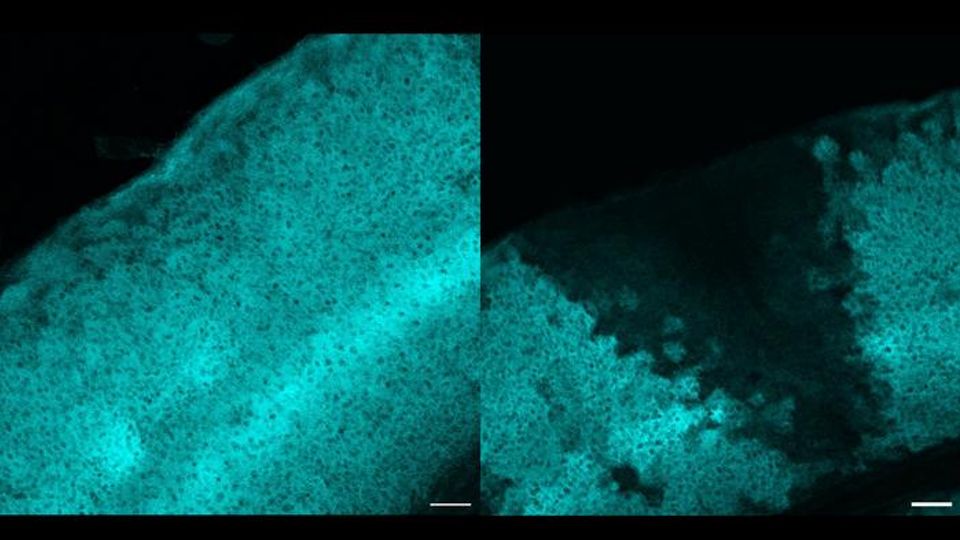
Although astrocytes are as prevalent in the brain as neurons, their role in neural processing remains less explored. A recent study conducted by researchers at the Picower Institute for Learning and Memory at the Massachusetts Institute of Technology has demonstrated that astrocytes contribute to neural information encoding by regulating the chemical environment that enables neurons to work together effectively.
The research, published in eLife, focused on a protein called GABA transporter 3 (Gat3) that astrocytes use to control ambient levels of gamma-aminobutyric acid (GABA), a major inhibitory neurotransmitter. When researchers knocked out Gat3 in astrocytes located in the visual cortex of mice, they found that neurons were less able to act in a coordinated manner to represent the visual information the mice were receiving.
GABA (gamma-aminobutyric acid)
GABA is the brain's primary inhibitory neurotransmitter. It reduces neuronal excitability by binding to specific receptors.
Astrocyte
A type of glial cell in the brain that supports neuronal function.
Visual cortex
The region of the brain located in the occipital lobe responsible for processing visual information received from the eyes.
Investigating astrocyte function in the visual cortex
The team used a novel implementation of CRISPR/Cas9 gene editing, developed with support from the National Institutes of Health, to knock out Gat3 in a targeted and efficient manner. The variant, known as MRCUTS, enabled the researchers to make multiple cuts to the Gat3 gene using a single viral vector, ensuring its complete removal from astrocytes in the visual cortex.
Calcium imaging of neurons, used as a proxy for electrical activity, showed that neurons in the modified mice exhibited less reliable and weaker firing patterns when exposed to visual stimuli such as movies. Interestingly, the neurons retained their individual functional responses. For instance, cells continued to respond to features like the orientation of lines in visual images. Additionally, synaptic GABA signaling between neuron pairs was preserved.
Despite this preserved individual function, analysis revealed that collective neural activity had been disrupted. Neurons became less predictive of each other’s activity, indicating a breakdown in coordination. Computational models, including a generalized linear model and a support vector machine-based decoder, revealed that population-level decoding of visual information was significantly impaired in the absence of Gat3.
Broader implications for understanding neural coordination
The findings suggest that although individual neurons may appear functionally intact, ambient GABA regulation by astrocytes is crucial for the synchronized activity necessary for efficient visual processing. The study offers a new perspective on how astrocytes modulate brain activity not through synaptic mechanisms but by shaping the broader chemical environment.
This disruption of coordination may provide clues to existing clinical observations. Previous research has linked changes in Gat3 levels in other brain regions to neurological and behavioral disorders, including increased seizure risk, repetitive behaviors and motor coordination deficits. However, the authors note that additional research is needed to determine how other GABA transporters, such as Gat1, might compensate in different regions or conditions.
Reference: Park J, Sipe GO, Tang X, et al. Astrocytic modulation of population encoding in mouse visual cortex via GABA transporter 3 revealed by multiplexed CRISPR/Cas9 gene editing. 2025. doi: 10.7554/elife.107298.1
This article has been republished from the following materials. Note: material may have been edited for length and content. For further information, please contact the cited source. Our press release publishing policy can be accessed here.
This content includes text that has been generated with the assistance of AI. Technology Networks' AI policy can be found here.
 Add Technology Networks as a preferred Google source to see more of our trusted coverage.


